











Listen and followApple PodcastsSpotifyYouTubeMore apps · Browse all episodes
“Billroth spent long hours dissecting cadavers and planning on surgical interventions. He was able to pioneer abdominal surgery with careful preparation and strict adherence to meticulous antiseptic technique. Animal experimentation and cadaveric-rehearsed surgery emboldened the Viennese professor; perhaps the abdomen could be entered. Nothing short of a ‘godlike creative spirit,’ as Mukherjee calls it, would suffice when it came to intestinal surgery. Vienna has a centuries’ old reputation for virtuoso performances; with Imperial spirit, maestro Billroth would take his place for master class performances in the greatest theater in the City of Music: the Allgemeines Krankenhaus operative theater.
In 1872 Billroth resected a portion of the esophagus and joined the ends together. In 1873, he performed the first complete excision of a larynx. Even more amazing, he became the first surgeon to excise a rectal cancer, and by 1876, he had performed thirty-three such operations.
What seems commonplace today (abdominal surgery) is nothing short of a stupendous magic act, in reality.”
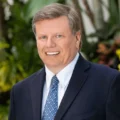
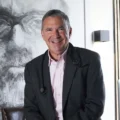
David J. Schneider is an orthopedic surgeon and author of The Invention of Surgery: A History of Modern Medicine: From the Renaissance to the Implant Revolution.
He shares his story and discusses his KevinMD article, “Surgery is nothing short of a stupendous magic act.”
Did you enjoy today’s episode?
Please click here to leave a review for The Podcast by KevinMD. Subscribe on your favorite podcast app to get notified when a new episode comes out!
Do you know someone who might enjoy this episode? Share this episode to anyone who wants to hear health care stories filled with information, insight, and inspiration.

Hosted by Kevin Pho, MD, The Podcast by KevinMD shares the stories of the many who intersect with our health care system but are rarely heard from.


Transcript
Kevin Pho: Hi, and welcome to the show, where we share the stories of the many who intersect with our health care system but are rarely heard from. My name is Kevin Pho, founder and editor of KevinMD. Today on the show we have David Schneider. He’s an orthopedic surgeon, and he wrote the book The Invention of Surgery: A History of Modern Medicine from the Renaissance to the Implant Revolution. David, welcome to the show.
David J. Schneider: Thank you, Kevin. Thank you so much.
Kevin Pho: So we’ll get into your book in a little bit, but first off, tell me your story and your journey to where you are today.
David J. Schneider: Well, as an orthopedic surgeon, I’ve been in practice for 18 years, and it was about eight years ago I thought, “You know what? I’m interfacing so much with patients, and it’s obvious they don’t understand this arc of how we got to now.” They just assume that any kind of surgical problem can just magically be treated, and it must have been this way for hundreds of years. Joint replacements must have been around forever, and “If I have an infection, just give me a couple, a few magic doses, and I’ll be great.” And I realized there’s this huge, just, blind spot that patients have.
So I started writing the book, and little did I know, I realized I was going to learn a massive amount myself. Much of it was so hard to discover. And of course, halfway in, I realized what I’m really writing about is a revolution that no one has named. That’s why I coined the phrase “the implant revolution”: This magic thing happened in about a decade’s time period, that you had simultaneous inventions of antibiotics, transistors, polymers, and modern metal alloys. So you went from, prior to 1941, nothing going in anyone’s bodies, not joint replacements, not pacemakers, not cardiac stents, deep brain stimulation, for goodness’ sake, wasn’t, you know, none of that was going in. And by the time we get to the 1960s, we’re able to do all kinds of joint replacements and stents and bypass surgery, and it’s become so commonplace that we don’t even think about it being miraculous anymore. So that was the thrust of my book.
Real physician voices, twice a week
Free, and one click to unsubscribe.
Kevin Pho: Wonderful. And tell me a little bit about your practice and how the pandemic has affected your practice.
David J. Schneider: So I’m a shoulder and elbow surgeon, and I would say I do have a nationwide practice, in part because I do a lot of the revision total shoulder replacements and revision total elbow replacements. You know, the last few days I’ve talked to patients from Florida, Virginia, Texas, Nebraska, San Francisco, you know, people who’ve kind of come to the end of their rope because they don’t have anything left, multiple operations. So in some ways, Kevin, I haven’t missed a beat.
We did have a few weeks around the launch of my book. The Invention of Surgery launched March 3rd, so I took a few weeks off for the publicity tour, going coast to coast giving grand rounds. I was lucky to give grand rounds at places like the Mayo Clinic and NYU. Incredible to be able to do that. But other than those few weeks, my telemedicine visits, like I think a lot of us, just completely morphed, and for the first time ever, I was actually being reimbursed for all these telephone calls and online stuff I was doing. But actually, in a lot of ways, like we know about revolutions, it’s changed the game for me, to be able to just kind of alter my practice a little bit and serve a different clientele.
Kevin Pho: Sure. Now let’s talk about the wonderful excerpt that you submitted on KevinMD. It was titled “Surgery is nothing short of a stupendous magic act,” and it really gave a nice history of the evolution of surgery. So I was wondering if you could walk my audience through that article, and why did you choose that specific excerpt to share on KevinMD?
David J. Schneider: Yeah, you know, my book is, I think, 384 pages long, so trying to find an excerpt has been challenging. And I’ve been lucky to have excerpts on wonderful pages like yours, as well as Popular Science and BuzzFeed and things like that. But for you, I chose the excerpt I did because I knew a lot of your followers obviously are physicians. Not all. Well, what’s the breakdown, Kevin? What do you think the breakdown is of your audience?
Kevin Pho: So I would say it’s about 70 to 75 clinicians, and most of those clinicians are in fact physicians.
David J. Schneider: Yeah, so I wanted those clinicians to be reminded of the fact, once we got into the 1880s and the antiseptic technique and germ theory had finally taken hold. Can you believe it? In the 1860s, still only a tiny percentage of clinicians believed that germs were real, and it wasn’t until the 1880s that enough people believed in Lister and Theodor Billroth. You know, you and I can remember back to our medical school days, the Billroth I, the Billroth II, those kinds of operations, abdominal operations. But that’s Theodor Billroth. He was in Vienna, and he was the first guy, and this is a half century before antibiotics were discovered. He was doing rectal surgery, esophageal surgery, abdominal surgery. Of course, thoracic surgery was an impossibility, but this guy, a half century before antibiotics, was doing rectal surgery successfully. I can’t believe it.
So the excerpt I submitted for you was walking through the 1880s and the very first time the miracle of elective surgery was contemplated. So guys like Halsted were able to think, “You know what? These people have this horrible pain and these horrible symptoms associated with umbilical hernias and inguinal hernias. Maybe we actually volitionally go to the operating room and have the temerity to believe that we’re going to leave the operating room with all of us alive.” That’s a miracle. And now elective surgery is so commonplace, we forget the audacity of going to the operating room in the 1880s, 1890s. But that happened.
And, you know, at first, when Halsted came back from Europe, his first operative theater in New York, just before he’d gone to help found Hopkins, was an operating room tent that they built there on the grounds of Bellevue. And operating rooms slowly were built. So if you look at what hospital construction was happening in the 1880s, all these big hospital buildings only had one operating room. Mayo, Hopkins, even Special Surgery, all those places had one operating room. And it wasn’t until decades later that they thought, “You know, business is so good, let’s build a second operating room.” And it wasn’t until the implant revolution happened that it opened up the doors to say, you know, you go to any major metropolitan center, they’re going to have 30, 40, 50 ORs, which would have been mind-boggling 100 years ago, absolutely impossible. So that’s what the implant revolution brought us, besides cardiac stents and urethral stents and plastic surgery implants. It’s been a miracle, really.
Kevin Pho: Now, are there a few things that surgeons today can learn by looking back in history and seeing the stories and reading about the stories of the surgeons from yesteryear?
David J. Schneider: I think one of the big things is thinking about, and one of my big take-home points, especially over the last 90 days, is realizing that revolutions always happen with a combination of technological and scientific innovation matched with catastrophe or chaos. Well, that’s what we’re having right now. And look at us, Kevin: We’re having this great conversation that other people can think about. But those who think about the way telemedicine is going to work: It went from you and me making phone calls, circling back with our patients, to now realizing I can actually have a fairly intimate conversation with my patient, even as an orthopedic surgeon, preoperative, immediately postoperative, and years down the road, to check in with them.
And of course, you know, those who are the most alert will say, “Well, what about if we enhance our ability and make this connection even more intimate? And is there a way we can actually do physical therapy? What if we have tracking devices?” It’s actually something I’m working on, tracking devices to look at shoulder and elbow range of motion and be really scientifically objective and stop guessing. I think our pandemic right now will open doors, besides thinking about the way that vaccine development is going to happen. I mean, Kevin, you know, the virologists in our midst are all thinking about the fact that it used to take four years at best to come up with a vaccine. I think this will revolutionize the way we do the flu vaccine. There’ll be a lot less guesswork and a lot more adaptability on the fly. I think there are going to be a lot of things that will happen. But again, scientific revolutions tend to happen because of technological innovations meeting catastrophe, and those few among us who are the most alert are going to be the ones that make history.
Kevin Pho: Your book takes us through a wonderful journey of the history of surgery. Now, what are some ways that surgeons have evolved over the decades?
David J. Schneider: Well, one of the first things that had to happen was, of course, just treating skin and washing our hands, and that’s all Joseph Lister. All hail Joseph Lister. He’s my favorite surgeon of all time. He’s my hero. It’s actually the second book I’m working on right now. We’re about ready to pitch it to publishers. It’s about Joseph Lister and his wife and the teamwork that they had to truly change history.
But surgeons first had to think about prepping the skin, and really the first implant, it was all suture. Sutures used to be just single strands of horsehair, and then it was silk, but that wasn’t sterile, ever. And Joseph Lister had the intelligence to say, “Well, we’re washing the skin, we’re washing our hands. Maybe I should prepare the suture.” And in my archival research all over the British Isles, I’ve actually gotten hold of, in my hands, in the letters, I’m going through all his letters, I’ve handled every letter to and from him, and here in this little packet, I pulled it out: Here’s some of his specially treated suture from 175 years ago. That was kind of a cool moment.
But then, you know, they just kept progressing and thinking, “How can it be better? It has to be better.” And finally, it was Billroth who had the courage to say, “You know what? I’m going to deny everyone ahead of me and say abdominal surgery is possible.” You know, in every operating room, or I should say, there are operating rooms in every hospital in America where abdominal surgery’s happening today. And that was the, you know, “There be dragons.” But those surgeons, and if we think about today, as a surgeon, think about the sheer bravery and courage to tackle what everyone said was wrong: “Don’t do it. Who do you think you are?” There have to be clinicians, scientifically, with great ethics, to say, “We’re actually going to try this. We’re going to cure epilepsy. We’re going to cure heart disease. We’re going to say that brain tumors, though, you know, astrocytomas, they actually are treatable, and we’re going to tackle this.” And we’re going to remember that people used to say glioblastoma was a kiss of death. Not anymore. So it’ll happen.
Kevin Pho: We’re talking to David Schneider. He’s an orthopedic surgeon and the author of The Invention of Surgery: A History of Modern Medicine from the Renaissance to the Implant Revolution. David, what is the number one tip today’s surgeons can learn from your book?
David J. Schneider: Ooh, the number one tip. I would say the embrace of science. Prior to Lister, really the only scientific surgeon was John Hunter. And instead of just practicing and trying to be this bold surgeon, John Hunter was that in the 1700s in London. Some of the stuff he did, just kind of outrageous; you can’t believe that people actually did that. But it was Joseph Lister, through a very careful scientific research program, who said, “I’m going to prove, I have to first understand how blood clots and how inflammation happens, and then why infection happens. And yes, I’m jumping on board and saying germs are real. I’m one of those crazy people that’s going to say germs are real.” People just slayed him.
And when he got to Glasgow, this was his second major act in his career, by the time he was in his 40s. That’s where he made world history, in Glasgow. He was a Londoner, but he went to Glasgow, and they said, “You know what? We don’t really need people like you. We don’t have time for this scientific stuff. We’re into treating patients.” And Joseph Lister said, “Well, I’m going to do both.” And I would say all of us, even if we’re not in full-time academics, we still, as surgeons, have to embrace scientific surgery, follow the literature, go to meetings, listen to the wise among us who want to be involved in scientific research. That’s the way to practice surgery. And we can’t be like those who criticized Lister for being too much into this unproven world of research.
Kevin Pho: And my final question, David: What is your take-home message that you want to share with the KevinMD audience?
David J. Schneider: That we are part of a revolution, and it is nothing short of a miracle. And I feel like I’m the luckiest guy in the world. I get to treat, I’m in clinic today, I just walked out of a couple rooms where people had lost all hope: gunshot wounds, cancer, bone loss, car accidents. We are in the midst of a revolution. It is miraculous. And as hard as it is, and as discouraging as practice can be some days, it is like the greatest blessing in the world to be able to treat people so powerfully.
Kevin Pho: And how can people find your book?
David J. Schneider: So it’s still on any online thing, including the Big A, and, you know, The Invention of Surgery. I’ve been very blessed; the sales have been great. The audiobook is amazing, if people are more into audiobooks. The day my book came out was the day of the Audies, and the guy who narrated my book won the Audie. It’s like the Grammy, the Oscar, for the top narrator in the world. So any site, and in bookstores. But the audiobook itself is incredible.
Kevin Pho: Well, thank you so much for sharing your insight and time, and thanks for being on the show.
David J. Schneider: Thank you, Kevin. Really appreciate it.
Listen and followApple PodcastsSpotifyYouTubeMore apps · Browse all episodes