Listen and followApple PodcastsSpotifyYouTubeMore apps · Browse all episodes
“Have you ever been to a new city and realized you’d been pronouncing a street or a town name all wrong? Have you ever been from one of those cities and has it broken your heart to hear someone call Copley Square Cope-ly? Or pronounce the Schuylkill River or Worcester how it is spelled?
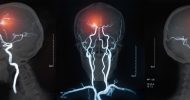
This is how neurologists feel when you call a stroke a cerebrovascular accident, or a CVA. It’s just … not what we do. Maybe it was in 1992, and maybe it is in the world of billing and coding, but it’s not 1992, and billing and coding have never made sense.
If we did call it a CVA, there’d be a high-impact factor journal called CVA instead of one called Stroke. And the International Stroke Conference (ISC) that brings together hundreds of thousands of stroke (not CVA) neurologists from around the world would be called the ICVAC. That acronym is just not as sexy or easy to say, you get the drift.”
Aleksandra Yakhkind is a neurointensivist.
She shares her story and discusses her KevinMD article, “A PSA from a neurologist to the medical community.”
Did you enjoy today’s episode?
Rate and review the show so more audiences can find The Podcast by KevinMD.
Subscribe on your favorite podcast app to get notified when a new episode comes out.
Reflect and earn 1.0 AMA PRA Category 1 CME for this episode.
Also available in Category 1 CME bundles.
Powered by CMEfy – a seamless way for busy clinician learners to discover Internet Point-of-Care Learning opportunities that reward AMA PRA Category 1 Credit(s)™. Learn more at about.cmefy.com/cme-info
Do you know someone who might enjoy this episode? Share this episode with anyone who wants to hear health care stories filled with information, insight, and inspiration.

Hosted by Kevin Pho, MD, The Podcast by KevinMD shares the stories of the many who intersect with our health care system but are rarely heard from.


Transcript
Kevin Pho: Hi, and welcome to the show, where we share the stories of the many who intersect with our health care system but are rarely heard from. My name is Kevin Pho, founder and editor of KevinMD. Today on the show we have Aleksandra Yakhkind. She is a neuro-intensivist, and she wrote the KevinMD article “A PSA from a neurologist to the medical community.” Aleksandra, welcome to the show.
Aleksandra Yakhkind: Thank you so much for having me, Kevin.
Kevin Pho: We’ll get into the article a little bit, but first off, can you share your story and journey to where you are today?
Aleksandra Yakhkind: Sure. So I’m currently a neuro-intensivist in Boston. I completed a neurocritical care fellowship; before that, neurology residency. I’m from the New England area, and I’m really excited to be back.
Real physician voices, twice a week
Free, and one click to unsubscribe.
Kevin Pho: So we don’t have many neuro-intensivists on the show, so tell me exactly what that is and some of the typical cases that you would see.
Aleksandra Yakhkind: That’s a great question. Neurocritical care isn’t super common, but it’s a field in which specialty-trained professionals, including physicians, advanced practice providers, and nurses, work to take care of critically ill neurologic patients. So we take care of patients with large strokes, subarachnoid hemorrhages, neuromuscular disorders, basically anything neurologic that requires a patient to have an airway, so be intubated, or requires frequent neuro checks. Every comprehensive stroke center has to have a neuro ICU, so there are more and more of them as neurointerventional procedures are getting more common.
Kevin Pho: So walk us through one of your typical days. And I’m sure no day is really typical, but take us through a common day and some of the things that you would see.
Aleksandra Yakhkind: Yeah, so our neuro ICU has about 10 to 15 patients a day. So I come in at 6 a.m., and I round with neurosurgery as well as our fellow and our residents. And we work really, really closely with neurosurgery, because we see a lot of their postoperative cases too, and so it’s a very collaborative environment in that sense. And then we have some sort of didactics, education, and then we round on the patients like you would in any other ICU, and more education following. And this kind of is different from some of the non-academic models that are out there, where sometimes you have more patient volume and less education, but it does vary.
And unfortunately, we see really, really sick patients, so patients who come in with some large brain bleeds, and a lot of our day has to do with talking to families about what this means. It’s often the worst day of their lives, something they couldn’t imagine, and we have to walk them through what’s going to happen from there on out.
Kevin Pho: So tell us about some of the rewards and challenges of being a neuro-intensivist.
Aleksandra Yakhkind: There are two main things that I find rewarding. So it’s a really team-based environment. The nurses who take care of these patients are specially trained, and often they’re the first eyes on the patient. They’re the ones who are in the room all the time, so we rely heavily on them and their neuro exams to tell us what’s going on with the patient minute to minute. And the second thing is this communication with families. It’s challenging, but it’s also really, really rewarding to be able to guide families through this in a way that, to the best of my ability, I can prevent secondary trauma that’s associated with having family members in the ICU. So those are the things. And obviously, I’m a neurologist; I nerd out about localization and all things brain, so that’s another thing that I love about it.
Kevin Pho: So what are some of the challenges that you face?
Aleksandra Yakhkind: The difficult cases, they stick with you, and I’m still learning how to incorporate that into my life and how to process that. One thing I was thinking about recently is how, especially when you work in critical care, you lose a lot of patients, but patients as in, you know, people you take care of. And I remember in medical school, we had this tradition where we had anatomy lab, and we honored the people who donated their bodies for it. But we don’t really do that. We don’t have any kind of ceremony surrounding the patients that we lose. And I’ve recently been thinking about how to incorporate that, to be able to kind of process this really heart-wrenching experience sometimes.
Kevin Pho: All right, let’s transition into the KevinMD article that you wrote. It’s titled “A PSA from a neurologist to the medical community.” Now, for those who didn’t get a chance to read your article, can you just walk my audience through it and share the story of why you decided to write it?
Aleksandra Yakhkind: Sure. I’ve noticed over the years that people outside of neurology tend to call strokes CVAs, and people within neurology don’t love it, and there’s a disconnect, and I wanted to put us all on the same page. The main goal, overarching, was to draw awareness to stroke, and that for people who don’t see it all the time, it has changed over the years. There are interventions and procedures that have taken this from a disease state with a dismal prognosis to something that can be cured and intervened upon. So that was the goal.
Kevin Pho: Yeah, so tell us why. Why don’t neurologists like the term cerebrovascular accidents, CVAs?
Aleksandra Yakhkind: Yeah, so CVA, or cerebrovascular accident, neurologists don’t like that term because strokes are not accidents. We know what causes them. We know that there are risk factors, the same kind of risk factors you have for heart attacks, so high blood pressure, hyperlipidemia, diabetes. And yes, they happen suddenly, but they’re certainly not accidents. And our whole job, and especially that of stroke neurologists, is to figure out what that cause is and to prevent it from happening in the future. So it kind of takes away from the science behind it.
Kevin Pho: So should we just call them hemorrhagic or ischemic strokes? What’s the right way that we should be addressing this condition? Because I have to admit, I’m guilty of calling strokes CVAs.
Aleksandra Yakhkind: Yeah, no, that’s a great question. And it’s something that came up in my mind after I wrote this: Where did the term stroke even come from? And there’s not a lot written about it. What I found was that it showed up in the Oxford dictionary around the 1500s, and it implied palsy that happened by the stroke of God. So is that even the best word? Because it’s something that isn’t stemming from a scientific background.
At the same time, you have your International Stroke Association, you have a journal called Stroke. So it’s a term that, despite its origins, has really taken on its own definition and its own life. So I think stroke is something that we can say that everyone will understand, but probably more accurate would be to say cerebral infarction or hemorrhage, because stroke encompasses both of those.
Kevin Pho: So what about transient ischemic attacks? Is that term OK by neurologists?
Aleksandra Yakhkind: Good question. It is, yeah. Although something to note is that sometimes you can have a clinical transient ischemic attack but then actually have a stroke on your imaging, in which case it becomes a stroke.
Kevin Pho: So I’ve heard some people refer to transient ischemic attacks as, quote unquote, “mini strokes.” What do you think about that?
Aleksandra Yakhkind: This all gets into the language and the weight of meaning that certain words carry. But it’s not very accurate, because “mini” means small, so some people, especially patients, might get confused. They might think, “I had a small stroke,” but actually they had a TIA. So I think it’s a little misinformative.
Kevin Pho: So you have an audience of clinicians here, a lot of them in primary care. What are some things about neurology, or some messages other than this PSA, that you want them to know about?
Aleksandra Yakhkind: Just that a lot of people are scared by neurology because they think it’s a depressing field where patients don’t do well, but that’s really not the case anymore. Not just with stroke, but with MS and Parkinson’s disease, you probably have patients who you wouldn’t know have these diseases, because their symptoms are very well controlled. And so I would want primary care providers to know that we’re a field that is really on the edge of research and trying to make lives of patients with these conditions better, and that there’s a lot out there, and to keep learning, just like it is my job, in my field, to be learning about primary care as well.
Kevin Pho: We’re talking to Aleksandra Yakhkind. She is a neuro-intensivist, and she wrote the KevinMD article “A PSA from a neurologist to the medical community.” Aleksandra, we also have a lot of medical students who listen to the show. If they’re interested in neurology or even pursuing neurointensive care, what are some character traits, some characteristics, that they should have if they’re eager to pursue this field?
Aleksandra Yakhkind: There are lots of different kinds of people who go into neurology. Some people might not even know that there are many subspecialties within neurology. So there’s neuroimmunology, so if you’re interested in the intersection between your immune system and the brain and the central nervous system, that’s one way that you could go. You could do neuroinfectious disease. You could do neuromuscular, or intensive care or stroke, which are more inpatient types of specialties.
I think something that’s important to know for students is that the neurology exposure that you might get in medical school almost certainly doesn’t represent the entire field. So if you happen to be placed in a cognitive neurology clinic and you only see patients with Alzheimer’s disease, that’s very different than what I do, for example. So if you have an interest in the brain and in neuroscience, then explore your options. Talk to different subspecialists, to experts, about what the options are.
And the other thing, just for trainees in general, is to think about not only what your interests are but what your day-to-day life will be like. So I loved neuroscience and the brain when I was an undergrad, and knew going into medical school that I would focus on one of those specialties. But then when I got to residency and I saw that most of the practice was clinic, outpatient-based, I thought, “Whoa, this isn’t for me.” I love being in the hospital; I love the fast-paced environment. And then I found neurocritical care. So it’s out there. And think about what you want your day-to-day life to be like, how you’ll be fulfilled, and kind of find a way to combine that with your passion.
Kevin Pho: And my final question, what are some of your take-home messages that you want to leave with the KevinMD audience?
Aleksandra Yakhkind: Yeah, so I think we talked about a lot of them, but my goal was to draw attention to stroke as a disease state that has changed drastically over the years, and that at the end of the day, no matter what we call things, we are all on the same page, where we’re working towards the same goals of taking the best care of our patients. So we might as well keep learning from each other and how to make our care and our communication align.
Kevin Pho: Aleksandra, thank you so much for sharing your time and insight. Thanks again for being on the show.
Aleksandra Yakhkind: Thank you.
Listen and followApple PodcastsSpotifyYouTubeMore apps · Browse all episodes