




Listen and followApple PodcastsSpotifyYouTubeMore apps · Browse all episodes
“I know how different my experience is. I am not facing potentially debilitating treatment(s) or the fear of death. Still, I am experiencing a physical transformation, a redefining of my feminine self, yet I do not feel as if I have the ‘right’ to be scared, saddened or supported. This is a “me” problem but raises the broad need for inclusivity, acceptance, and support in general and by health care professionals.
I no longer have breasts. Pathology confirmed for me that this was the right choice — no cancer yet. Findings indicated that it was ‘just a matter of time.’ While I truly have no regrets (even looking at my now truly, scarred flat chest) my vanity is still an issue. Time, a lavish, beautiful tattoo of lilacs or orchids and working toward washboard abs to match my washboard chest will help to heal this wound — and, most importantly, no more worries about breast cancer.
The guilt and doubt still linger, but then I see the relief in the faces of my family and understand that preventive mastectomy (and going flat) may not be right for everyone, but it was right for me.
I am not a survivor, not a previvor, but a preventer.”
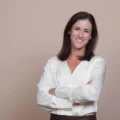
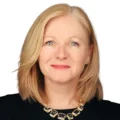
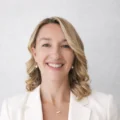
Nanette Elster is a bioethicist.
She shares her story and discusses her KevinMD article, “Not a cancer survivor, not a cancer previvor: Am I a cancer preventer?”
Did you enjoy today’s episode?
Rate and review the show so more audiences can find The Podcast by KevinMD.
Subscribe on your favorite podcast app to get notified when a new episode comes out.
Click here to earn 1.0 AMA PRA Category 1 CME for this episode.
Also available in Category 1 CME bundles.
Powered by CMEfy – a seamless way for busy clinician learners to discover Internet Point-of-Care Learning opportunities that reward AMA PRA Category 1 Credit(s)™. Learn more at about.cmefy.com/cme-info
Do you know someone who might enjoy this episode? Share this episode with anyone who wants to hear health care stories filled with information, insight, and inspiration.

Hosted by Kevin Pho, MD, The Podcast by KevinMD shares the stories of the many who intersect with our health care system but are rarely heard from.


Transcript
Kevin Pho: Hi, and welcome to the show, where we share the stories of the many who intersect with our health care system but are rarely heard from. My name is Kevin Pho, founder and editor of KevinMD. Rate and review the show at kevinmd.com/rate. Subscribe at kevinmd.com/follow. Today on the show we have Nanette Elster. She is a bioethicist, and her KevinMD article is titled “Not a cancer survivor, not a cancer previvor: Am I a cancer preventer?” Nanette, welcome to the show.
Nanette Elster: Thank you, Kevin. I’m happy to be here.
Kevin Pho: We’ll get to the article in a little bit, but briefly share your story and journey to where you are today.
Nanette Elster: Sure. I am a bioethicist. I came to that by way of first being a lawyer and then getting a master’s in public health, where I really got introduced to ethics. My career now intersects. I’m a professor, an associate professor at Loyola’s Neiswanger Institute for Bioethics. A good part of my career has focused on families and genetics, the intersection of genetics and family and ethics. In particular, I’ve spent a lot of time looking at issues related to how genetic testing and screening might impact families, and following what transpires when there’s a family that experiences a diagnosis of breast cancer and/or learns that they have a BRCA mutation in their family.
My family happens to be one of those families. I worked in the field for years before this actually even became an issue, and so for a long time I’d been emotionally preparing, professionally preparing, for what it means to learn this information. It was interesting to me when I first underwent BRCA testing that in fact I did not test positive but had an uncertain result, and then from there I got retested and thankfully did not test positive for the mutation that was found in my family.
So it came as a bit of a surprise to me that I, without a BRCA mutation, actually had a greater than 50 percent risk of breast cancer, based on a number of other factors, combined with a very profound cancer risk in my family overall, with a range of cancers, being of Ashkenazi Jewish descent. I came to the decision, on which my article is based, to have a prophylactic mastectomy.
Real physician voices, twice a week
Free, and one click to unsubscribe.
Kevin Pho: We’re going to talk more about your story and article in a little bit, but first off, just through your lens as a bioethicist, given that example that you brought up with a BRCA-positive genetic history, what are some of the ethical questions that you commonly come across in that scenario?
Nanette Elster: Sure. One is, who do you tell? Do you have an obligation to tell? And it’s not just who the individual tells, but what about a physician who may have a relationship with multiple family members? That actually happened to me. I was treated by a physician who also treated the member of my family who is BRCA-positive. We’d all been seeing the same physician for a number of years, so she knew that my relative had tested, but she also knew my relative hadn’t told me. I had had some other issues going on, and her quandary was: How did she encourage me to get tested, to consider prophylaxis, without sharing my family’s experience? So that disclosure piece is one of the big, big ethical questions.
The next ethical question, especially if one’s in a relationship, is how do you go about making future decisions, future reproductive decisions, for example? Some of the prophylaxis a woman might experience might be a prophylactic mastectomy or a prophylactic oophorectomy. If one’s in a relationship, or even not, but contemplating their future reproductive options, what choices are available given today’s climate? If one chooses, for example, to freeze eggs and then have their ovaries removed, would those reproductive options now be more limited? So these are some of the ethical questions, and as you can tell from my response, they keep evolving with the climate and culture around us.
Kevin Pho: How do physicians reach you to help guide them through these ethical questions that often come up, especially in cases like this?
Nanette Elster: Often the practitioner doesn’t reach out to a bioethicist. Often we come upon consults if we work in a hospital setting. I am not an ethics consultant per se. It’s work that I’ve done, but what I do is write and speak on these issues. I’ve given talks to groups of genetic counselors, to community groups, to groups of physicians. I’ve given grand rounds. So those are the ways that that information gets discussed, and really talking it through. I have rarely experienced an ethics consult on this, because these often happen outside the hospital setting and are more in a private practice setting, and so they may not come up. So thinking through what the dynamics are is important.
Now, genetic counselors are integral to this discussion. They have the training, they have the expertise, and very few people would go through this kind of screening and process without meeting with a genetic counselor. So I think that’s really a key component to getting the information and talking through these familial relationships, the reproductive options, even some of the social implications. Will this impact insurance? Will it not? Typically, with the advent of GINA, the Genetic Information Nondiscrimination Act, as well as the vast majority of states that have laws preventing genetic discrimination in employment and insurance, we won’t be seeing this. But it’s still a concern. It’s still something people worry about, and so it needs to be discussed.
Kevin Pho: And you illustrate more about these issues in your story, which you talk about in your KevinMD article. It’s titled “Not a cancer survivor, not a cancer previvor: Am I a cancer preventer?” Now, for those who didn’t get a chance to read your article, just walk my audience through it and share the story of why you decided to write it.
Nanette Elster: I decided to write it because at first it was just a little bit of a personal catharsis, having had a month of uncertainty followed by a six-month waiting period until I was able to take some action. It started out as what I thought was minor, and it took me a couple of weeks. I had some fluid leaking from my breast. I didn’t think much of it at first, and I thought, “Well, maybe I should call my doctor. I don’t want to be an alarmist, but let’s call.” I called her. She said, “Let’s get you in for an ultrasound and see what’s going on here.”
I couldn’t get that ultrasound appointment. Now, remember, this is still with COVID going on, so appointments are tough everywhere. I called for the ultrasound, and they kept saying, “Well, you’re not due for your mammogram yet. We can’t do an ultrasound without it.” And that was again going to be a three-month wait until I was due for my mammogram. I called my doctor back. She’s like, “This is ridiculous. I think you need a diagnostic ultrasound.” So I was able to get an appointment about three weeks later.
I went in. First they do a mammogram, followed by the ultrasound. I left the mammogram and was shuffled into another room, where I underwent the ultrasound, and the radiologist, without really much more than introducing himself, said that he noticed a mass at three o’clock. So of course, that’s a bit alarming, and from that moment on I really didn’t hear much other than, “Let’s schedule this, let’s schedule that.”
So through a range of biopsies, ultrasounds, and MRIs, we discovered not only a benign condition in that breast, thank goodness, but discovered that in the other breast there was a very high-risk condition called atypia, combined with a few other things. And so one thing led to another, and I went from doing maybe monitoring or screening to learning that I had this high-risk condition. Even before I learned of the high-risk condition, I went to see a surgeon, and she shared with me, through an algorithm, putting in a whole lot of information, that my risk was 49. That’s before even learning of this high-risk condition: My risk of breast cancer was 49.
My husband was with me when I heard this information, and it just kept playing in my head. He looked at me like, “That seems really high.” He’s a bioethicist. He’s an attorney. He’s very well informed. He’s like, “This sounds really high to me.” So we talked it through. I talked to my doctor, who made the referrals, and just thought, “You know what? Let’s have this mass removed. No messing around. And maybe it’s time to think about a prophylactic mastectomy.”
So with that, I scheduled the lumpectomy on the one side. Again, preparing for that, I did some more screening, found something on the other side, the left side, and then at the very 11th hour, from a Friday to a Monday, I opted to do a double lumpectomy, one in each breast. Upon getting all of that pathology back, the decision was then made that I just couldn’t go through this again. Every six months I’d be having a mammogram or an MRI, and given what those mammograms and MRIs led to, multiple biopsies and two lumpectomies, I said, “I can’t really spend the rest of my life doing this. I’m busy. I don’t want to think about it. I don’t want the emotional turmoil. Let’s just move ahead and do this.”
I scheduled it at a time that worked for me. I felt a little bit like I was a control freak, but I wanted to have time off to recover. I wanted to just be able to have a plan. So as soon as my summer session started, I went ahead with the surgery. Thankfully, it was very straightforward. I was back at work truly the next day. I work remotely, so being back at work was pretty easy. I have recovered very easily, thank goodness, much thanks to a wonderful surgeon and a lot of familial support. But getting that pathology back, I learned that really it was not a matter of if I was going to develop cancer, but a matter of when. And so the relief has been tremendous.
But now, in the aftermath, thinking this through, and even looking up things like, “Is this normal recovery?”, all of these things relate to someone who has cancer: “As a cancer patient, this is what you can expect to experience,” and moving on to treatment for cancer. So even when I’m looking or googling to say, “Should I still have this? Should I discover that pain, what do I do?”, it’s all related to the cancer treatment that I should be receiving after my mastectomy.
Now, there’s a little bit of information for those who are previvors, people who test positive for BRCA and choose to move forward with the prophylaxis. But even looking to schedule an appointment to get fitted for a prosthetic, everything I read is about helping me through my cancer journey: the support that I need, all of the other therapies, treatments, and things that I might need in undergoing my cancer treatment. That’s caused me to feel a little bit guilty, a little bit hesitant, like, “Should I do this? Is this a resource that shouldn’t be available to me?” This was a conscious choice. It got me thinking through this idea: I’m a public health professional. We think about prevention. This is an important step, and maybe it needs a little more support.
And then I also learned, and I was lucky, I had supportive medical care, that choosing not to do reconstruction is often something women going through this are not supported in, their journey to not go ahead with reconstruction. I have a very small frame. I also have an underlying autoimmune condition, so I did not want further surgeries. I did not want to be more at risk, and I really felt like, at my age, did I really want to go through reconstruction? I opted not to. It’s not a decision I can go back on later and then do reconstruction, because of the procedure that I had.
Like I said, I was lucky. I had a surgeon who completely supported that, and I feel good about that choice. But I know that there are other women out there who might not, and that’s a longer journey, and it’s more risk, and it’s potentially more expense. So if I’m not a cancer survivor, if I’m not a previvor, was insurance going to cover all of this? And then, if I did choose to go ahead with reconstruction, was that going to be another layer where I might not have had insurance coverage?
So my point in writing this and sharing the story, what started as catharsis, became much more about opening up the discussion about leaving choices available, stewardship of resources, supporting the decisions that individuals make going through this process, and knowing that there’s really more than one way to look at this.
Kevin Pho: Well, there’s no question that a series of life-changing decisions came at you very, very quickly, and you’ve had multiple conversations with not only your husband but the medical team in terms of navigating the ethical quandaries of each of these decisions. I was wondering if I could ask you to take us into one of those conversations. When you’re talking about the implications of the treatment course, what were they like? What were those discussions like for you?
Nanette Elster: They were a little hazy at the moment, I have to say, and as I said, I had a lot of support. I have a very close relationship with my aunt, who is not only a survivor of breast cancer but a previvor, so she’s been through it on both ends. She’s the only one who knew at the very beginning what was happening, and her support was invaluable. I really can’t say enough about it. When I told her the direction I was thinking of going, before I shared it with anybody else, she’s like, “I support you 100. If I had the options, I would have taken them. I’m so glad that you’re thinking about this in this way.”
And then, as soon as I mentioned it in that very casual conversation with my husband in the car, leaving the surgeon’s office, he was on board. I wasn’t sure if he’d be hesitant. I forced him to sit down at the computer with me and look at some pictures, especially as we were talking about not going through reconstruction, and asked him if this was OK. How was he going to feel? Was he going to feel differently about me? Was he thinking this should just be my decision? Should it be our decision? How do we go about making this together? And he was just so supportive. He looked at it with his bioethicist lens too, and so it’s kind of difficult when you’ve got two professionals who face these kinds of issues, at the same time thinking about the personal implications.
I don’t think there was a moment’s hesitation, and so far, to be honest with you, I’m a month out, so not very far along in this process, but I can honestly say so far: no regrets, a lot of relief, and just more of a commitment to making sure that we’re looking at this from a big-picture perspective, so that people can make the choices that are best for them at the time in their life. My only hope is that anybody going through this has the medical support that I had: the surgeon, my OB/GYN, my husband, my family. Those elements of support mean so much in the decision-making process as well as the recovery.
Kevin Pho: We have a lot of clinicians who are listening to this podcast and listening to your story. Now, from your perspective, what’s one thing that they did particularly well, and is there anything that you felt could have been improved upon?
Nanette Elster: I think in the whole process, the thing that went really well was the open and accepting approach of my surgeon. She gave me all the options. She listened to me. She helped me and my husband make a decision that was best for us. Again, the bioethicist came on. When we talk about informed consent, we talk about understanding a patient’s goals and values, talking about risks, benefits, and alternatives. All that couldn’t have gone more perfectly. It was sort of a picture-perfect example of how I would hope informed consent could happen: understanding me, my needs, what was important to me, laying out all of the options, and then applying them through my lens, from her understanding. That meant the world to me.
What could have been done a little differently was probably in this process of getting to where I got: that moment of being in that first ultrasound and hearing that you have a mass at three o’clock, without any more than that, without any level of trying to ease that concern. And we were talking days before Thanksgiving, so a holiday coming up, and not knowing what direction to go or what that meant. I think we all do this in our professions. We get so used to certain things that we forget that to an outsider it may be new, and it may come as a surprise or a shock, and a certain level of humanizing the experience and sensitivity is really important. So that would be the only small piece that I think I would want to have seen changed.
Kevin Pho: We’re talking to Nanette Elster. She’s a bioethicist, and her KevinMD article is titled “Not a cancer survivor, not a cancer previvor: Am I a cancer preventer?” Nanette, for those who are undergoing a similar situation and journey to what you went through, do you have any advice for them?
Nanette Elster: I do. Make sure you’re working with a team that supports you. Thankfully, there are a lot of options out there now, but not everybody has access to them. There are some good resources available online, people’s personal stories. But if you find someone you’re not comfortable with who’s treating you, and there are other options, explore those, second opinions. Reach out to support groups, others who’ve been through the journey who might be able to share.
Personally, I’ve gone so far as to be willing to show someone who’s thinking about this, and not opting for reconstruction and doing an aesthetic flat closure like I opted for, to let them see what it looks like. It’s not something I would do publicly, but I think for some people, what you see, I mean, what I saw online, was a little jarring. I wasn’t sure what to expect. The day that those big bandages came off was, I would say, the one day in all of this that the emotions really sprang to the surface for me, and I couldn’t look. But by the next day I felt a little more comfortable, and it’s much less shocking than I could have imagined. And so find the comfort where you need it. I think that’s really what I would say.
And for those practitioners who may not have considered all the options, reach out to others in the community. Oncoplastics, for example, is pretty emerging as a field. It’s not as established as others, but those who work in oncoplastics have a lot of information to share, and know what options might work best for some, talking through all those options and thinking about what’s right for that person in that moment.
Kevin Pho: And my final question: What are some of your take-home messages that you want to leave with the KevinMD audience?
Nanette Elster: I guess what I learned in this process is that it’s different for everyone. Your past, your present, and your future all influence that decision-making. For me, having lived through so much cancer in my family, I knew that early detection was not going to be OK with me. I would have ended up in the same place, with a mastectomy, but then adding something like chemo and radiation to the mix. Having watched that through numerous relatives with different kinds of cancer, I didn’t want to do that. I have a 20-year-old daughter. She’s my only child. I did not want to put her through that. So for me, this was absolutely a good choice.
For others, who may not be quite as risk-averse as I am, watching and waiting might be sufficient and give peace of mind. So I do think it’s different for everyone, but I think it’s important to think through the iterations and have people you can talk to, medical professionals who support your decision-making, because that makes the whole process a lot easier.
Kevin Pho: Nanette, thank you so much for sharing your story, time, and insight. Thanks again for being on the show.
Nanette Elster: Thanks, Kevin. I really appreciate it.
Listen and followApple PodcastsSpotifyYouTubeMore apps · Browse all episodes