“Congratulations, you don’t have MS.”
That’s what Christina Applegate’s doctor told her, five years after she was diagnosed with multiple sclerosis (MS). Newer technology had ruled it out. On her podcast this week, she described how everyone around her was thrilled, and she wasn’t. She still needs a wheelchair to get from the car to the exam room. Nothing magical happened when she heard the news.
I’m not her doctor, and I won’t guess what she has. But I’ve had versions of this conversation in my own exam room, and I don’t think we talk about it enough.
When a patient isn’t relieved by good news, it’s easy to read that as ingratitude. It isn’t. It’s grief.
Real physician voices, twice a week
Free, and one click to unsubscribe.
A diagnosis gives you a name. A community. A roadmap. It’s the word on the Family and Medical Leave Act (FMLA) paperwork and how you find the support group at 2 a.m. When a diagnosis gets taken away, even with good news attached, all of that goes at once. It’s like having the rug pulled out from under feet that were barely steady to begin with.
I see this with Sjögren’s, rheumatoid arthritis, lupus, and common variable immunodeficiency. A diagnosis gets quietly walked back because an antibody came back negative on repeat, a new doctor read the chart differently, or, frankly, the clinical picture evolved into something else. These patients don’t come in relieved. They come in terrified, because “you don’t have X” can turn into, or at least sound like, “there’s nothing wrong with you.” Sometimes the medications get stopped along with the label. I’ve seen that lead to significant flares of arthritis and neuropathy, and to serious infections.
I take labels off all the time, and usually it’s great news. Most people who carry a penicillin allergy label aren’t truly allergic, and removing it opens up better antibiotics. When a child outgrows a food allergy, the whole family celebrates. But in those cases, the person walks out healthy, with more options than they came in with. When an autoimmune diagnosis gets walked back, the patient is usually still sick, and often has fewer.
Getting MS wrong isn’t rare. When researchers at Cedars-Sinai and UCLA looked at 241 patients referred to their MS centers with a diagnosis already in hand, about 18 percent didn’t meet criteria and had something more likely going on. Nearly three-quarters of them were already on MS treatment.
We learn about premature closure early in training. You land on a diagnosis that fits well enough, and your brain stops looking. All of us have done it. The diagnoses we miss are the ones we don’t think about.
Once a diagnosis is disproven, we risk closing the case a second time. “Not MS” becomes the end of the workup instead of the start of a new one, and the patient goes home with a negative result and no plan.
The list of conditions that can mimic MS on MRI is long: migraine, small vessel disease, neuromyelitis optica and MOG antibody disease, sarcoidosis, vasculitis, infections, B12 deficiency, and systemic autoimmune diseases like lupus and Sjögren’s. When MS doesn’t explain the whole picture, or gets ruled out, we need to revisit that list.
Sjögren’s is my go-to example, partly because it’s my specialty and partly because it’s my diagnosis. Most of us were taught it as dry eyes and dry mouth, because that’s what sets it apart on a board question. In real life, it affects the whole body and can cause motor and sensory neuropathies, autonomic dysfunction and ganglionopathy, brain fog, and fatigue that doesn’t match the labs. It can affect the brain and spinal cord too, with white matter lesions, myelitis, or optic neuritis. Plenty of patients have very little dryness, at least at first. Many are antibody negative. And there’s no single test that gives you a clean yes or no the way a pregnancy test does.
I’m an immunologist, and I lived with Sjögren’s for sixteen years before anyone put a name to it, including me. I had colleagues down the hall and every resource you could want. It just wasn’t in the room.
So I’ve started using the phrase “working diagnosis” with my patients, out loud. It means this is our best explanation based on what we know today. We talk about what fits, what doesn’t, and what would make us rethink it. These diseases look different from person to person and from year to year, so I tell patients up front that the label may change.
If you’re the one delivering a revised diagnosis, here’s what I’ve found helps:
- Ask before you celebrate. “How are you feeling about this?” tells you whether the news lands as relief or loss.
- Tell them their symptoms are still real and you’re not done.
- Don’t stop treatment just because the label changed. Make that a separate decision.
- Leave with a next step: a referral, a test, a date to reconvene.
- Write down what never fit, and give the patient a copy, so the next doctor isn’t starting over.
None of this comes naturally. Our brains hate uncertainty. It feels icky, and our nervous system reads it as a threat. People are more stressed by a shock that might come than by one they know is coming. I’m not immune to it either. I gave grand rounds warning colleagues about supplement hype, and when I was sick and scared, I still bought a “superfood” that ended with a piece of my liver under a microscope at the National Institutes of Health (NIH). Waiting felt like giving up, so I grabbed the first thing that felt like solid ground.
In allergy, we learned the fix the hard way. We told parents to keep peanuts away from babies, and peanut allergy went up. Kids who ate peanut early and often built tolerance. Using the words “working diagnosis” is that small dose. It lets patients and doctors practice sitting in the uncertainty together, with a plan in hand.
So if you’re in the room when a diagnosis changes, skip the congratulations. Try something closer to this: I believe you, and we’re going to keep looking.
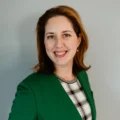
Kara Wada is a quadruple board-certified pediatric and adult allergy and immunology, lifestyle, and functional medicine physician, a Sjögren’s disease specialist, and a Sjögren’s patient herself. She spent nine years on faculty at The Ohio State University Wexner Medical Center, where she served as associate program director of the allergy and immunology fellowship and led the Mast Cell Center of Excellence.
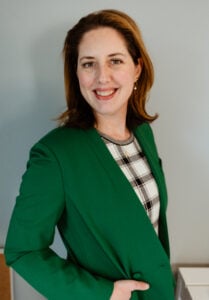
In 2025, she left academic medicine to build the kind of practice she could not find as a patient: the Immune Confident Institute, a national direct-care immunology practice licensed in 27 states. She treats the patients the health care system sends ping-ponging between specialists, people with complex, chronic, multisystem disease including mast cell activation syndrome (MCAS), dysautonomia, Sjögren’s disease, immune dysfunction, and the seronegative and “in-between” diagnoses that do not fit neatly into a single specialty.
Her premise is simple: These patients are not the problem. Fragmented care is. Medicine has become exceptionally good at looking through microscopes while losing sight of the telescope, the bigger picture of the person in front of us. Her work challenges a health care culture that demands compliance when it should assume competence, and aims to make strategic, compassionate immune-directed care the standard, and the exam room a place where patients are finally seen, heard, and believed.
Most of her reach is built outside the exam room. Her YouTube channel drew roughly two million views this past year, and more than 100,000 people follow her work across platforms, including a Sjögren’s community of about 6,600. She founded and hosts the Virtual Sjögren’s Summit, now in its sixth year and drawing some 4,300 registrants worldwide. She appears regularly on national television and in the health press, including Prevention, SELF, Good Housekeeping, WebMD, Medscape, and MedPage Today, and she writes for KevinMD on the diagnoses that live in the shadows and the medical gaslighting that surrounds them.
A TEDx speaker and sought-after keynote, Wada speaks to clinician and patient audiences about complex immune disease, the experience of being disbelieved, and what changes when the physician is also the patient. She is also an unlikely pageant titleholder, having served as Dr. Ohio America 2022 and Dr. Midwest America 2023, and has written about how pageantry sharpened skills medicine rewards but rarely teaches.
She earned her medical degree with honors from the University of Illinois College of Medicine at Peoria and completed internal medicine-pediatrics residency, allergy and immunology fellowship, and clinician educator fellowship at The Ohio State University and Nationwide Children’s Hospital. She lives in Columbus, Ohio, with her medical school sweetheart turned husband, Akira, and their three children.