Post Author: Gerald Kuo

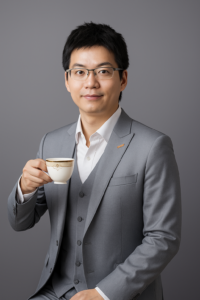
Gerald Kuo, a doctoral student in the Graduate Institute of Business Administration at Fu Jen Catholic University in Taiwan, specializes in health care management, long-term care systems, AI governance in clinical and social care settings, and elder care policy. He is affiliated with the Home Health Care Charity Association and maintains a professional presence on Facebook, where he shares updates on research and community work. Kuo helps operate a day-care center for older adults, working closely with families, nurses, and community physicians. His research and practical efforts focus on reducing administrative strain on clinicians, strengthening continuity and quality of elder care, and developing sustainable service models through data, technology, and cross-disciplinary collaboration. He is particularly interested in how emerging AI tools can support aging clinical workforces, enhance care delivery, and build greater trust between health systems and the public.

Gerald Kuo, a doctoral student in the Graduate Institute of Business Administration at Fu Jen Catholic University in Taiwan, specializes in health care management, long-term care systems, AI governance in clinical and social care settings, and elder care policy. He is affiliated with the Home Health Care Charity Association and maintains a professional presence on Facebook, where he shares updates on research and community work. Kuo helps operate a day-care center for older adults, working closely with families, nurses, and community physicians. His research and practical efforts focus on reducing administrative strain on clinicians, strengthening continuity and quality of elder care, and developing sustainable service models through data, technology, and cross-disciplinary collaboration. He is particularly interested in how emerging AI tools can support aging clinical workforces, enhance care delivery, and build greater trust between health systems and the public.
Consider Mrs. Chen, an 82-year-old woman discharged home after a minor ischemic stroke. On paper, her care plan was flawless.
Her physician intensified her antihypertensive regimen to protect vascular health (medication). Her well-meaning daughter, concerned about blood pressure, switched her to a strict low-sodium porridge diet, unknowingly slashing her protein intake (nutrition). Her physical therapist prescribed a daily walking program to rebuild confidence and strength (exercise).
Two weeks later, Mrs. Chen was …
Read more…
At the height of the COVID-19 surge, many hospital leaders faced moments they will never forget. Beds were nearly full. Staff were exhausted. Supplies that once felt routine suddenly became scarce. In those moments, decisions had to be made quickly, often based on experience, instinct, and whatever information was available at the time.
We like to believe that good leadership means trusting our gut. In clinical medicine, intuition matters. Years of …
Read more…
I used to think the hardest part of building better health care was securing funding.
Then I watched the same cycle repeat itself: A promising pilot launches, early outcomes are celebrated, a report is written, and when the funding period ends, the program quietly disappears. The idea did not fail. It simply could not survive.
Nothing was wrong with the clinicians involved.
Nothing was wrong with the intention.
What was missing was a system.
Health …
Read more…
For years, hospitals have been urged to modernize. We are told to digitize workflows, optimize performance, and rely on dashboards and algorithms to improve efficiency. Much of this advice is reasonable. Medicine cannot function without systems.
But recently, while observing hospital transformation from within, I began to feel a familiar unease, one I had encountered before outside of medicine.
It reminded me of how digital platforms operate.
Platforms are not inherently unethical. They …
Read more…
On a winter evening in Taipei, random violence erupted across two of the city’s busiest metro stations. Within minutes, lives were lost, dozens were injured, and a familiar cycle followed: shock, fear, calls for more security, and questions about public safety. But for those of us in health care, this should not be framed as a failure of policing alone. It should be recognized for what it truly is: a …
Read more…
Medicine is getting faster, louder, and more efficient, and many of us feel something quietly slipping away. We talk about burnout, moral injury, and depersonalized care, but the deeper question is often left untouched: How do we keep the soul of medicine alive while building systems that must scale?
I encountered that question in an unexpected place, not in a policy meeting, not in a spreadsheet, and not in an architectural …
Read more…
When I first began working with clinical AI tools, I felt the kind of excitement many young clinicians and researchers feel today. For the first time, it seemed possible to reduce cognitive overload, surface hidden patterns, and give clinicians more time to focus on what mattered most: patients. AI felt less like a threat and more like a long-awaited collaborator.
As a young clinician-scholar, I did what many of us do. …
Read more…
I have spent years working with older adults in community and home-based care. During that time, I learned that one of the most stubborn barriers to health is not a rare disease, a complex guideline, or even a lack of services.
Sometimes, the barrier is a piece of paper. A flyer that an 80-year-old cannot read because the font is too small, a brochure filled with medical jargon that confuses more …
Read more…
Last month, a daughter called our care center in panic. Her mother, who lives with early dementia and mobility problems, needed support immediately. She had already contacted five agencies. All of them gave the same answer: “We have caregivers, but they are not allowed to work here.”
Not because the workers lacked skills. Not because the families were difficult. But because recent regulations now restrict long-term care workers to a single …
Read more…
Most discussions about cannabis stay on the surface: legality, crime, or medical claims. But the core question is this: What suffering does a society allow? After watching a recent documentary with police, lawyers, physicians, and families, I found cannabis is the stage. The real drama is the system behind it. When ethics is pushed far, inconsistencies become impossible to ignore.
1. Legal ethics: When the law punishes pain instead of harm
Some …
Read more…
Across conferences and journals worldwide, we repeat the same aspiration: Health care must shift from treating disease to promoting health. Yet most systems (regardless of country) remain architected around illness. Buildings, budgets, and workflows are still optimized for what happens after the body breaks down.
My perspective changed after speaking with a senior health care leader in Asia. He did not begin by discussing surgical innovation, emergency demands, or reimbursement challenges. …
Read more…
I used to believe that being a good physician meant being generous, flexible, and willing to bend the rules if it helped a patient. I don’t believe that anymore.
The lesson came from a young patient who walked into my traditional Chinese medicine (TCM) clinic one afternoon, looking exhausted, embarrassed, and desperate.
He needed a powdered herbal preparation that cost around NT$7,500 (about $230). He stared at the ground and whispered, “Doctor, …
Read more…
Innovation in health care is often described in technological terms (new devices, advanced imaging, digital platforms). But some of the most meaningful forms of innovation happen quietly, inside small hospitals struggling to survive.
This is the story of a community hospital in Taiwan that once faced collapse, and the unexpected lessons it offers to health care leaders everywhere.
Looking for a way forward
In the late 1990s, the hospital was in serious decline. …
Read more…
Last winter, a senior nurse in our psychiatric unit told me, “The dashboard says we’re low-risk. But during night shifts, I don’t even feel safe walking to the bathroom.”
The monthly quality report on her desk said the same thing it had said for nearly a year: “Violence incidents: no significant difference among the three wards (p > .05).”
On paper, her ward looked normal. At the bedside, it was anything but.
Her …
Read more…
He spent his youth memorizing lungs. That was how he learned chest X-rays, not by chasing abnormalities, but by studying thousands of perfectly normal films until his eyes could sense when something was ever so slightly wrong. “If you don’t know normal,” he would tell residents, “you’ll never understand abnormal.”
He was a chest physician, not a radiologist, yet his skill with chest imaging became legendary. At Taipei Veterans General Hospital, …
Read more…
The day before the attack, a senior physician at a Catholic university hospital in Taiwan sat with young medical students at noon, talking not about lawsuits or hospital finances, but about Brahms. He loved four-hand piano pieces, especially Brahms’s Hungarian Dances, and he would explain how two players must breathe together, listen to one another, and balance passion with discipline. For him, this was also a lesson about medicine: You …
Read more…