

Listen and followApple PodcastsSpotifyYouTubeMore apps · Browse all episodes
“Being present is a wonderful thing. It relieves stress caused by focusing on failures of the past and worries of the future. Both realms are unreachable, largely unchangeable. But at the same time, they both entice and tease our minds such that we often find ourselves everywhere, but at the moment as we focus on changing what has already passed or what may (or may not) come to be.
Living as our children model so well, at the moment, has an immediate influence on our health and wellness. Tuning out the constant barrage of news about coronavirus and tuning into what is before you will bring calm, serenity, and a sense that all is okay. It will allow you to enjoy the moment, the small pleasures our senses offer us, things that pass us by when we are lost somewhere else on the time continuum. The touch of an elder, the smell of a blossoming fruit tree, the way the wind feels against our cheek – open up to the present, and it is all there for you.
Just ask the two year olds.”
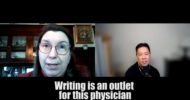
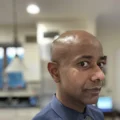
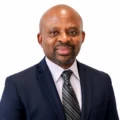
Anthony Fleg is a family physician who blogs at Writing to Heal.
He shares his story and discusses his KevinMD article, “Take a gratitude perspective on coronavirus” and “The superpower of being present.”
Did you enjoy today’s episode?
Please click here to leave a review for The Podcast by KevinMD. Subscribe on your favorite podcast app to get notified when a new episode comes out!
Do you know someone who might enjoy this episode? Share this episode to anyone who wants to hear health care stories filled with information, insight, and inspiration.

Hosted by Kevin Pho, MD, The Podcast by KevinMD shares the stories of the many who intersect with our health care system but are rarely heard from.


Transcript
Kevin Pho: Hi, and welcome to the show, where we share the stories of the many who intersect with our health care system but are rarely heard from. My name is Kevin Pho, founder and editor of KevinMD. And today on the show we have Anthony Fleg. He’s a family physician in New Mexico. He’s a KevinMD contributor. He wrote the articles “The superpower of being present” and “Take a gratitude perspective on coronavirus.” Anthony, welcome to the show.
Anthony Fleg: It’s great to be here, Kevin.
Kevin Pho: So I was wondering if you could start by sharing your story and your journey to where you are today.
Anthony Fleg: Be happy to. I grew up thinking that I might be interested in health fields and actually more gravitated to public health. Following an undergraduate tenure at Haverford College in Philly, I went to teach elementary school, and it was in that process, believe it or not, that it was actually a public health admissions officer at Johns Hopkins that basically sat me down and said, “You know, hearing what you want to do, I think you need to go to med school.” So it was kind of a neat moment, for someone who’s paid to convince people to go to public health to say, “No, no. You might get an MPH later, but you need to go to med school.”
So I’ve always been interested in taking care of populations that are underserved, medically and in the larger kind of way. So that just led me to family medicine through UNC Chapel Hill, and I did end up getting a master’s in public health, and ended up in Albuquerque, New Mexico, where I now serve as a faculty member in family medicine.
Real physician voices, twice a week
Free, and one click to unsubscribe.
Kevin Pho: And how has the pandemic affected you and your practice?
Anthony Fleg: You know, Kevin, in a slightly humorous way, I miss no-shows. I have a conversational style. I like to know my patients really as people and not just as medicalized beings. And so I am really struggling when I have 100 percent of my patients showing. And I know it has a lot of conveniences from a patient’s standpoint, of not having to come into a clinic, but I definitely feel more drained. And I don’t think it’s just that. I think it’s just trying to do medicine feeling like your hands are kind of tied. You don’t have vitals, you can’t get labs, you can’t look at those rashes. And to do that over and over, I think there’s a real mental strain that all of us in medicine, and particularly primary care providers, I think, are feeling right now.
Kevin Pho: Is there anything that you’ve learned over the last few months that you would like to share with your fellow primary care clinicians?
Anthony Fleg: You know, I documented in all of my notes: My first thing to talk about is the patient’s mindset and perspective related to the pandemic. So I think it’s really helped me just get a sense, before we dive into blood sugars or a knee pain, to really get a sense of, “What is your mindset right now? How are you choosing to meet this moment?” And just that question gives me a real window into what the pandemic looks like for them. Some people’s answers are completely inspiring and teach me, and in other people, I can immediately say, “Well, we’re not going to deal with blood sugar control today. We’re going to deal with this. This is just going to be Anthony as a social worker and as a support for this person.” So that’s probably my biggest thing that I think I’ve learned, that if I don’t do it, just maybe at the end of the conversation, I realize everything else I focused on really wasn’t what that person needed at that moment.
Kevin Pho: Sure. So you also started a blog, Writing to Heal, and your two KevinMD articles came from your blog. What was the impetus for you starting to write?
Anthony Fleg: You know, I’ve always enjoyed writing. I’ve been a poet, spoken word poet, and have written kind of from time to time. Medicine, as one of my, admittedly, many excuses, doesn’t allow a whole lot of extra space for sitting to write. And I think it was the convergence of factors and just the intensity of everything that I was seeing around the pandemic, along with just my sense that what I didn’t see enough of were really the other angles: How are we learning from this? How can all of us, regardless of our age and our profession, emerge better people? How are we going to treat our planet better? And as things have emerged, my question would now be: How can we create a more equitable, a more just, a less racist society? And so all of that has, I think, been part of my reason to write and share, but it’s also one of my best ways of grappling with those issues, just for myself, to put it on paper.
Kevin Pho: Sure. So let’s talk about your KevinMD articles. The first one, “Take a gratitude perspective on coronavirus,” it’s a very positive, inspirational piece, and we can certainly use more of that during these times. Can you share the story behind that article and why you decided to write it?
Anthony Fleg: Sitting at the dinner table, I looked at my kids. The question for my 11-, 9-, and 5-year-olds was, “What is this really trying to teach us?” And this was maybe a couple weeks into the pandemic, and my 11-year-old was the first to just very quickly answer, “Appreciate life, appreciate our health, the small things we don’t always think about.” And that to me was profound, in a moment that I was being bombarded by emails and news that had nothing but doomsday kind of predictions. My 11-year-old daughter says that this is teaching us how precious this time on the planet that we get is.
And so from that, I scribbled a piece, and it started kind of a tradition of every Wednesday night, once the kids are in bed, sitting down with a blank piece of paper, nothing really thought out, nothing really carefully researched, and just what comes to me is what I write about.
Kevin Pho: Sure. And what are some of the other topics that you’ve delved into?
Anthony Fleg: A very recent one was a conversation around a garden with a friend, and he kind of commented that the strawberry plant gives you two options. You either cut its flowers and force it to put its energy into growing deep roots, or if you’re really greedy and you want two or three berries that first year, you let it do its thing, but you’re not going to grow a strong plant. And in the moment of all of the unrest, to me that was a very beautiful analogy, that maybe our best thing right now is to grow deep roots into thinking of how we change things, and not necessarily reaching for the one berry that we can get in 2020.
Kevin Pho: Sure. So you wrote a second article, “The superpower of being present.” Again, that article got inspiration from your kids. So tell me again the story of that article and why you decided to write that.
Anthony Fleg: You know, Kevin, most of us in health, and health care particularly, probably would say that 30 to 50 percent of our energy is spent on helping people deal with anxiety and stress, and particularly, and I mean that in the pandemic specifically, anxiety and stress over what’s July going to look like, what’s August going to look like. And I looked at my two-year-old, and in this case I didn’t even need to hear anything. I just kind of had a moment where I thought, you know, if I commanded, in my most fatherly voice, this little one to worry about even 30 minutes from now, much less tomorrow or three days from now, they literally have this superpower that prevents them from living anywhere but in the present.
And almost the idea of channeling that inner child in all of us: You know, I can’t change what happened yesterday, and worrying all day today about what’s going to happen tomorrow or next month ain’t going to change that either. Let’s really just focus, even more so in the pandemic, on being present and being in the present.
Kevin Pho: It’s amazing how much wisdom we can garner from our kids. I have two daughters, a little bit older than your kids, 11 and 15 years old, and sometimes asking about how they see the world through their eyes, to me, is very inspiring.
Anthony Fleg: Yeah, absolutely. They have a lot to teach us if we’re able to listen.
Kevin Pho: So let’s take a step back. Tell me something that you’ve been curious about or something that you’ve been passionate about recently.
Anthony Fleg: I really, as someone who considers myself a movement activist, believe deeply in the power of movement to heal. I think in this moment, and I have a group here in Albuquerque called Running Medicine that does just that. We treat running and movement as medicine for mind, body, and spirit, not just like physical, run your best 5K, but all the other aspects, and I absolutely prescribe it in my work. So just a passion has been, over these last months, how do we now get creative and inspire people to move virtually, even though we’re not meeting in big, exciting groups all together?
Kevin Pho: And my final question, Anthony: What’s your take-home message for the KevinMD audience?
Anthony Fleg: Find what inspires you. Find what gives you medicine beyond your paid job, your school life, your credit hours, and dig into that art form or creative outlet, spiritual outlet, and really make it something that is equally important to you as what pays the bills or what gets you passing grades in the formal lines of study.
Kevin Pho: Well, thank you so much for sharing your insight. We’ve been talking to Anthony Fleg. He is a family physician in New Mexico. He blogs at a site, Writing to Heal, and he wrote the KevinMD articles “The superpower of being present” and “Take a gratitude perspective on coronavirus.” Anthony, thank you so much for joining me on the show.
Anthony Fleg: Kevin, it was a pleasure, and I hope to have some more material for your readers shortly.
Kevin Pho: Great. Thank you so much.
Listen and followApple PodcastsSpotifyYouTubeMore apps · Browse all episodes