



Listen and followApple PodcastsSpotifyYouTubeMore apps · Browse all episodes
“The first 100 days of COVID made me confront and reflect on a lot of aspects of myself and life, as philosophical as that sounds. Often times, I’m exhausted talking about COVID every single day and frustrated because we should be in a much better place right now as a nation. The wound is still fresh, and it deeply hurts to see more people suffering due to a lack of proper health care infrastructure and guidance as an underlying cause rather than the virus itself. I remind myself to be mindful, be kind to myself, allow myself to feel whatever I want without holding back emotions, and stay present. Emotional ups and downs are a part of life, but how you process them matters. It has also given me a glaring reminder that life is not guaranteed. It has reminded me that medical school is only a facet of my life, and the rest of my life is happening now. So why do we say, I’ll do that after I’ve reached ‘X’ stage in my life? Within reason, just do it, and you won’t regret it.
Writing this has given me a lot of peace and clarity, and I hope whoever is reading this can reflect on their experience to gain some level of calm.”
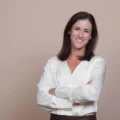
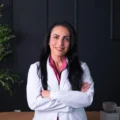
Priyanka Shindgikar is a medical student.
She shares her story and discusses her KevinMD article, “A medical student’s 100 days of COVID.”
Did you enjoy today’s episode?
Please click here to leave a review for The Podcast by KevinMD. Subscribe on your favorite podcast app to get notified when a new episode comes out!
Do you know someone who might enjoy this episode? Share this episode to anyone who wants to hear health care stories filled with information, insight, and inspiration.

Hosted by Kevin Pho, MD, The Podcast by KevinMD shares the stories of the many who intersect with our health care system but are rarely heard from.


Transcript
Kevin Pho: Hi, and welcome to the show, where we share the stories of the many who intersect with our health care system but are rarely heard from. My name is Kevin Pho, founder and editor of KevinMD. Today on the show we have Priyanka Shindgikar. She is a medical student, and she wrote the KevinMD article “A medical student’s 100 days of COVID.” Priyanka, welcome to the show.
Priyanka Shindgikar: Hi, thank you so much for having me. It’s really a pleasure to be talking about my experiences and what I wrote in the article.
Kevin Pho: So we’ll get into the article in a little bit, but first off, can you share your story and your journey to where you are today?
Priyanka Shindgikar: Sure. So I was born in India, grew up for the most part in California, and then went to college there as well. And then I left sunny California for the East Coast to pursue a master’s program. I was a re-applicant to medical school, so that was really kind of a very grounding experience for me, getting into medical school after that. And really, my motivation to be in medicine, apart from, you know, finding the medical sciences interesting, has really been to help people preserve their identities in the face of illness, especially chronic illness, and kind of making a tangible impact on someone’s life.
So, you know, currently I’m in Boston. I’m a second-year medical student, and, you know, all the craziness that goes on with that, and with Step coming up. So aside from school, I really like cooking and reading, exploring the city, and spending time with my friends.
Real physician voices, twice a week
Free, and one click to unsubscribe.
Kevin Pho: Fantastic. And I’m certainly interested in hearing your medical school journey, especially during the pandemic. So let’s talk about your KevinMD article, “A medical student’s 100 days of COVID.” Now, for those who haven’t read the article, can you just walk my audience through it and share the story of why you decided to write it?
Priyanka Shindgikar: Sure. So I love journaling, and I realized that I had been journaling pretty much every day ever since the pandemic hit, which was, I think, March 12 for me. And at one point I was like, “Wow, so much has happened, and it’s all happened so fast.” I kind of wanted to make sense of the past few months and kind of understand, to my best knowledge, why is this all happening, and what did I learn about myself in the process?
And then basically the article goes through the 100 days. It’s March 12, and it actually ends after my first year of medical school, around June 6. Through it, it just chronicles how, the first day, I found out that classes were going online; all these people, prominent figures and even people I knew, who may have tested positive for COVID; how I was transitioning to still being in school, going home, seeing my parents in the middle of a pandemic, coming back; and then grappling, really right before the end of medical school, with George Floyd’s death and the impact that had on our country.
So yeah, I really just wanted to reflect, and, you know, hopefully people have done the same, because it really brought a sense of peace for me. And everyone was going through something different at the time, and everyone has a story, so I wanted to write mine down.
Kevin Pho: So during the last few months of your first year, when the pandemic was in its infancy, share some of the thoughts that were going through your mind during that time.
Priyanka Shindgikar: Sure. So really, more than ever, the first day, I remember I was constantly just checking my phone, and, you know, we were all very confused as to what was happening, kind of going with the flow. And then it kind of coincided with my spring break, so I had some time to think. And I really felt helpless, because I was a first-year medical student, so I wasn’t really there to help or be in the hospital or the clinics or anything, but I still understood what was going on within science, within medicine. And I was surprised to find that it actually pushed me more to be involved in the field.
But at the same time, I did feel a little bit like a phony. I had some people texting me like, “Thank you so much for what you do.” And I’m like, “I haven’t really done anything. I’m just sitting in my room, you know, kind of waiting for the next email.” And the more I thought about it, I realized that they kind of meant it as a whole, and what it really means to be in medicine, especially right now. And that’s something inspiring. That’s something that I keep in mind.
And I recently read that medical school applications have jumped about, like, 18 percent this year, which is truly, you know, amazing, that people are responding that way. I think it’s very important, because to me, I think those people see that our system needs to be changed, you know, whether it’s supporting students in their training, supporting women in medicine, and really understanding that our pandemic disproportionately affected a lot of people, especially Black and brown people. And I hope that their motivation is also geared toward that, and providing a more equal and equitable sense of health care moving forward.
In the beginning, like I said, I felt more of a push to be in the field, and other people were questioning more than me whether I should be in the medical field, in the most genuine of ways, because they feared, you know, what would happen to me with pandemics right now or in the future. One of them was my mom, and I kind of laughed off her question, but I truly understood where she was coming from, and it was, you know, a sense of fear as well.
And with that, it was scary seeing the doctors kind of being deployed into the ERs, into the front lines, and it did make me question, “Will I be safe in this profession?” And also, “Am I disposable? Am I just another?” People were clapping for the health care workers. At the same time, you know, health care workers were struggling to get enough PPE and be heard by our government and our politicians. So I definitely thought about that.
Kevin Pho: Now, we’re talking in the middle of December, and you’re in the midst of your second year. What would you say are some of the biggest challenges that medical students still face right now?
Priyanka Shindgikar: As a second year, a majority of our time is spent studying. So there were many months when we came back for second year where I just felt kind of useless. I was just sitting at my desk studying, you know, just another enzyme, just another disease. And yes, I’m studying for my patients, but I realized that at the same time, in that moment, there were so many things going on almost every day, whether it was in the United States or in the world, and I felt like I wasn’t really contributing to the world. And I think my peers felt similarly, the ones that I’ve talked to, you know. So a lot of us, especially me, kind of explored that side of us and also tried to take action in other ways, whether it was changing something at our school or being involved in clubs, and kind of doing something outside of just our day-to-day studying.
Online learning is hard. Online medical school is hard. I thought I had the hang of it at the end of first year. I found out that I really didn’t. So I think, every day, you kind of realize, “OK, my routine should be this way,” or “I should be focusing on this,” and “How do I connect with my peers?”
One of the biggest things that’s kind of kept me going is that we do weekly clinics, and so it’s really nice to see my work and my studying being applied somewhere, and kind of realizing that it matters, and, you know, understanding a more practical side of medicine, other than just being in First Aid.
Kevin Pho: Sure. Now, one of the things that you mentioned was that medical schools and medical education could take this opportunity to change going forward. The pandemic, unfortunately, has given them this opportunity. Now, what are some specific ways that you can see medical schools and education change going forward because of the pandemic?
Priyanka Shindgikar: Because of the pandemic specifically, I can say that it’s really important to educate the students about COVID, first and foremost, because we’re going to have this around for a while. So it’s important to understand the medical aspect of it as well as the social aspect.
Another thing is to actually state and inform the students how the pandemic hit different people in our country and why it did. Namely, there’s a socioeconomic divide, but why is there that socioeconomic divide? There’s a huge history of racism that we are facing. And it’s important that, you know, we take that opportunity to not only frame it in terms of the pandemic, but also in medicine in general, because there are a lot of, you know, different fields or different ways that that has played out in the past and is still playing out. And so I think, you know, institutions are realizing that they need to talk about that more, and, you know, that goes hand in hand with removing or decreasing implicit biases in their students as well. I think something that goes along with that is changing the curriculum to include different images of Black and brown bodies for different pathologies.
And then, as a whole, making sure that medical schools are really supporting students, understanding that, yes, medical school is rigorous, and it’s a field where we all think that we just have to muster up the strength and go through it. But everyone’s kind of going through something, and it’s important to support their students and recognize that some people need more support than others.
And I think they could also, in general, you know, start, and I think it’s already happening, supporting women in medicine more. I think there’s a lot of change that should be made. I think it’s going to be, you know, steps, like baby steps. So I think those kinds of things are really at my forefront, because, you know, burnout is so real, especially in medical students and residents, that supporting them from day one is very important, so they either don’t get to that point of severe burnout, or recognize it along the way and, you know, take the steps to figure out what works for them.
Kevin Pho: We’re talking to Priyanka Shindgikar. She is a medical student, and she wrote the KevinMD article “A medical student’s 100 days of COVID.” Priyanka, have you learned any lessons over the past few months that have helped you along your journey that you could share with the other medical students who may be listening to this podcast?
Priyanka Shindgikar: Sure. So I’ve learned a few things. One is that I’m not alone in figuring this entire thing out. Another thing is to thrive and not survive, so really setting myself up for success, whether it’s weekly or daily, to make sure I’m not constantly putting out fires, and, you know, kind of anticipating the changes. And another thing is to not let anyone define or stop my hustle in the midst of everything.
So in the end, you know, medical school is a facet of my life and my identity. It’s a really big one, but it’s not my entire life. So I’m fortunate to be in this field. I’m also fortunate to do other things and just, you know, live my life, and not wait to live my life.
Kevin Pho: And my final question: What’s your take-home message that you want to leave with the KevinMD audience?
Priyanka Shindgikar: My take-home message is to focus on what we have and stay in the present moment, constantly.
Kevin Pho: All right. Well, thank you so much for sharing your story and your journey, and thanks again for being on the show.
Priyanka Shindgikar: Awesome, thanks so much for having me. I hope you have a nice rest of your day.
Listen and followApple PodcastsSpotifyYouTubeMore apps · Browse all episodes