Skip to content
  • About
  • Contact
  • Contribute
  • Book
  • Careers
  • Podcast
  • Recommended
  • Speaking
  • All
  • Physician
  • Practice
  • Policy
  • Finance
  • Conditions
  • .edu
  • Patient
  • Meds
  • Tech
  • Social
  • Video
    • All
    • Physician
    • Practice
    • Policy
    • Finance
    • Conditions
    • .edu
    • Patient
    • Meds
    • Tech
    • Social
    • Video
    • About
    • Contact
    • Contribute
    • Book
    • Careers
    • Podcast
    • Recommended
    • Speaking

The 5 percent problem: the low value of primary care

Jonathan Bushman, DO
Physician
November 9, 2025
Share
Tweet
Share

I spent 11 years becoming a family physician.

Four years in undergrad, four in medical school, three more in residency.

That’s a decade of delayed income and about $300,000 in debt, all for the privilege of practicing in one of the most critical, underappreciated corners of medicine: primary care.

I came out idealistic. I wanted to build relationships, prevent disease, and guide people through the chaos of a broken system. But I quickly learned something that still stings: the system doesn’t actually value what primary care does.

In most health plans, primary care accounts for roughly 5 percent of total health care spend. That’s it. Five cents on the dollar to handle 90 percent of what keeps people healthy and out of the hospital.

Meanwhile, the rest of that dollar is divided up among specialists, hospitals, facility fees, and administrative waste that could fill a landfill.

Then one day, curiosity, and maybe a little frustration, led me to get my health insurance broker license.

The process? About 30 minutes and $38.

The compensation? You guessed it: Around 5 percent of total health care spend.

Let that math sink in.

A decade of education and six figures of debt earns me the same slice of the health care dollar as a license I could get on my lunch break.

The broker vs. the healer

This isn’t a dig at brokers. There are great ones out there; the ones who fight for transparency, align incentives, and actually help employers spend their health care dollars wisely. I’ve had the privilege of working with some.

But our system rewards the distribution of health care dollars far more than the delivery of health care itself.

I can sit across from an employer, design a benefits strategy, and earn a percentage of their total spend, regardless of whether the employees get healthier.

ADVERTISEMENT

Or I can spend an hour diagnosing, counseling, and preventing costly downstream care, and get reimbursed less than a car mechanic.

Somewhere along the way, we decided that the people who move money deserve the same (or more) as the people who move health.

Standing on both sides of the fence

Today, I straddle both worlds.

I run a direct primary care practice, and I work as a benefits advisor and health plan consultant for employers.

And from this vantage point, I see exactly where the disconnect lives: Physicians understand health, but most don’t understand the economics of health care.

Brokers understand the economics, but most don’t understand health.

The people paying the bill (employers) are stuck in the middle, assuming everyone at the table has their best interest at heart.

Spoiler: not everyone does.

The irony? When a physician brings clinical insight into plan design, when we actually connect the dots between care delivery and benefit structure, the results are transformative.

Costs go down. Health improves. Everyone wins.

It’s not absurd that I can hold both licenses (doctor and broker).

It’s absurd that the system doesn’t see how vital it is for more physicians to do the same.

Because until we bring clinical voices into the boardroom, we’ll keep spending 95 percent of our dollars treating preventable problems, and 5 percent trying to prevent them.

The economics of health care are built on a perverse kind of symmetry: Both the healer and the middleman earn 5 percent. But only one of them can look a patient in the eye when something goes wrong.

So no, I’m not crazy for thinking this is backward.

I’m just tired of pretending that the current system makes sense.

If a $38 license carries the same economic weight as $300,000 in medical education, it’s not the education that needs to change; it’s the system that values it.

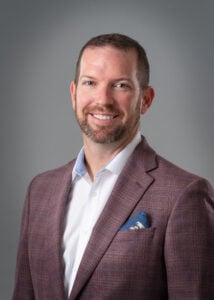
Jonathan Bushman is a board-certified family physician, health benefits advisor, and passionate advocate for reimagining health care delivery. As the founder of Primed Healthcare, a physician-owned benefits agency, Dr. Bushman helps employers and employees navigate a transparent, trust-based approach to health care. He brings deep expertise in direct primary care and employer-sponsored health plans, focusing on solutions that align physician-led care with cost-effective strategies. Dr. Bushman serves as a fractional chief medical officer and continues to drive innovation in health plan design. Through his leadership at Reliant Direct Primary Care and thought leadership shared via LinkedIn, he works to empower organizations with health care solutions built on meaningful care rather than bureaucracy.

Prev

The opioid crisis's other victims

November 9, 2025 Kevin 0
…
Next

The flaws in the new child health report

November 9, 2025 Kevin 0
…

Tagged as: Primary Care

Post navigation

< Previous Post
The opioid crisis's other victims
Next Post >
The flaws in the new child health report

ADVERTISEMENT

More by Jonathan Bushman, DO

  • The hidden moral injury behind value-based health care

    Jonathan Bushman, DO

Related Posts

  • The solution to a crumbling primary care foundation is direct primary care

    Sara Pastoor, MD
  • In the absence of physician mentorship, who will train the next generation of primary care clinicians?

    Kenneth Botelho, DMSc, PA-C
  • Health care’s hidden problem: hospital primary care losses

    Christopher Habig, MBA
  • The rise of direct primary care in America

    Andy Bonner
  • What’s driving medical students away from primary care?

    ​​Vineeth Amba, MPH, Archita Goyal, and Wayne Altman, MD
  • Fostering health care innovation through federal policy: a case for direct primary care

    Christopher Habig, MBA

More in Physician

  • Physician exploitation: Why burnout is the wrong diagnosis

    Tina F. Edwards, MD
  • Physician shortage and private equity: the ruin of U.S. health care

    John C. Hagan III, MD
  • Pediatrician vs. grandmother: Choosing love over medical advice

    Jessie Mahoney, MD
  • How I got Dr. Luis Torres Díaz on Wikipedia: a grandson’s journey

    Francisco M. Torres, MD
  • Direct primary care vs psychotherapy models: Why they aren’t interchangeable

    Arthur Lazarus, MD, MBA
  • The hidden depth of the rural primary care shortage

    Esther Yu Smith, MD
  • Most Popular

  • Past Week

    • The blind men and the elephant: a parable for modern pain management

      Richard A. Lawhern, PhD | Conditions
    • Is primary care becoming a triage station?

      J. Leonard Lichtenfeld, MD | Physician
    • Catching type 1 diabetes before it becomes life-threatening [PODCAST]

      The Podcast by KevinMD | Podcast
    • Why learning specialists are central to medical education [PODCAST]

      The Podcast by KevinMD | Podcast
    • Why medicine needs military-style leadership and reconnaissance

      Ronald L. Lindsay, MD | Physician
    • Finding meaning in medicine through the lens of Scarlet Begonias

      Arthur Lazarus, MD, MBA | Physician
  • Past 6 Months

    • The blind men and the elephant: a parable for modern pain management

      Richard A. Lawhern, PhD | Conditions
    • Is primary care becoming a triage station?

      J. Leonard Lichtenfeld, MD | Physician
    • Psychiatrists are physicians: a key distinction

      Farid Sabet-Sharghi, MD | Physician
    • Why feeling unlike yourself is a sign of physician emotional overload

      Stephanie Wellington, MD | Physician
    • The U.S. gastroenterologist shortage explained

      Brian Hudes, MD | Physician
    • California’s opioid policy hypocrisy

      Kayvan Haddadan, MD | Conditions
  • Recent Posts

    • Saving limbs from the silent threat of peripheral artery disease [PODCAST]

      The Podcast by KevinMD | Podcast
    • Why intercultural competence matters in health care

      Evangelos Chavelas | Education
    • Physician exploitation: Why burnout is the wrong diagnosis

      Tina F. Edwards, MD | Physician
    • Physician shortage and private equity: the ruin of U.S. health care

      John C. Hagan III, MD | Physician
    • Catching type 1 diabetes before it becomes life-threatening [PODCAST]

      The Podcast by KevinMD | Podcast
    • The consequences of adopting AI in medicine

      Jordan Liz, PhD | Tech

Subscribe to KevinMD and never miss a story!

Get free updates delivered free to your inbox.


Find jobs at
Careers by KevinMD.com

Search thousands of physician, PA, NP, and CRNA jobs now.

Learn more

Leave a Comment

Founded in 2004 by Kevin Pho, MD, KevinMD.com is the web’s leading platform where physicians, advanced practitioners, nurses, medical students, and patients share their insight and tell their stories.

Social

  • Like on Facebook
  • Follow on Twitter
  • Connect on Linkedin
  • Subscribe on Youtube
  • Instagram

ADVERTISEMENT

ADVERTISEMENT

  • Most Popular

  • Past Week

    • The blind men and the elephant: a parable for modern pain management

      Richard A. Lawhern, PhD | Conditions
    • Is primary care becoming a triage station?

      J. Leonard Lichtenfeld, MD | Physician
    • Catching type 1 diabetes before it becomes life-threatening [PODCAST]

      The Podcast by KevinMD | Podcast
    • Why learning specialists are central to medical education [PODCAST]

      The Podcast by KevinMD | Podcast
    • Why medicine needs military-style leadership and reconnaissance

      Ronald L. Lindsay, MD | Physician
    • Finding meaning in medicine through the lens of Scarlet Begonias

      Arthur Lazarus, MD, MBA | Physician
  • Past 6 Months

    • The blind men and the elephant: a parable for modern pain management

      Richard A. Lawhern, PhD | Conditions
    • Is primary care becoming a triage station?

      J. Leonard Lichtenfeld, MD | Physician
    • Psychiatrists are physicians: a key distinction

      Farid Sabet-Sharghi, MD | Physician
    • Why feeling unlike yourself is a sign of physician emotional overload

      Stephanie Wellington, MD | Physician
    • The U.S. gastroenterologist shortage explained

      Brian Hudes, MD | Physician
    • California’s opioid policy hypocrisy

      Kayvan Haddadan, MD | Conditions
  • Recent Posts

    • Saving limbs from the silent threat of peripheral artery disease [PODCAST]

      The Podcast by KevinMD | Podcast
    • Why intercultural competence matters in health care

      Evangelos Chavelas | Education
    • Physician exploitation: Why burnout is the wrong diagnosis

      Tina F. Edwards, MD | Physician
    • Physician shortage and private equity: the ruin of U.S. health care

      John C. Hagan III, MD | Physician
    • Catching type 1 diabetes before it becomes life-threatening [PODCAST]

      The Podcast by KevinMD | Podcast
    • The consequences of adopting AI in medicine

      Jordan Liz, PhD | Tech

MedPage Today Professional

An Everyday Health Property Medpage Today
  • Terms of Use | Disclaimer
  • Privacy Policy
  • DMCA Policy
All Content © KevinMD, LLC
Site by Outthink Group

Leave a Comment

Comments are moderated before they are published. Please read the comment policy.

Loading Comments...