My name is Tony Grandelis. I’m an OB/GYN hospitalist, a medical educator, and a person in long-term recovery from substance use disorder. Through my brand Recovering Healthcare, I explore what addiction recovery has taught me about fixing a broken health care system, one principle at a time. Today, I want to talk about resentments, which are, in my opinion, some of the most under-recognized causes of burnout in medicine.
In recovery, resentments are a clinical danger. We say it plainly in twelve-step programs: Resentments are the number one cause of relapse. The slow-burning ones. The ones we’ve carried so long that they’ve started weighing us down and have burned a hole into our souls.
Step 4 of the recovery process asks us to take a searching and fearless moral inventory of ourselves. At the center of that inventory are our resentments. We list them. We name them. We sit with them. And then we do something that initially feels deeply unfair: We look for our part in them. Not because we’re to blame or because the harm done to us wasn’t real. But because the only thing we can ever change is what belongs to us. And as long as a resentment lives entirely in someone else’s hands, we are powerless over it. The Step 4 inventory gives us power back. It allows us to release the anger that has burrowed deep inside of us for ages.
Now bring that into medicine.
Think about the attending who humiliated you in front of the team and never apologized. The administrator who dismissed your safety concern without a second glance. The colleague who took credit for your work. The patient who was cruel to you after you stayed two hours late to make sure they were OK. Any one of these, in isolation, is manageable. But over time these resentments accumulate. Shift after shift, year after year, grievance layered on grievance. And before we know it, we are burned out, shut down, and moving through our days with a low-grade bitterness we can no longer fully explain or locate.
Real physician voices, twice a week
Free, and one click to unsubscribe.
It is my opinion that we need to start treating resentments as a leading cause of burnout in health care. We spend enormous energy studying workload, system inefficiency, and administrative burden. We spend almost none studying what happens to a clinician who has been quietly keeping score for years.
Recovery offers a different path. Name the resentment (out loud, on paper, to another person). Feel it fully instead of managing it. Ask honestly: What is my part here? This is not meant to excuse the institution or the colleague or the system that failed you. Rather, it is meant to find the piece that belongs to you: the expectation that went unspoken, the boundary that was never set, the moment you chose silence over honesty. Once you’ve done that, tend to it with compassion, and then, as best you can, let it go. Not for them. But for you.
Resentments live in you. They shape your clinical practice, your teaching, your relationships, your capacity for joy. A resentment is, in the language of recovery, a poison you drink hoping someone else will get sick. Medicine will keep giving us reasons to resent. That will not change anytime soon. What can change is how we carry what we’re given and whether we choose to process it or store it.
Naming resentments, seeing our part in them, and letting them go is the daily practice of putting down what isn’t ours to carry anymore. And over time, we come to notice that a weight has been lifted, and we are finally able to move through medicine with more compassion, presence, forgiveness, and joy.
Anthony Grandelis is a fellowship-trained OB/GYN hospitalist, medical educator, author, and person in long-term recovery from addiction. He holds an academic appointment at SUNY Downstate and a hospital affiliation with Maimonides Medical Center.
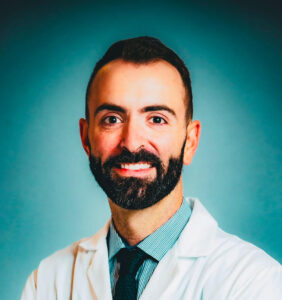
Recovery saved his life, and he believes it also made him a better doctor. The longer he has practiced medicine, the more convinced he has become that health care does not need another wellness initiative. It needs recovery. He founded Recovering Healthcare on a simple idea: The principles that help people rebuild their lives after addiction are exactly the principles that medicine is missing. Through speaking, writing, and education, he brings the principles of addiction recovery into clinical spaces, including honesty, presence, surrender, community, and humility, not as a metaphor but as a practice.
He is the author of The Recovery Prescription: What Addiction Can Teach Us About Fixing a Broken Healthcare System. He shares his work at AnthonyGrandelisMD.com, on Instagram, and on LinkedIn.