My name is Tony Grandelis. I’m an OB/GYN hospitalist, a medical educator, and a person in long-term recovery from substance use disorder. Through my brand Recovering Healthcare, I explore what the principles of addiction recovery (honesty, surrender, humility, community) can teach us about fixing a broken health care system. Recovery gave me something medicine never did: a framework for sitting with what cannot be fixed, for accepting what cannot be changed, and for finding meaning in the space between intervention and letting go.
It is from this framework that I want to explore a moment I have witnessed many times in my career, in different hospitals, with different patients. It is the moment when everyone in the room knows the truth, that we have reached the end of what medicine can offer. Yet no one says it out loud. Instead, we order another test. We consult another specialist. We escalate the intervention. We keep going, because stopping feels like giving up, and giving up feels like failure, and failure is the one thing medicine has decided it cannot tolerate.
We have built a health care system in the image of conquest. Cancer is something to be fought, beaten, defeated. Death is something to be postponed at nearly any cost. The ventilator, the induced coma, the heroic surgery at 2 in the morning. These are not always acts of healing. Sometimes they are acts of refusal. A refusal to accept what nature has already decided. A refusal to sit with the unbearable truth that we are not, and have never been, in control of the final outcome.
This is, at its core, a spiritual problem dressed in clinical language.
Why is it so hard to let go? Part of the answer is human. Part of it is cultural. And part of it, if we are being honest, is institutional and legal.
Real physician voices, twice a week
Free, and one click to unsubscribe.
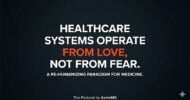
The medicolegal environment in American medicine has quietly reshaped clinical practice in ways we rarely name directly. When a physician orders a test they know is unlikely to change management, when they escalate intervention in a terminal patient because withdrawal of care might be misread, when they document defensively rather than honestly. We are practicing fear-based medicine, for we work in a system that will ask hard questions if we do less, and almost never if we do more.
More is safe. Less requires a conversation. And conversations take time, create uncertainty, and leave paper trails.
The consequences of this style of medicine are profound. Patients spend their final days in intensive care units rather than at home. Families make decisions they are not equipped to make, under time pressure, without the honest guidance they deserve. Residents are trained to believe that the appropriate response to uncertainty is intervention, and they carry that belief into decades of practice. And providers, absorbing the suffering of patients they cannot save while the system asks them to keep trying, accumulate a particular and corrosive form of moral injury: the wound of knowing what is right and being unable to do it.
I think about what recovery has taught me about acceptance. In twelve-step programs, we talk about the difference between resignation and acceptance. Resignation is passive; it is giving up, turning away, washing your hands. Acceptance is something harder and more active. It is the decision to be fully present with what is true, to stop fighting reality, and to ask: Given what is actually happening, what is the most loving thing I can do right now?
Sometimes the most loving thing is a surgery. Sometimes it is a ventilator. And sometimes, more often than our system is willing to admit, the most loving thing is to sit down, turn off the overhead light, hold someone’s hand, and tell them the truth.
We cannot change the system overnight. But we can begin, each of us, by being honest in the rooms we are in. By having the conversations earlier. By remembering that the goal was never to prevent death. It was to honor life.
And sometimes those are the same thing. But not always.
This essay is cited in the KevinMD record on end of life.
Anthony Grandelis is a fellowship-trained OB/GYN hospitalist, medical educator, author, and person in long-term recovery from addiction. He holds an academic appointment at SUNY Downstate and a hospital affiliation with Maimonides Medical Center.
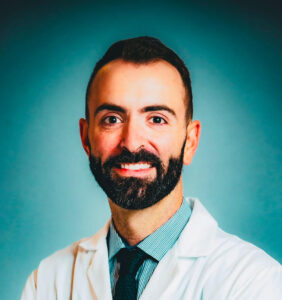
Recovery saved his life, and he believes it also made him a better doctor. The longer he has practiced medicine, the more convinced he has become that health care does not need another wellness initiative. It needs recovery. He founded Recovering Healthcare on a simple idea: The principles that help people rebuild their lives after addiction are exactly the principles that medicine is missing. Through speaking, writing, and education, he brings the principles of addiction recovery into clinical spaces, including honesty, presence, surrender, community, and humility, not as a metaphor but as a practice.
He is the author of The Recovery Prescription: What Addiction Can Teach Us About Fixing a Broken Healthcare System. He shares his work at AnthonyGrandelisMD.com, on Instagram, and on LinkedIn.