The New York Times reported on June 5, 2026, that new research suggests molecular screening with a 14-protein panel can identify patients who will develop lung cancer in intervening years, allowing prescription of an interleukin-1 beta inhibitor drug (Ilaris) that may be capable of preventing lung cancer. This potentially important development, based upon a report in the journal Cell on the same date, is worthy of publication, but it fails to inform readers of readily available information on the cost and feasibility of future experiments required for forward progress, and it omits pertinent information on potential financial conflicts of interest.
Specifically, what corporation might market the new molecular testing product, and what pharmaceutical company manufactures canakinumab (Ilaris)?
One potential commercial source of the testing might be GRAIL Inc., which manufactures the DNA-based Galleri test. In his “Interests” declaration in the manuscript, the senior author of the Cell paper discloses that, in addition to multiple other corporate interests, he “is also Co-Chief Investigator of the NHS Galleri trial funded by GRAIL and a paid member of GRAIL’s Scientific Advisory Board.”
GRAIL’s website claims that “Galleri had the potential to detect 99 percent of cancer types via a shared cancer signal.” It also emphasizes that treatment of early-stage cancer is “7X less expensive” to treat.
GRAIL’s product, the Galleri test, for molecular screening of multiple types of cancer, is currently being investigated in a large prospective trial in the United Kingdom. In a February 2025 letter, two researchers reported that “At the end of the first year, UK-NHS unexpectedly announced that the trial (of the Galleri test) was put on hold (no details given).” They went on to make a provocative comment. “The GRAIL case has some similarities to the Theranos story, which sent some executives to jail and led to company bankruptcy.” And they concluded by stating that “Finally, these and other similar tests should ideally be identified early by regulatory agencies, to protect patients, investors, and other stakeholders from artificially created situations which, at least partially, are motivated by profit.”
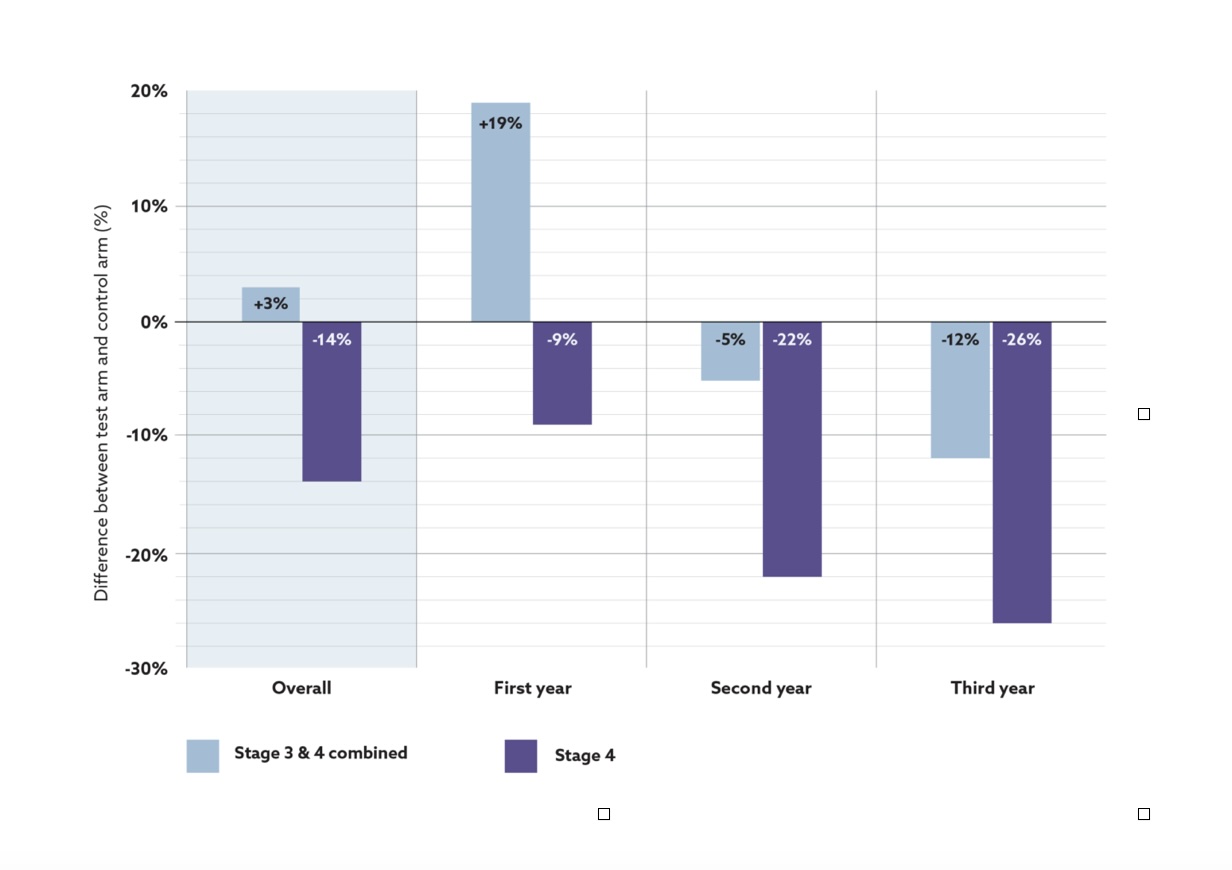
A more recent report disclosed that the Galleri test did not meet its primary end point in the U.K. trial. The web page of the NHS Galleri study reports that although there was no statistically significant drop in combined stage III-IV diagnosis, the study endpoint, data showed a small increase in early-stage detection and a decrease in stage IV, as well as a possible trend toward reduction in stage III-IV. The NHS Galleri will reexamine data and report in one year.
Is comparison of GRAIL to Theranos hyperbolic? It is perhaps worth comment that one of those researchers was among the first to question the validity of diagnostic claims by Theranos in 2015.
GRAIL is a spinoff from Illumina Inc., a San Diego biotech company which purchased GRAIL outright for $7.1 billion in 2021 and was later forced to divest itself of ownership in 2024, under pressure from the European Union and the U.S. Federal Trade Commission. The Court of Justice of the European Union reversed a lower court decision against Illumina after the sale. Illumina share price peaked at $500 in 2021 and currently sells at $164.
Stock price of GRAIL peaked near $120 per share in 2025. The stock price fell 50 percent on February 19, 2026, when “GRAIL announced that the National Health Service Galleri Trial failed to achieve its primary endpoint of a statistically significant reduction in Stage III-IV cancers.” Ongoing class-action lawsuits allege that the company breached fiduciary duties by “making false and/or misleading statements.” GRAIL currently sells at $62 per share. The current price of GRAIL’s Galleri test is $949, before discounting.
Canakinumab, the drug proposed as the treatment arm in a prospective randomized lung cancer chemoprevention trial, is manufactured by Novartis. The drug has failed in prior trials to prevent cardiovascular events and as treatment for lung cancer. Drugs.com estimates the cost of canakinumab at $21,909.21 for 150 mg/ml. In the absence of price reductions or discounts, the cost of a monthly dose of the drug would thus be approximately $250,000 per year. In his “Declaration of Interests,” the lead author of the Cell article disclosed that he “has been a non-executive board member for Novartis since March 2026.”
In summary, even in a best-case scenario, one in which a protein panel proved able to narrowly refine lung cancer risk estimates, allowing restriction of chemoprevention to those at elevated risk, contingent upon a prospective trial that showed substantial reduction in advanced-stage lung cancer with minimal toxicity, the combination of molecular screening for and chemoprevention of lung cancer would remain an elusive and very expensive public health strategy.
Frederic W. Grannis, Jr. is a thoracic surgeon.





ADVERTISEMENT