
The most useful AI data for physicians published this year had nothing to do with medicine.
In early June, Anthropic released a report called “When AI builds itself.” One number matters more than the rest. As of May, more than 80 percent of the code merged into the company’s own codebase was written by the very same AI. A typical Anthropic engineer now produces 5.8 times as much code per day as in 2024, and the trend line points toward eight. The company building the machine handed most of the building to the machine.
The coverage played it as a safety story, machines improving machines, and calls for a pause button. Fine. But for anyone who runs a clinical operation, the buried story is a workforce story, and it is the best documented one we have. This is not a survey or a consultant’s projection. It is a company measuring how much of a skilled profession’s core output moved to software in less than two years.
Notice what did not happen. The engineers are still there. That 5.8 figure is output per engineer, which means the humans stayed in the loop while the work changed shape underneath them. Writing became reviewing. Producing became directing and judging. The job title survived. It looks different now.
Real physician voices, twice a week
Free, and one click to unsubscribe.
Meta just ran the control group. In May it cut 8,000 jobs, betting that AI agents would absorb the work. In early July, Zuckerberg told employees that agent development “hasn’t really accelerated in the way that we expected.” Put this side by side with the Anthropic numbers. Where people stayed in the loop while the work shifted underneath them, output multiplied. Where leadership cut ahead of the capability, the payoff is still a promise. The migration is real. It refuses to run on an executive’s schedule.
I have spent thirty years in health care, and I now run a company that deploys AI inside provider and payer organizations. What I see on the ground matches the lab data. The work that moves first is not clinical judgment. It is assembly and translation. Pulling results from six systems into one picture before the visit. Writing the note. Chasing the prior authorization. Summarizing eighteen months of labs. Every hour a physician spends assembling information rather than judging it is an hour begging for change.
Most of that is good news. Nobody went into medicine to be the integration layer between an EHR and a fax machine. If the machine takes the assembly and hands back time, medicine wins.
But the engineering data carries a warning that medicine has not absorbed. When the machine produces the work, the human role becomes verification, and verification does not scale the way production does. An engineer merging nearly six times more code each day is not reading it the way they read their own. Medicine’s version is already visible. Machine-drafted notes signed at a pace that makes reading them a ritual. AI-assembled summaries accepted because they are usually right.
That pull is documented. When researchers fed radiologists incorrect AI reads on mammograms, accuracy fell at every experience level, decades of expertise included. And in a Microsoft survey of knowledge workers, the people who trusted the AI most examined its output least. Expertise does not protect you. Trust is the exposure. The dangerous moment is not when the system fails. It is when signing becomes ceremony, because usually right is exactly what makes checking feel optional.
So treat the lab report as the preview it is, and do two things with it.
First, map your week. How much of it is assembly and how much is judgment? Be honest about the split, because the assembly share is migrating whether or not anyone asks your permission. The physicians who name that early get to decide what fills the space. The ones who wait will have it decided for them.
Second, push your institution past adoption metrics. Every health system now counts usage. Almost none has redesigned what verification means when volume goes up several fold. That’s backwards. The question to put to your CMIO is not whether the tool works. It is what review looks like when each clinician is signing five times more machine-produced work, and what happens on the day the answer is a shrug.
Software engineering ran this experiment first and published the results. The work migrated, the people stayed, and the job quietly became a different job. Medicine is standing at the same door. The engineers found out in real time. We got a preview. It would be malpractice not to use it.
Craig Hauben is the chief executive officer of Clutch and has spent thirty years in health care, the last fifteen as an executive in private equity-backed companies. He writes about what AI is doing to work, in health care and beyond, from the operator’s side of the table.
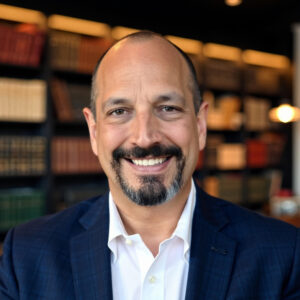
He approves the kinds of systems clinicians are asked to trust, and he writes about what that responsibility should mean. He is the author of the novel The AI: Migration, in which every AI system, study, and clinical event is drawn from the documented record. It is available in print, ebook, and audiobook. The second book in the series, The AI: Breakout, publishes in November.
He shares updates on LinkedIn and writes at craighauben.com.