Skip to content
  • About
  • Contact
  • Contribute
  • My Book
  • Careers
  • Podcast
  • Transcripts
  • Speaking
KevinMD
  • All
  • Physician
  • Burnout
  • Practice
  • Policy
  • Finance
  • Conditions
  • .edu
  • Patient
  • Meds
  • Tech
  • Social
  • All
  • Physician
  • Burnout
  • Practice
  • Policy
  • Finance
  • Conditions
  • .edu
  • Patient
  • Meds
  • Tech
  • Social
    • All
    • Physician
    • Burnout
    • Practice
    • Policy
    • Finance
    • Conditions
    • .edu
    • Patient
    • Meds
    • Tech
    • Social
    • About
    • Contact
    • Contribute
    • My Book
    • Careers
    • Podcast
    • Transcripts
    • Speaking
KevinMD
  • All
  • Physician
  • Burnout
  • Practice
  • Policy
  • Finance
  • Conditions
  • .edu
  • Patient
  • Meds
  • Tech
  • Social
    • All
    • Physician
    • Burnout
    • Practice
    • Policy
    • Finance
    • Conditions
    • .edu
    • Patient
    • Meds
    • Tech
    • Social
    • About
    • Contact
    • Contribute
    • My Book
    • Careers
    • Podcast
    • Transcripts
    • Speaking
  • About KevinMD | Kevin Pho, MD
  • Be heard on social media’s leading physician voice
  • Contact Kevin
  • Discounted enhanced author page
  • DMCA Policy
  • Establishing, Managing, and Protecting Your Online Reputation: A Social Media Guide for Physicians and Medical Practices
  • Group vs. individual disability insurance for doctors: pros and cons
  • KevinMD influencer opportunities
  • Opinion and commentary by KevinMD
  • Physician burnout speakers to keynote your conference
  • Physician Coaching by KevinMD
  • Physician keynote speaker: Kevin Pho, MD
  • Physician Speaking by KevinMD: a boutique speakers bureau
  • Primary care physician in Nashua, NH | Kevin Pho, MD
  • Privacy Policy
  • Recommended services by KevinMD
  • Terms of Use Agreement
  • Thank you for subscribing to KevinMD
  • Thank you for upgrading to the KevinMD enhanced author page
  • The biggest mistake doctors make when purchasing disability insurance
  • The doctor’s guide to disability insurance: short-term vs. long-term
  • The KevinMD ToolKit
  • Upgrade to the KevinMD enhanced author page
  • Why own-occupation disability insurance is a must for doctors

What the eGFR race correction teaches us about AI

Craig Hauben, MPA
Health Technology
June 5, 2026
Share
Tweet
Share

The number was wrong for twenty years. Nobody could see it.

For more than twenty years, a number quietly shaped the care of millions of patients. It told nephrologists when to refer. It told transplant committees who qualified for the waitlist. It told primary care physicians which patients were stable, and which were declining.

For Black patients, the number was wrong. By design.

The number was eGFR, and the formula behind it included a race correction, an upward adjustment for Black patients based on a 1999 study’s assumption about baseline creatinine and muscle mass. The premise that race is a biological variable with consistent physiological implications was never scientifically sound. It reflected ideas about racial biology that medicine had formally discarded generations earlier. But it was embedded in the electronic health record systems of thousands of hospitals, and so it ran, automatically, on every calculation, for over two decades.

The consequences were not abstract. Black patients’ kidney function was systematically overestimated. Specialist referrals came later. Transplant waitlist placements were delayed. Patients who should have been flagged as high priority were assessed as stable for years. When the National Kidney Foundation and the American Society of Nephrology task force finally removed the race adjustment from clinical guidelines in 2021, EHR vendors took two more years to update their systems. The patients affected during the twenty-year run were never identified or compensated.

I have spent thirty years in health care, most of them as an executive responsible for deploying the systems clinicians work inside. I did not write the eGFR formula. But I have approved hundreds of decisions that put calculations like it in front of clinicians, and the eGFR story keeps me up at night for a reason that has nothing to do with kidneys.

It is this. The error was not hidden by anyone. It was hidden by the interface.

The clinicians who acted on those scores were doing exactly what good clinicians do. They trusted a validated number from a trusted system. The formula’s assumptions were not displayed on the screen. There was no asterisk that said this estimate embeds a racial assumption from a methodologically weak 1999 study. The number arrived with the full authority of the system that delivered it, and the system delivered it millions of times.

Now consider what we are deploying today.

AI clinical systems are arriving in every department, and many of them are really good. I have seen AI flag an atypical presentation that put a patient in the OR hours before a routine workup would have caught it. The early detection work in pancreatic cancer is the kind of thing our field has wanted for fifty years. I am not writing this as a skeptic.

I am writing this because every lesson of the eGFR story applies with more force with AI models. The race correction was inspectable. It was a published formula. Anyone who looked could see the adjustment. Today’s models are not inspectable by anyone in that way, not even by their builders. They perform well on average and unevenly in the specific. They were validated on datasets whose gaps are invisible until someone goes looking. The eGFR error took twenty years to correct when the formula was sitting in plain sight. What is the correction timeline for an error nobody can see?

Physicians will carry the weight of this, the way nephrologists and primary care doctors unknowingly carried the eGFR adjustment. The number on the screen will arrive with authority. You will trust it. The pressure of the day will not leave room to interrogate it. And if the system is wrong in some invisible way, the chart will show that the clinician followed the standard of care.

I do not think the answer is refusing the technology. The answer, I think, starts with three questions every clinician is entitled to ask of any system placed in front of them, and every health system executive is obligated to answer. What populations was this validated on, in detail? What is its performance in the specific, not on average, across the patients I actually see? And when it is wrong, how will we find out?

If your institution cannot answer those questions about a system it has already deployed, that is not a technology problem. That is a governance problem, and it has a twenty-year precedent with a body count we never counted.

The eGFR correction was a quiet victory. A flawed number was fixed. But nobody was identified, nobody was compensated, and almost nobody outside nephrology knows it happened. The next version of this story is being installed now, at scale, with better marketing. The clinicians who will be told to trust the number deserve to know what happened the last time.

Craig Hauben is the CEO of Clutch and has spent thirty years in health care, the last fifteen as an executive in private equity-backed companies. He writes about what AI is doing to work, in health care and beyond, from the operator’s side of the table. He approves the kinds of systems clinicians are asked to trust, and he writes about what that responsibility should mean.
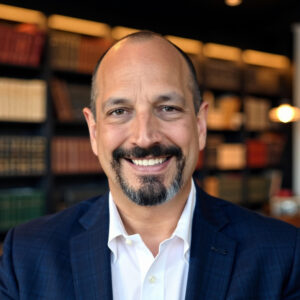
His white paper series, comprising The Meter Is Running, The Token Trap, and The Second Token Trap, covers the economics of AI tokens and why most companies cannot price what they are buying. His first novel, The AI: Migration, publishes in July 2026. Every AI system, study, and clinical event in it is drawn from the documented record.

He shares updates on LinkedIn, and readers can sign up for early access to his book.

Prev

End-of-life decision-making is never a solo act

June 5, 2026 Kevin 0
…

Kevin

Tagged as: Health IT and AI in Medicine, Nephrology

< Previous Post
End-of-life decision-making is never a solo act

ADVERTISEMENT

Related Posts

  • Why doctors must fight health misinformation on social media

    Olapeju Simoyan, MD
  • California’s governor race is missing a health care plan

    Kayvan Haddadan, MD
  • The social imperative of health

    Steven Merahn, MD
  • U.S. drug shortages threaten national health security

    Anmol Gupta, MD, MPP
  • Digital health equity is an emerging gap in health

    Joshua W. Elder, MD, MPH and Tamara Scott
  • Health care affordability is now a moral crisis

    Narinder Singh Parhar, MD

More in Health Technology

  • Clinician trust in AI is not a one-time milestone

    Susan Grant, DNP, RN
  • What AI in medicine can and cannot do

    Shiv K. Goel, MD
  • I built clinical decision-support tools at the bedside

    Ahmed Elsonbaty, MD
  • Physicians must shape AI in medicine, not watch it

    Sonal Patel, MD
  • 3 fixes for primary care access in the ChatGPT era

    Payam Zamani, MD
  • Doctors using AI are not being replaced by it

    Neha Pathak, MD
  • Most Popular

  • Past Week

    • DEA fear is reshaping how doctors prescribe

      Ronald L. Lindsay, MD | Physician
    • Violence against doctors: 5 forces that ignite it

      Timothy Lesaca, MD | Physician
    • The double standard at the heart of chronic pain treatment

      Joshua Saylor | Conditions and Diseases
    • Your sinus infection may not be an infection

      Franklyn R. Gergits, DO, MBA | Conditions and Diseases
    • Why does post-discharge care keep breaking down?

      Katherine Owen, RN | Conditions and Diseases
    • The recovery no one schedules after maternity leave

      Anonymous | Physician
  • Past 6 Months

    • Primary care crisis requires new training and skills

      Justin Oldfield, MD | Physician
    • Polycystic ovary syndrome is more than ovarian

      Oluyemisi Famuyiwa, MD | Conditions and Diseases
    • DEA fear is reshaping how doctors prescribe

      Ronald L. Lindsay, MD | Physician
    • Expanding the SOAP framework boosts health outcomes

      Deepak Gupta, MD and Sarwan Kumar, MD | Physician
    • The handwashing standard nobody finished. Until now.

      Bernadette Burroughs, RN | Conditions and Diseases
    • Primary care access is the real problem, not the system

      Payam Zamani, MD | Physician
  • Recent Posts

    • What the eGFR race correction teaches us about AI

      Craig Hauben, MPA | Health Technology
    • End-of-life decision-making is never a solo act

      Chinmeri Nwuba | Health Policy
    • Why health influencers shape patients, not prescriptions

      Timothy Lesaca, MD | Social Media in Medicine
    • Why ChatGPT can’t write your residency personal statement

      Kathleen Muldoon, PhD | Medical Education
    • Military sports medicine and the cost of readiness

      Ann Lebeck, MD | Physician
    • How to assess liver fibrosis in primary care

      Radhika Vayani, DO | Conditions and Diseases

Subscribe to KevinMD and never miss a story!

Get free updates delivered free to your inbox.


Find jobs at
Careers by KevinMD.com

Search thousands of physician, PA, NP, and CRNA jobs now.

Learn more

Leave a Comment

Founded in 2004 by Kevin Pho, MD, KevinMD.com is the web’s leading platform where physicians, advanced practitioners, nurses, medical students, and patients share their insight and tell their stories.

Social

  • Like on Facebook
  • Follow on Twitter
  • Connect on Linkedin
  • Subscribe on Youtube
  • Instagram

ADVERTISEMENT

  • Most Popular

  • Past Week

    • DEA fear is reshaping how doctors prescribe

      Ronald L. Lindsay, MD | Physician
    • Violence against doctors: 5 forces that ignite it

      Timothy Lesaca, MD | Physician
    • The double standard at the heart of chronic pain treatment

      Joshua Saylor | Conditions and Diseases
    • Your sinus infection may not be an infection

      Franklyn R. Gergits, DO, MBA | Conditions and Diseases
    • Why does post-discharge care keep breaking down?

      Katherine Owen, RN | Conditions and Diseases
    • The recovery no one schedules after maternity leave

      Anonymous | Physician
  • Past 6 Months

    • Primary care crisis requires new training and skills

      Justin Oldfield, MD | Physician
    • Polycystic ovary syndrome is more than ovarian

      Oluyemisi Famuyiwa, MD | Conditions and Diseases
    • DEA fear is reshaping how doctors prescribe

      Ronald L. Lindsay, MD | Physician
    • Expanding the SOAP framework boosts health outcomes

      Deepak Gupta, MD and Sarwan Kumar, MD | Physician
    • The handwashing standard nobody finished. Until now.

      Bernadette Burroughs, RN | Conditions and Diseases
    • Primary care access is the real problem, not the system

      Payam Zamani, MD | Physician
  • Recent Posts

    • What the eGFR race correction teaches us about AI

      Craig Hauben, MPA | Health Technology
    • End-of-life decision-making is never a solo act

      Chinmeri Nwuba | Health Policy
    • Why health influencers shape patients, not prescriptions

      Timothy Lesaca, MD | Social Media in Medicine
    • Why ChatGPT can’t write your residency personal statement

      Kathleen Muldoon, PhD | Medical Education
    • Military sports medicine and the cost of readiness

      Ann Lebeck, MD | Physician
    • How to assess liver fibrosis in primary care

      Radhika Vayani, DO | Conditions and Diseases

MedPage Today Professional

An Everyday Health Property Medpage Today

Copyright © 2026 KevinMD.com | Powered by Astra WordPress Theme

  • Terms of Use | Disclaimer
  • Privacy Policy
  • DMCA Policy
All Content © KevinMD, LLC
Site by Outthink Group

Leave a Comment

Comments are moderated before they are published. Please read the comment policy.

Loading Comments...