Skip to content
  • About
  • Contact
  • Contribute
  • My Book
  • Careers
  • Podcast
  • Transcripts
  • Speaking
KevinMD
  • All
  • Physician
  • Burnout
  • Practice
  • Policy
  • Finance
  • Conditions
  • .edu
  • Patient
  • Meds
  • Tech
  • Social
  • All
  • Physician
  • Burnout
  • Practice
  • Policy
  • Finance
  • Conditions
  • .edu
  • Patient
  • Meds
  • Tech
  • Social
    • All
    • Physician
    • Burnout
    • Practice
    • Policy
    • Finance
    • Conditions
    • .edu
    • Patient
    • Meds
    • Tech
    • Social
    • About
    • Contact
    • Contribute
    • My Book
    • Careers
    • Podcast
    • Transcripts
    • Speaking
KevinMD
  • All
  • Physician
  • Burnout
  • Practice
  • Policy
  • Finance
  • Conditions
  • .edu
  • Patient
  • Meds
  • Tech
  • Social
    • All
    • Physician
    • Burnout
    • Practice
    • Policy
    • Finance
    • Conditions
    • .edu
    • Patient
    • Meds
    • Tech
    • Social
    • About
    • Contact
    • Contribute
    • My Book
    • Careers
    • Podcast
    • Transcripts
    • Speaking
  • About KevinMD | Kevin Pho, MD
  • Be heard on social media’s leading physician voice
  • Contact Kevin
  • Discounted enhanced author page
  • DMCA Policy
  • Establishing, Managing, and Protecting Your Online Reputation: A Social Media Guide for Physicians and Medical Practices
  • Group vs. individual disability insurance for doctors: pros and cons
  • KevinMD influencer opportunities
  • Opinion and commentary by KevinMD
  • Physician burnout speakers to keynote your conference
  • Physician Coaching by KevinMD
  • Physician keynote speaker: Kevin Pho, MD
  • Physician Speaking by KevinMD: a boutique speakers bureau
  • Primary care physician in Nashua, NH | Kevin Pho, MD
  • Privacy Policy
  • Recommended services by KevinMD
  • Terms of Use Agreement
  • Thank you for subscribing to KevinMD
  • Thank you for upgrading to the KevinMD enhanced author page
  • The biggest mistake doctors make when purchasing disability insurance
  • The doctor’s guide to disability insurance: short-term vs. long-term
  • The KevinMD ToolKit
  • Upgrade to the KevinMD enhanced author page
  • Why own-occupation disability insurance is a must for doctors

Health care affordability is now a moral crisis

Narinder Singh Parhar, MD
Health Policy
June 4, 2026
Share
Tweet
Share

“If gravity pulls everything down, why are my health insurance premiums and co-payments skyrocketing?”

The question sounds humorous, but beneath the humor lies frustration shared by millions of Americans. Health care spending in the United States continues to rise year after year. Medical technology has advanced dramatically. We have better imaging, more sophisticated procedures, and an ever-expanding list of medications. Yet many patients are finding health care increasingly difficult to afford. Even insured families worry about deductibles, co-payments, prescription costs, and unexpected medical bills. Retirees watch savings disappear. Small businesses struggle to provide employee coverage. Patients delay appointments or ration medications because they simply cannot afford them.

The affordability crisis is no longer just an economic issue. It has become a human issue.

One patient taught me this lesson vividly. Mike was a retired Korean War veteran. He and his wife were pleasant, proud, and independent. Like many responsible Americans, they carried Medicare and supplemental insurance coverage. By most standards, they had done everything right.

Mike suffered from asthma-COPD overlap syndrome, a chronic respiratory condition requiring inhaler therapy. During one office visit, I noticed that his breathing was noticeably worse than usual. As we talked, I learned he had stopped using one of his prescribed inhalers. The reason shocked me. He could not afford the refill. The medication carried an out-of-pocket cost approaching $500 per month because he had entered the Medicare Part D coverage gap. Here was a man who had served his country, worked hard throughout his life, maintained insurance coverage, and still found himself struggling to breathe because a necessary medication had become financially inaccessible.

This was not merely a medical problem. It was a moral problem.

Unfortunately, Mike’s story is not unique. Health care systems often measure outcomes, quality metrics, and utilization rates, yet we frequently underestimate the emotional burden created by financial barriers. Patients enter the examination room already worried about costs. They wonder whether insurance will approve a test, whether they can afford a medication, or whether illness will create financial hardship for their families.

Financial stress itself becomes part of the illness.

One reason costs continue to escalate is that our health care system has become increasingly top-heavy. We invest enormous resources in hospitals, advanced imaging, procedures, specialty care, and pharmaceutical interventions. These services are often necessary and lifesaving. Modern medicine has achieved remarkable successes, particularly in acute care and disease management. However, we have underinvested in preserving health before disease and disability develop. We spend vast sums treating the consequences of functional decline while devoting comparatively little attention to preventing it.

Consider falls and fractures among older adults. A single hip fracture can trigger ambulance transport, hospitalization, surgery, rehabilitation, prolonged disability, nursing home placement, and loss of independence. The financial costs are enormous, but the human costs are even greater. Similarly, polypharmacy creates both biological and economic burdens. Each additional medication carries costs, potential side effects, and risks of drug interactions. New symptoms often lead to additional tests, specialist referrals, and further prescriptions, creating a cycle that becomes increasingly expensive for both patients and health care systems.

Perhaps the most overlooked truth is that many chronic diseases are influenced by factors that receive relatively little attention in routine health care delivery: movement quality, balance, posture, muscle preservation, breathing mechanics, sleep, nutrition, and other foundational aspects of human biology. Modern medicine excels at rescue care. We need to become equally skilled at health enhancement. America is doing many things exceptionally well in acute health care interventions and disease management. We must continue supporting those strengths. At the same time, we need a stronger commitment to prevention, health preservation, and patient empowerment.

Health care systems should reward measurable health improvement. Patients who actively improve their health should benefit from lower costs and meaningful incentives. Primary care physicians, nurses, therapists, and other health care professionals who successfully reduce downstream health care utilization should also be rewarded. In short, we need to broaden the base and lighten the top.

The affordability crisis will not be solved simply by building more hospitals, ordering more tests, or prescribing more medications. Those tools remain important, but they cannot carry the entire burden. A sustainable health care future requires a course correction toward preserving function, reducing preventable disease, minimizing unnecessary polypharmacy, preventing falls and fractures, and empowering patients to become active participants in their own health.

At its heart, affordability is about dignity. A civilized health care system should not force elderly patients to choose between medications and groceries. It should not financially punish people for aging. And it should not reward disease treatment while neglecting health preservation.

If we truly want affordable health care, we must begin creating more health, not simply spending more money managing its loss.

Narinder Singh Parhar is a physician with more than three decades of experience in internal medicine, hospital medicine, and intensive care medicine. Over the course of his career, he cared for a broad spectrum of medically complex and critically ill patients while developing a growing interest in health care systems improvement, prevention, biomechanics, and population health.
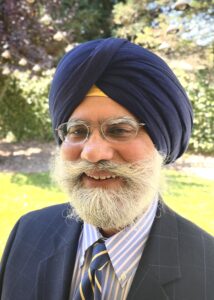
Dr. Parhar previously served as an associate clinical professor affiliated with the University of California, Davis, and on the executive board of Sutter Independent Physicians IPA in California. His professional experience spans outpatient medicine, inpatient care, intensive care medicine, and health care leadership, including past affiliations with Sutter Health and Sutter Roseville in California.

Throughout his career, he became increasingly concerned about several structural challenges within the current health care model, including affordability, accessibility, polypharmacy, health care fragmentation, microbial resistance, physician burnout, and the progressive underemphasis of prevention and functional preservation. These observations led him to develop the Health Enhancement Organization (HEO) Framework, a prevention-oriented and biomechanics-aware health care enhancement model designed to complement scientific medicine through earlier biological support, movement preservation, patient empowerment, and health care team well-being.

Dr. Parhar’s current work focuses on health care course correction, scalable prevention strategies, biomechanics education, healthier aging, and improving long-term population health resilience in practical, affordable, and biologically grounded ways. He is the founder of Jeeva Health Systems, and his research includes “Impact of a Novel Plant-Based Treatment Option in Improving Pulmonary Function Markers,” published in Alternative and Integrative Medicine.


Prev

U.S. drug shortages threaten national health security

June 4, 2026 Kevin 0
…

Kevin

Tagged as: Health Policy and Public Health

< Previous Post
U.S. drug shortages threaten national health security

ADVERTISEMENT

More by Narinder Singh Parhar, MD

  • Why scientific medicine alone is not making us healthier

    Narinder Singh Parhar, MD

Related Posts

  • Rural health care crisis: Can telemedicine close the gap?

    Griffin Popp
  • A theological answer to our health care crisis

    Cedric Dark, MD, MPH
  • Clinicians unite for health care reform

    Leslie Gregory, PA-C
  • Independent physicians are missing from health care policy

    Scott Tzorfas, MD
  • Global aspirations for value-based health care

    Paul Pender, MD
  • Fostering health care innovation through federal policy: a case for direct primary care

    Christopher Habig, MBA

More in Health Policy

  • U.S. drug shortages threaten national health security

    Anmol Gupta, MD, MPP
  • The real reason value-based care has not delivered

    Jeanne Cohen
  • RFK’s food pyramid is a win for industry, not health

    Martha Rosenberg
  • How cross-sector collaboratives cut health care costs

    Christine Schuster, RN, MBA
  • Why health care accountability demands system readiness

    Tiffiny Black, DM, MPA, MBA
  • How Medicare reimbursement hurts independent physicians

    James Albert, MD
  • Most Popular

  • Past Week

    • DEA fear is reshaping how doctors prescribe

      Ronald L. Lindsay, MD | Physician
    • Metrics got you into medicine and are making you unhappy in it [PODCAST]

      The Podcast by KevinMD | Podcast
    • Violence against doctors: 5 forces that ignite it

      Timothy Lesaca, MD | Physician
    • The double standard at the heart of chronic pain treatment

      Joshua Saylor | Conditions and Diseases
    • 3 fixes for primary care access in the ChatGPT era

      Payam Zamani, MD | Health Technology
    • Why does post-discharge care keep breaking down?

      Katherine Owen, RN | Conditions and Diseases
  • Past 6 Months

    • Primary care crisis requires new training and skills

      Justin Oldfield, MD | Physician
    • Polycystic ovary syndrome is more than ovarian

      Oluyemisi Famuyiwa, MD | Conditions and Diseases
    • DEA fear is reshaping how doctors prescribe

      Ronald L. Lindsay, MD | Physician
    • Expanding the SOAP framework boosts health outcomes

      Deepak Gupta, MD and Sarwan Kumar, MD | Physician
    • The handwashing standard nobody finished. Until now.

      Bernadette Burroughs, RN | Conditions and Diseases
    • Why bipolar II is not just a milder version of bipolar I

      Ethan Evans, MD | Conditions and Diseases
  • Recent Posts

    • Health care affordability is now a moral crisis

      Narinder Singh Parhar, MD | Health Policy
    • U.S. drug shortages threaten national health security

      Anmol Gupta, MD, MPP | Health Policy
    • What happens when physicians cede AI to direct-to-consumer startups [PODCAST]

      The Podcast by KevinMD | Podcast
    • How a self-driving car medical escort could work

      Deepak Gupta, MD | Physician
    • Clinician trust in AI is not a one-time milestone

      Susan Grant, DNP, RN | Health Technology
    • The real reason value-based care has not delivered

      Jeanne Cohen | Health Policy

Subscribe to KevinMD and never miss a story!

Get free updates delivered free to your inbox.


Find jobs at
Careers by KevinMD.com

Search thousands of physician, PA, NP, and CRNA jobs now.

Learn more

Leave a Comment

Founded in 2004 by Kevin Pho, MD, KevinMD.com is the web’s leading platform where physicians, advanced practitioners, nurses, medical students, and patients share their insight and tell their stories.

Social

  • Like on Facebook
  • Follow on Twitter
  • Connect on Linkedin
  • Subscribe on Youtube
  • Instagram

ADVERTISEMENT

  • Most Popular

  • Past Week

    • DEA fear is reshaping how doctors prescribe

      Ronald L. Lindsay, MD | Physician
    • Metrics got you into medicine and are making you unhappy in it [PODCAST]

      The Podcast by KevinMD | Podcast
    • Violence against doctors: 5 forces that ignite it

      Timothy Lesaca, MD | Physician
    • The double standard at the heart of chronic pain treatment

      Joshua Saylor | Conditions and Diseases
    • 3 fixes for primary care access in the ChatGPT era

      Payam Zamani, MD | Health Technology
    • Why does post-discharge care keep breaking down?

      Katherine Owen, RN | Conditions and Diseases
  • Past 6 Months

    • Primary care crisis requires new training and skills

      Justin Oldfield, MD | Physician
    • Polycystic ovary syndrome is more than ovarian

      Oluyemisi Famuyiwa, MD | Conditions and Diseases
    • DEA fear is reshaping how doctors prescribe

      Ronald L. Lindsay, MD | Physician
    • Expanding the SOAP framework boosts health outcomes

      Deepak Gupta, MD and Sarwan Kumar, MD | Physician
    • The handwashing standard nobody finished. Until now.

      Bernadette Burroughs, RN | Conditions and Diseases
    • Why bipolar II is not just a milder version of bipolar I

      Ethan Evans, MD | Conditions and Diseases
  • Recent Posts

    • Health care affordability is now a moral crisis

      Narinder Singh Parhar, MD | Health Policy
    • U.S. drug shortages threaten national health security

      Anmol Gupta, MD, MPP | Health Policy
    • What happens when physicians cede AI to direct-to-consumer startups [PODCAST]

      The Podcast by KevinMD | Podcast
    • How a self-driving car medical escort could work

      Deepak Gupta, MD | Physician
    • Clinician trust in AI is not a one-time milestone

      Susan Grant, DNP, RN | Health Technology
    • The real reason value-based care has not delivered

      Jeanne Cohen | Health Policy

MedPage Today Professional

An Everyday Health Property Medpage Today

Copyright © 2026 KevinMD.com | Powered by Astra WordPress Theme

  • Terms of Use | Disclaimer
  • Privacy Policy
  • DMCA Policy
All Content © KevinMD, LLC
Site by Outthink Group

Leave a Comment

Comments are moderated before they are published. Please read the comment policy.

Loading Comments...