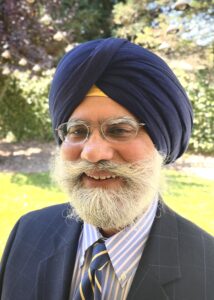
Narinder Singh Parhar is a physician with more than three decades of experience in internal medicine, hospital medicine, and intensive care medicine. Over the course of his career, he cared for a broad spectrum of medically complex and critically ill patients while developing a growing interest in health care systems improvement, prevention, biomechanics, and population health.
Dr. Parhar previously served as an associate clinical professor affiliated with the University of California, Davis, and on the executive board of Sutter Independent Physicians IPA in California. His professional experience spans outpatient medicine, inpatient care, intensive care medicine, and health care leadership, including past affiliations with Sutter Health and Sutter Roseville in California.
Throughout his career, he became increasingly concerned about several structural challenges within the current health care model, including affordability, accessibility, polypharmacy, health care fragmentation, microbial resistance, physician burnout, and the progressive underemphasis of prevention and functional preservation. These observations led him to develop the Health Enhancement Organization (HEO) Framework, a prevention-oriented and biomechanics-aware health care enhancement model designed to complement scientific medicine through earlier biological support, movement preservation, patient empowerment, and health care team well-being.
Dr. Parhar's current work focuses on health care course correction, scalable prevention strategies, biomechanics education, healthier aging, and improving long-term population health resilience in practical, affordable, and biologically grounded ways. He is the founder of Jeeva Health Systems, and his research includes "Impact of a Novel Plant-Based Treatment Option in Improving Pulmonary Function Markers," published in Alternative and Integrative Medicine.
Medical education has always carried an enormous responsibility: deciding what a future physician needs to know. For generations, the answer seemed relatively straightforward. Give medical students a rigorous foundation in anatomy, physiology, biochemistry, pathology, pharmacology, microbiology, and other basic sciences.…
Medical education has always carried an enormous responsibility: deciding what a future physician needs to know.
For generations, the answer seemed relatively straightforward. Give medical students a rigorous foundation in anatomy, physiology, biochemistry, pathology, pharmacology, microbiology, and other basic sciences. Build clinical knowledge upon that foundation. Then provide supervised clinical experience until the student becomes capable of practicing medicine. That model has served medicine extraordinarily well.
Medicine has become remarkably sophisticated at measuring the human body. We measure blood pressure, heart rate, temperature, oxygen saturation, laboratory values, imaging findings, and increasingly complex biomarkers. Yet one of the richest sources of information about a patient's functional health…
Medicine has become remarkably sophisticated at measuring the human body. We measure blood pressure, heart rate, temperature, oxygen saturation, laboratory values, imaging findings, and increasingly complex biomarkers. Yet one of the richest sources of information about a patient’s functional health may pass directly in front of us every day without being systematically captured:
How the patient walks.
I believe a brief gait video deserves consideration as a functional vital sign. A …
Modern scientific medicine has given humanity extraordinary tools. Antibiotics transformed once-lethal infections into treatable illnesses. Cardiovascular medications prevent strokes and myocardial infarctions. Insulin, anticoagulants, immunotherapies, psychiatric medications, and countless other treatments have extended and improved millions of lives. The problem…
Modern scientific medicine has given humanity extraordinary tools. Antibiotics transformed once-lethal infections into treatable illnesses. Cardiovascular medications prevent strokes and myocardial infarctions. Insulin, anticoagulants, immunotherapies, psychiatric medications, and countless other treatments have extended and improved millions of lives.
The problem is not medication. The problem begins when our capacity to prescribe becomes greater than our discipline to ask whether every intervention remains necessary. That distinction is increasingly important in an aging …
Inflammation is having an important moment in cardiovascular medicine. That is appropriate. Atherosclerosis is unquestionably an inflammatory disease. Chronic inflammation participates in plaque initiation and progression, plaque instability, thrombosis, and ultimately myocardial infarction and stroke. But a recent clinical trial…
Inflammation is having an important moment in cardiovascular medicine. That is appropriate. Atherosclerosis is unquestionably an inflammatory disease. Chronic inflammation participates in plaque initiation and progression, plaque instability, thrombosis, and ultimately myocardial infarction and stroke.
But a recent clinical trial gives us reason to ask a question that may take us one step further: not whether inflammation matters, but why inflammation persists in the first place. Before attempting to suppress it, …
In Western medical training and clinical practice, one of the first questions a clinician traditionally asks is: "What is your chief complaint?" The patient tells a story. The clinician listens, asks questions, performs an examination, develops a differential diagnosis, and…
In Western medical training and clinical practice, one of the first questions a clinician traditionally asks is: “What is your chief complaint?” The patient tells a story. The clinician listens, asks questions, performs an examination, develops a differential diagnosis, and recommends appropriate treatment.
But what if our current health care delivery model itself were the patient? Its chief complaint might sound something like this: “Doctor, I am becoming unaffordable.” And then, …
Health care has never possessed more scientific knowledge, more sophisticated technology, or more specialized expertise than it does today. Yet despite these remarkable advances, chronic disease continues to rise, health care costs continue to escalate, physician burnout persists, and patients…
Health care has never possessed more scientific knowledge, more sophisticated technology, or more specialized expertise than it does today. Yet despite these remarkable advances, chronic disease continues to rise, health care costs continue to escalate, physician burnout persists, and patients increasingly spend more years living with illness rather than enjoying health.
This paradox raises an important question. A probable explanation: Perhaps our greatest challenge is not a lack of scientific progress. …
Science, especially Newtonian physics, has taught us to appreciate the elegant laws that govern the physical world. A moving object carries momentum. A stationary object possesses inertia. One tends to keep moving in its current direction until acted upon by…
Science, especially Newtonian physics, has taught us to appreciate the elegant laws that govern the physical world. A moving object carries momentum. A stationary object possesses inertia. One tends to keep moving in its current direction until acted upon by an external force. The other resists movement until sufficient force is applied. These principles explain planets, automobiles, athletes, and machinery.
Perhaps less obviously, they also offer a useful way to understand …
Every physician has seen it. A healthy young woman gives birth, recovers from the immediate demands of pregnancy and childbirth, and returns to the responsibilities of work and family. Years later, often decades later, she presents with chronic knee pain,…
Every physician has seen it.
A healthy young woman gives birth, recovers from the immediate demands of pregnancy and childbirth, and returns to the responsibilities of work and family. Years later, often decades later, she presents with chronic knee pain, hip discomfort, lower back pain, or declining mobility. Eventually, some of these women progress to knee replacement surgery.
We usually regard these events as unrelated. Perhaps they are not.
One of the most common questions physicians ask when evaluating a new idea is simple: "Where is the evidence?" It is an appropriate question. Scientific evidence has transformed modern medicine. It has helped identify beneficial therapies, eliminate ineffective treatments, improve…
One of the most common questions physicians ask when evaluating a new idea is simple: “Where is the evidence?” It is an appropriate question.
Scientific evidence has transformed modern medicine. It has helped identify beneficial therapies, eliminate ineffective treatments, improve patient safety, and extend human life. Few would argue against the enormous contributions of evidence-based medicine. As a physician, neither would I.
Yet over time, I have become concerned that we sometimes …
American health care faces many challenges: rising costs, workforce shortages, an aging population, increasing chronic disease burden, and growing administrative complexity. Yet one of the most important health care crises receives far less attention than it deserves: the declining physical…
American health care faces many challenges: rising costs, workforce shortages, an aging population, increasing chronic disease burden, and growing administrative complexity. Yet one of the most important health care crises receives far less attention than it deserves: the declining physical and emotional well-being of the health care workforce itself.
Physicians, nurses, respiratory therapists, pharmacists, physical therapists, and countless other health care professionals devote their careers to caring for others. Yet many …
Few would argue against the extraordinary success of modern cardiovascular medicine. Over the past half century, physicians, researchers, public health leaders, and policymakers have invested enormous effort in understanding and reducing cardiovascular risk. Smoking cessation campaigns, blood pressure control, cholesterol…
Few would argue against the extraordinary success of modern cardiovascular medicine. Over the past half century, physicians, researchers, public health leaders, and policymakers have invested enormous effort in understanding and reducing cardiovascular risk. Smoking cessation campaigns, blood pressure control, cholesterol management, diabetes treatment, cardiac rehabilitation, and advances in acute cardiac care have collectively saved millions of lives.
As a result, Americans today are far more aware of cardiovascular health than previous …
"If gravity pulls everything down, why are my health insurance premiums and co-payments skyrocketing?" The question sounds humorous, but beneath the humor lies frustration shared by millions of Americans. Health care spending in the United States continues to rise year…
“If gravity pulls everything down, why are my health insurance premiums and co-payments skyrocketing?”
The question sounds humorous, but beneath the humor lies frustration shared by millions of Americans. Health care spending in the United States continues to rise year after year. Medical technology has advanced dramatically. We have better imaging, more sophisticated procedures, and an ever-expanding list of medications. Yet many patients are finding health care increasingly difficult to afford. …
After nearly four decades in medicine, I have become convinced that one of the greatest threats facing American health care is not a lack of scientific advancement. It is the growing imbalance between what our health care system excels at…
After nearly four decades in medicine, I have become convinced that one of the greatest threats facing American health care is not a lack of scientific advancement. It is the growing imbalance between what our health care system excels at and what it often neglects.
Modern medicine has achieved extraordinary successes. We routinely save patients from heart attacks, strokes, severe infections, trauma, and many cancers. We transplant organs, replace joints, implant …