After nearly four decades in medicine, I have become convinced that one of the greatest threats facing American health care is not a lack of scientific advancement. It is the growing imbalance between what our health care system excels at and what it often neglects.
Modern medicine has achieved extraordinary successes. We routinely save patients from heart attacks, strokes, severe infections, trauma, and many cancers. We transplant organs, replace joints, implant sophisticated cardiac devices, and perform procedures that previous generations could scarcely imagine. Yet despite these remarkable accomplishments, many patients are not getting healthier. Health care spending continues to rise. Insurance premiums and out-of-pocket expenses continue to climb. Physicians report increasing frustration and burnout. Patients often feel unheard, rushed, and overwhelmed. Chronic diseases continue to consume a growing share of health care resources.
Why? I believe one important reason is that our health care system has gradually become increasingly top heavy. Much of our investment, attention, and reimbursement structure is directed toward diagnosing, treating, and managing disease after it has already developed. The system is exceptionally skilled at responding to illnesses. It is far less effective at helping people preserve function, mobility, resilience, and health before disease becomes established.
In engineering, architecture, and biology, structures become unstable when the top grows disproportionately larger than the base. The same principle applies to health care. The base of health care should consist of informed patients, empowered primary care physicians, nurses, physical therapists, respiratory therapists, dietitians, health educators, and community-based prevention efforts. These professionals and patients together represent the foundation upon which long-term health depends. Instead, many of these foundational elements receive comparatively limited resources and attention while health care expenditures continue to concentrate higher in the system.
Real physician voices, twice a week
Free, and one click to unsubscribe.
As a practicing physician, I repeatedly observed patients entering a cascade that often began with a relatively simple problem. A decline in mobility leads to inactivity. Inactivity contributes to weight gain, weakness, imbalance, chronic pain, diabetes, hypertension, depression, or social isolation. More symptoms lead to more tests, more referrals, more medications, and more procedures. Each step may be medically justified. Yet collectively, the system often functions as though disease management alone can compensate for insufficient investment in health enhancement.
A different approach is possible. What if we broadened the base of health care? What if patients were systematically taught practical strategies to improve strength, balance, posture, mobility, sleep quality, respiratory function, nutrition, and self-care? What if primary care physicians and allied health professionals were given greater support and incentives to focus on preserving function rather than merely documenting decline? What if health care organizations measured success not only by disease outcomes, but also by improvements in mobility, independence, fall prevention, medication reduction, and quality of life? What if patients themselves became active participants rather than passive recipients of care?
These questions form the foundation of what I have come to describe as health enhancement, a complementary strategy that works alongside scientific medicine rather than in opposition to it. Health enhancement does not reject modern medicine. On the contrary, it depends upon and respects the achievements of scientific medicine. When patients develop serious illness, they deserve access to the best diagnostics, medications, procedures, and specialists available. But health care should not begin only after disease has taken hold. We need a stronger commitment to preserving health, maintaining function, preventing avoidable disability, and empowering patients to become partners in their own well-being.
One of the lessons I have learned over the years is that small improvements applied consistently can produce remarkable results. Better balance can prevent falls. Better mobility can reduce pain. Better sleep can improve cognition. Better conditioning can reduce hospitalizations. Better education can improve adherence and outcomes. These interventions may not attract the same attention as advanced procedures or breakthrough technologies, but their cumulative impact on population health can be profound.
America does not need less scientific medicine. America needs a better balance between scientific medicine and health enhancement. The health care challenges we face (affordability, accessibility, polypharmacy, chronic disease burden, and workforce burnout) will not be solved by continually building higher layers onto an already top-heavy structure. We must strengthen the foundation. The future of health care depends not only on how effectively we treat disease, but also on how successfully we help people remain healthy in the first place.
This article is discussed on The Podcast by KevinMD: Why more medicine isn’t making us healthier.
Narinder Singh Parhar is a physician with more than three decades of experience in internal medicine, hospital medicine, and intensive care medicine. Over the course of his career, he cared for a broad spectrum of medically complex and critically ill patients while developing a growing interest in health care systems improvement, prevention, biomechanics, and population health.
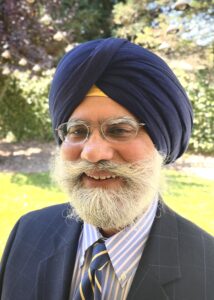
Dr. Parhar previously served as an associate clinical professor affiliated with the University of California, Davis, and on the executive board of Sutter Independent Physicians IPA in California. His professional experience spans outpatient medicine, inpatient care, intensive care medicine, and health care leadership, including past affiliations with Sutter Health and Sutter Roseville in California.
Throughout his career, he became increasingly concerned about several structural challenges within the current health care model, including affordability, accessibility, polypharmacy, health care fragmentation, microbial resistance, physician burnout, and the progressive underemphasis of prevention and functional preservation. These observations led him to develop the Health Enhancement Organization (HEO) Framework, a prevention-oriented and biomechanics-aware health care enhancement model designed to complement scientific medicine through earlier biological support, movement preservation, patient empowerment, and health care team well-being.
Dr. Parhar’s current work focuses on health care course correction, scalable prevention strategies, biomechanics education, healthier aging, and improving long-term population health resilience in practical, affordable, and biologically grounded ways. He is the founder of Jeeva Health Systems, and his research includes “Impact of a Novel Plant-Based Treatment Option in Improving Pulmonary Function Markers,” published in Alternative and Integrative Medicine.