The announcement landed the way tech announcements usually do: bold claims, a glossy render, the implication that health care’s problems are basically engineering problems that nobody competent had gotten around to solving.
Elon Musk envisions Optimus, his humanoid AI robot, stepping into medical care. Surgical precision. Universal access. Automation of the tasks that slow medicine down. He has gone so far as to claim Optimus could one day perform “any medical procedure, perhaps things that humans can’t even do because they’re too difficult.”
He is not wrong about the problem. He is partially wrong about the solution.
I have practiced medicine for two decades. Internal medicine. Hospitalist work. Functional medicine. I have watched colleagues burn out on documentation while patients waited. I have watched rural patients drive three hours for consultations that could have happened remotely. If Optimus can take documentation off a physician’s desk, let it. If it can extend diagnostic reach to underserved communities, that matters.
Real physician voices, twice a week
Free, and one click to unsubscribe.
But medicine has been here before. Every generation of technological optimism arrives with the same implicit promise: that the next tool will solve what the last tool could not. It has not worked that way. Not because the tools were wrong, but because the diagnosis was incomplete.
The problem is not throughput
The crisis in American health care is framed, almost universally, as a capacity problem. Not enough doctors. Not enough access. Not enough efficiency. Those are real. They are not the root.
For a century we have practiced biomedical medicine: find the broken part, fix the broken part. What we have never built at scale is its missing half, biographical medicine, the discipline of reading the body as a record of the life it has lived. This is not narrative medicine’s gift for listening alone. It is that listening made measurable, the arc of a life tracked with the same rigor we bring to a lab value.
She did not sit like someone who expected much.
A composite I will call Elena, mid-forties, a hospital administrator, the kind of person whose colleagues marveled at her precision under pressure. Eleven years of documented symptoms. Four rheumatologists, two gastroenterologists, a neurologist, a sleep specialist, a functional medicine consultation she had driven an hour and a half to access. IBS with no dietary pattern. Migraines every three to four weeks. Fatigue she described with the exactness of someone who had learned to be useful with language: I can sleep nine hours and wake up tired in a way that has nothing to do with sleep. Joint pain that migrated, hip one month, wrists the next, never staying long enough to anchor a diagnosis.
Every workup came back largely clean. The most recent rheumatologist had written: possible early connective tissue disease, monitor. Not a diagnosis. A holding pattern.
I asked her when it started. She paused the way patients pause when a question lands somewhere they were not expecting. My mother had a breakdown when I was nine, she said. A hospitalization. Several months. Then: My own mother died when I was thirty-four. We had a complicated relationship. I did not grieve it the way I probably should have. About six months later, things started going wrong.
Two losses. One absorbed as a child before she had language for it. One filed under there is so much to do. Eleven years of a body trying to complete something her schedule had declared finished. Nobody had asked. Not once, across eleven appointments.
Good labs. Bad life. There’s a reason. Eleven specialists had run biomedical medicine to its limit. Not one had practiced biographical medicine. Not one had asked what her body was carrying.
The Flexner Report of 1910 standardized medical education around biomedical science, and did enormous good. It ended quackery. It established evidence-based standards. Life expectancy gains of the 20th century are partly its legacy. But it also narrowed the lens. The patient became a collection of organ systems. The person standing in the room, with a biography, a body that had been following that biography for decades, became harder to see.
Optimus will not fix that. Neither will any AI trained primarily to optimize the inputs and outputs of a system built on the same narrow framework.
What AI in medicine can actually do
There is a detail in the Optimus rollout that rarely makes the headlines. The near-term plan for humanoid care robots is not autonomous intelligence at all. It is a human being, wearing a VR rig somewhere else, operating the robot’s hands in real time, the proposed model for delivering at-home care to the elderly, the injured, the disabled. Read that twice. Even the most ambitious version of the robotic future quietly concedes the thing I have been saying for two decades: The human cannot be removed from care. It can only be relocated. The hands move from the bedside to a headset. The judgment, the attention, the presence, those still have to come from a person.
We are not automating the caregiver. We are putting the caregiver behind glass and calling it innovation.
I am building TimeVitality.ai, a platform designed to bridge Eastern and Western medicine through precision diagnostics. I am not anti-technology. I am against magical thinking about technology.
AI in medicine does several things genuinely well. Pattern recognition at scale, catching rare drug interactions, imaging findings at the edge of perceptibility, population-level trends. Administrative burden reduction: a 2016 study by Sinsky and colleagues in Annals of Internal Medicine found physicians spend just 27 percent of their office day in direct face time with patients, against 49 percent on electronic records and desk work, plus one to two hours of pajama-time data entry each night. Any system that reduces that load is a legitimate intervention. Longitudinal tracking: AI can hold the arc of sleep, stress, and metabolic markers across time, surfacing signal that a single appointment cannot. Access extension: Telemedicine and AI-assisted diagnostics can reach communities that current staffing ratios cannot.
What AI does not do well: it cannot sit with ambiguity. It cannot hold a patient’s hand while she tells the story she has never told anyone. It cannot ask the question that is not on the intake form. It cannot recognize that what a patient calls insomnia is actually grief.
These are not soft observations. They have biological weight. Chronic unprocessed stress suppresses immune function, elevates cortisol, and dysregulates the HPA axis. The absence of meaning shows up in inflammatory markers. Social isolation increases all-cause mortality with effect sizes comparable to smoking fifteen cigarettes a day, a finding from Holt-Lunstad’s 2015 meta-analysis of 3.4 million adults, published in Perspectives on Psychological Science. It shows up in the patient who has been to eleven specialists and is no closer to understanding why she is sick.
A robot cannot diagnose a life that has lost its direction.
The real risk of AI in clinical settings
The fear in most physician communities is displacement. That fear is understandable. It is mostly misplaced. What AI displaces is not the physician. It is the physician’s worst work, the documentation, the administrative overhead, the tasks that never required clinical judgment to begin with.
The evidence is already sorting itself along exactly this line. Logistics robots that move supplies and specimens through hospitals report real gains. Where robots are pushed toward the relational core of care, they struggle. Nurses at one health system found them intrusive enough to name them “annoying.” The first long-term, nurse-led U.S. study of humanoid robots in dementia care launched at UC Davis this spring. Notably, the robot under study is a companion called “Abi,” not a surgeon. The validated frontier is presence-support and monitoring. The data is telling us where the line is. The only question is whether health systems will respect it.
The real risk is not that AI replaces physicians. The risk is that health systems, reading AI can do more with less, use that as license to further reduce physician time with patients. To further optimize for throughput over understanding. To build a more efficient version of the same incomplete system. That would be the wrong lesson.
What medicine needs from this moment
Technology is not neutral. It reflects the values of the systems that deploy it. Deploy AI into a system organized around disease management, and you get faster disease management. You do not get a healthier population. Deploy AI into a system that asks different questions, what is the root cause, what biography has this body been following, and you get something genuinely new. Biographical medicine, finally given the instruments it has always lacked.
Musk is right that medicine needs transformation. He is solving for the supply side: more access, more precision, more efficiency. The demand side is harder. It requires asking what people are actually sick from. Not just what their bodies are doing, but what their lives have been asking of those bodies. That question does not fit on an intake form. It does not fit inside an algorithm. It belongs to the physician still willing to ask it.
Because a robot cannot diagnose a life that has lost its direction.
Shiv K. Goel is a board-certified internal medicine and functional medicine physician based in San Antonio, Texas, focused on integrative and root-cause approaches to health and longevity. He is the founder of Prime Vitality, a holistic wellness clinic, and TimeVitality.ai, an AI-driven platform for advanced health analysis. His clinical and educational work is also shared at drshivgoel.com.
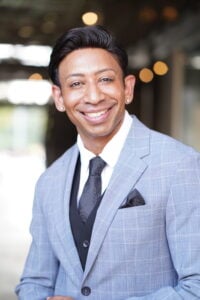
Dr. Goel completed his internal medicine residency at Mount Sinai School of Medicine in New York and previously served as an assistant professor at Texas Tech University Health Science Center and as medical director at Methodist Specialty and Transplant Hospital and Metropolitan Methodist Hospital in San Antonio. He has served as a principal investigator at Mount Sinai Queens Hospital Medical Center and at V.M.M.C. and Safdarjung Hospital in New Delhi, with publications in the Canadian Journal of Cardiology and presentations at the American Thoracic Society International Conference.
He regularly publishes thought leadership on LinkedIn, Medium, and Substack, and hosts the Vitality Matrix with Dr. Goel channel on YouTube. He is currently writing Healing the Split Reconnecting Body Mind and Spirit in Modern Medicine.