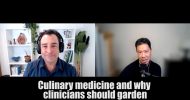
This month, 53 medical schools committed to requiring 40 hours of nutrition education. As the physician who co-taught the first U.S. medical school class in culinary medicine, with Mike Roizen, MD, founding director of the Cleveland Clinic Wellness Institute, I am proud that culinary medicine is now taught in roughly 80 percent of U.S. medical schools. I recognize this as a genuine win. But I have watched this story before, when no medical schools taught culinary medicine in 2002. And there was no CME for practicing clinicians. I am watching history repeat itself with nature-based medicine. A physician who counsels a patient on olive oil and fiber but never asks how much time that patient spends indoors is missing what may be the largest unaddressed environmental risk factor in modern medicine. Americans spend 93 percent of their lives inside. That confinement is not a wellness issue. It is a biological emergency, and its downstream consequences fill our schedules and waiting rooms.
What we are treating instead of the root cause
Insomnia. Cognitive decline. Insulin resistance. Treatment-resistant depression. Chronic low-grade inflammation. We manage these as separate diseases. Increasingly, the evidence suggests they share a root cause: chronic indoor confinement and the biological mismatch it creates. We are consuming more sensory input than the nervous system can metabolize, what some researchers have called digital obesity, a condition characterized by chronic screen overload that disrupts circadian architecture, elevates cortisol, suppresses melatonin, and drives the inflammation we are treating downstream. This is not a wellness hypothesis. Blue light from evening screens suppresses melatonin by up to 80 percent. Office CO2 levels above 1,000 ppm reduce cognitive performance by 15 percent (Allen et al., 2016, Environmental Health Perspectives). Chronic indoor confinement has now been associated with shortened telomere length, reduced NK cell activity, blunted cortisol awakening response, and progressive myopia, the last of which now affects half of all children.
The evidence is already at drug-level effect sizes
20 minutes in a natural setting lowers salivary cortisol by approximately 21 percent. A single 2-hour forest immersion increases NK cell activity by over 50 percent, an effect sustained for 30 days. Forest bathing lowers systolic blood pressure by 7 mmHg, equivalent to first-line antihypertensive therapy. A 5 mmHg SBP reduction carries a 14 percent reduction in stroke risk and a 9 percent reduction in MI risk. Regular gardening reduces HbA1c in diabetic patients by approximately 0.5 percent, comparable to the effect of initiating metformin in some patient populations. The White et al. (2019, Scientific Reports) study of 19,806 adults established a dose-response threshold: below 120 minutes per week in natural environments, no measurable health benefit. Above it, significant improvements in self-reported health, well-being, and biomarkers of stress and inflammation. The optimal window is 200-300 minutes weekly. That is the minimum effective dose of 17 minutes per day.
Real physician voices, twice a week
Free, and one click to unsubscribe.
Other health systems have already moved
Scotland’s NHS deploys green social prescribing, which are structured referrals to nature-based interventions as standard care. Japan has formally integrated shinrin-yoku into its Ministry of Health’s preventive medicine guidelines since the 1980s. Canada’s PaRx program enables licensed clinicians to prescribe national park time. South Korea operates government-designated forest healing programs. England’s NHS has a national Green Social Prescribing Programme. The World Health Organization now includes 120 minutes weekly in nature as a global public health guideline alongside exercise and nutrition. American medicine is not there yet. We do not need another app to get there. We need to upgrade the biological platform our patients run on. That means asking a question we were never trained to ask: When did you last spend time outside, deliberately, in something green?
What happens when we do not ask
My patient Michael was 42 years old, successful, and losing function. Chronic chest pressure. Brain fog. An anxiety that would not yield to any of the interventions we tried. He had seen three physicians. None had asked the question. The prescription that worked: Leave his office at noon. Drive to a bluff. Sit, phone in the car, for 15 minutes looking at the ocean. Within one month, his headaches decreased, his sleep improved, and his wife said he seemed present at dinner for the first time in years. That is not anecdote. That is the biology working.
The curriculum we are still missing
We built culinary medicine into medical education because food is medicine, and because the evidence demanded it. Practicing clinicians need to know what to do with the patient sitting in front of them with insomnia, hypertension, obesity, and burnout, who is spending 93 percent of their life in an environment their biology was not designed for. One thing to do: Ask, “What would happen if you intentionally spent 10 minutes in a green or blue space without looking at your device today?” And then prescribe it daily.
John La Puma is an internal medicine physician.