I need to say something uncomfortable, and I need to say it as someone who has spent a career arguing the opposite.
Right now, AI has made me a better physician. Not marginally. Dramatically. It sharpens my differential before I’ve finished the sentence. It catches the arrhythmia pattern I might have glossed over on a busy afternoon. It lets me spend less time hunting through a chart and more time with my hand on a patient’s shoulder. If you had asked me two years ago whether a machine could make me more human in the exam room, I would have laughed. I’m not laughing anymore.
And I still believe, as strongly as I have ever believed anything in medicine, that the physician is irreplaceable. That healing has always been part science and part presence, and no algorithm can sit at a bedside at 2 a.m. and simply be there.
So let me say the uncomfortable thing plainly: I don’t think the first half of that will be true forever.
Real physician voices, twice a week
Free, and one click to unsubscribe.
There are two separate claims hiding inside “AI will replace doctors.” The first is technical: Can a machine out-diagnose and out-operate a human physician? Extrapolate the current trajectory another decade or two, and I think the honest answer is yes. Robotics already does sub-millimeter work human hands cannot match. Pattern recognition already outperforms experienced clinicians at reading an angiogram or flagging a subtle rhythm change. The argument that humans remain the superior technicians of medicine is starting to collapse under its own weight.
The second claim is moral: Does that technical superiority mean the human role in medicine disappears? That is where I refuse to concede.
A diagnosis is a fact. Care is a relationship. We’ve gotten away with pretending those are the same thing because, until now, only a human could reliably do both. When I tell a patient they have critical limb ischemia and we’re racing a clock measured in tissue viability, the clinical decision is one act. Sitting with that patient’s fear, and their family’s fear, is a separate act. AI can own the first. It has no claim on the second, because the second isn’t a processing problem. It’s a witnessing problem. Suffering wants to be seen by something that can also suffer. That is not sentimentality; it is, I think, the actual load-bearing wall of what we call the doctor-patient relationship.
I’ve told residents for years: Being a doctor is the easy part. You learn the physiology, you log the hours, you earn the letters after your name. What separates a good physician from a great one was never in that pile. It’s the capacity to console, to comfort, to sit inside someone else’s worst moment without rushing to the next room. Curing is a skill. Comforting is a character trait, and no machine will ever manage it, no matter how far the curve extends. Comfort isn’t a script. It’s a body in the room. I cannot overstate how therapeutic an actual arm around an actual shoulder is at the exact second a diagnosis lands and a person’s legs nearly give out. No robot is going to be trusted to do that, and if one ever tried, something in medicine would have already been lost long before the machine arrived.
I think about this most on the nights I meet a family for the first time under the worst circumstances. A fifty-year-old man comes in with a massive heart attack. We do everything right, and it isn’t enough. I walk out to a wife and two children I have never met, and I have to introduce myself in the same sentence that I tell them their father is not coming home. There is no protocol for that conversation. There is only staying in the room.
Then I go home. Some nights I walk past my own children’s rooms, watch them sleeping, safe and unaware, and feel something close to guilt that I get to have this, that I get to tuck them in on a night I just took that same certainty from two other kids I’d never met an hour before. That guilt isn’t billable. No AI will ever carry it home in the car. A machine can be right. It cannot be haunted. I’ve come to believe a certain kind of good medicine requires being willing to be haunted.
Here is what actually worries me about the future, and it isn’t robotics. It’s that we let the technical collapse and the moral collapse happen together, simply because we never built anything to protect the second once the first became automatable. Presence has always ridden along for free, bundled with clinical necessity. Reimbursement pays for procedures, not for someone who stays in the room an extra ten minutes. If AI strips away the procedural work that has quietly subsidized the human work, the human work may simply stop being paid for, and therefore stop happening, long before any machine could actually replace it.
That is the version of “physicians are no longer needed” I actually fear. Not machines outcompeting us at compassion. Us quietly deciding compassion doesn’t survive once it’s no longer bundled with something billable.
I am not writing this to defend physicians as technicians. That fight may already be lost, and clinging to it wastes energy we need for the one that matters: making sure medicine still has room, structurally and financially, for one human being to sit with another at the worst moment of their life, even after a machine could have made the diagnosis faster and the incision cleaner.
The day physicians are no longer needed to practice medicine may come faster than most of us are prepared to admit. The day patients no longer need another human being in the room with them, I don’t think that day exists. I think we should build medicine as if it doesn’t, on purpose, before we lose the chance to choose.
This essay is cited in the KevinMD record on artificial intelligence.
Andrey Espinoza is a triple board-certified interventional cardiologist and vascular specialist and the founder and CEO of the Advanced Heart and Vascular Institute of Hunterdon in Flemington, New Jersey. He serves as medical director of its clinical research division and of its vascular laboratory, which is accredited by the Intersocietal Accreditation Commission (IAC). He is affiliated with Robert Wood Johnson University Hospital.
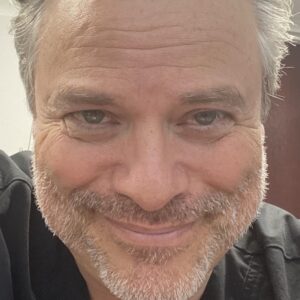
His clinical practice spans complex coronary and peripheral vascular disease, limb preservation, venous disease, and office-based endovascular intervention. Espinoza serves on the American College of Cardiology’s Vascular Disease Section Leadership Council and the Society for Cardiovascular Angiography and Interventions’ Vascular Disease Council. He is also an IAC board member, a journal reviewer, and an editorial board member.
His writing focuses on cardiovascular medicine, physician leadership, health care policy, clinical evidence, and restoring sound judgment and humanity to the practice of medicine. He shares updates on LinkedIn.