The clocks fall back on Sunday, Nov. 1, and most of us will tell our patients the same sensible things we always do: protect your sleep window, keep a consistent wake time, treat insomnia before it becomes chronic. Then we will drive home from a long shift on four hours of sleep and think nothing of it.
Medicine has a culture problem around rest. Somewhere in training we absorb the idea that needing sleep is a weakness and running on empty is a sign of commitment. The on-call badge of honor, the pride in “functioning fine” on no sleep, the quiet contempt for colleagues who leave on time: These norms are learned early and reinforced for decades.
As a psychiatrist who also practices sleep medicine, I see them as a clinical risk factor we would never tolerate in a patient. The data bear this out. Resident physicians carry an average sleep debt of roughly 1.6 hours, more than half report sleep disturbances, and severe social jetlag is independently linked to depressive symptoms.
Sleep sits upstream of burnout
Chronic short sleep and untreated insomnia do not stay in their lane. They shade directly into the emotional exhaustion and detachment we label burnout, and from there into diagnosable depression.
Real physician voices, twice a week
Free, and one click to unsubscribe.
Nearly half of physicians report symptoms of burnout, and sleep sits upstream of it. In a study of more than 7,000 physicians, those who screened positive for a sleep disorder had roughly four-fold higher odds of burnout and emotional exhaustion.
The proposed mechanisms are not mysterious: chronic depletion of energy reserves and sustained activation of the body’s stress-hormone system. It is the same stress physiology we counsel patients about.
The downstream numbers are sobering:
- Rates of depression (around 33 percent) and anxiety (around 24 percent) are higher among physicians than in the general population.
- Depression among residents runs as high as 29 percent, and 6 to 14 percent of physicians and trainees report suicidal thoughts.
- Female physicians, in particular, have a suicide rate meaningfully higher than women in the general population.
Why we don’t screen ourselves
Part of the answer is that the same culture that glorifies sleeplessness also tells us doctors should be invincible. Only 13 to 36 percent of physicians with mental health problems seek help. The barriers are specific and rational: fears about confidentiality, licensure, credentialing, and career consequences, compounded by self-stigma and simple lack of time.
We are also uniquely bad at recognizing our own impairment. Sleep-deprived physicians reliably underestimate their own fatigue, which makes self-screening the first thing to go.
The result is a workforce that would never let a patient white-knuckle through months of three-hour nights and early-morning awakenings, yet does exactly that itself and calls it normal.
The fix works at two levels
The individual level is the smaller one. Treat your own sleep the way you would a patient’s. Protect a consistent wake time and a realistic sleep window. Take persistent insomnia, or loud snoring with pauses in breathing that someone has noticed, seriously enough to pursue cognitive behavioral therapy for insomnia (CBT-I) or a sleep evaluation rather than another year of pushing through. Professional coaching has moderate-certainty evidence for reducing physician burnout, and it is a reasonable door to walk through.
The structural level is the larger lever. Systematic reviews consistently find that organization-directed changes outperform resilience training aimed at individuals. Duty-hour limits, workload redesign, and cutting low-value documentation do more, because you cannot mindfulness your way out of a 90-hour week.
This is the part the daylight saving change makes concrete. We spend one Sunday a year reminding everyone that an hour of sleep matters, then build systems that quietly take far more than an hour from the people delivering the care. The prescription we write for everyone else is the one we most need to fill.
Ravi Singareddy is the founder and medical director of Empower Psychiatry & Sleep in north metro Atlanta, where he leads an interventional psychiatry practice offering transcranial magnetic stimulation (TMS) and Spravato (esketamine) for treatment-resistant depression. Double board-certified in psychiatry and sleep medicine, he brings more than two decades of clinical and academic experience to patients who haven’t found relief with medications alone. He is affiliated with Emory Healthcare.
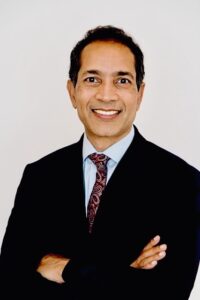
His interest in neuromodulation dates back to his years as associate professor of psychiatry at Penn State College of Medicine. There, he taught annually on vagus nerve stimulation and novel depression therapies, and he published on long-term combined electroconvulsive therapy and vagus nerve stimulation in the American Journal of Psychiatry. He has authored numerous peer-reviewed papers on sleep disorders, insomnia, anxiety, and depression, with work appearing in Sleep, the Journal of Clinical Sleep Medicine, and Psychiatry Research.
Singareddy is a Fellow of the American Psychiatric Association and the American Academy of Sleep Medicine and practices measurement-based care, tracking outcomes to guide every treatment decision. He shares updates on Instagram.