Listen and followApple PodcastsSpotifyYouTubeMore apps · Browse all episodes
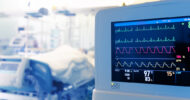
A young mother arrived in the intensive care unit sick but improving. Overnight, her care was handed to a telemedicine physician on a video screen. By morning she was beyond saving. Keith Corl is an emergency and critical care medicine physician who has worked in more than 40 community hospitals. This episode is based on his article “Why tele-critical care fails the sickest ICU patients,” published on KevinMD. You will hear how remote ICU coverage works in practice, why a physician who beams in arrives without the context that builds at the bedside, and what a split physical exam misses. He walks through the sign-out math behind covering dozens of beds across multiple hospitals. He explains why the 2024 TELESCOPE trial found no reduction in mortality or length of stay, and why the older studies hospitals cite tested adding remote physicians rather than replacing bedside ones. Press play to hear what remote coverage costs the sickest patients, and the standard he says physicians and patients should insist on.
Partner with me on the KevinMD platform. With over three million monthly readers and half a million social media followers, I give you direct access to the doctors and patients who matter most. Whether you need a sponsored article, email campaign, video interview, or a spot right here on the podcast, I offer the trusted space your brand deserves to be heard. Let’s work together to tell your story.
PARTNER WITH KEVINMD → https://kevinmd.com/influencer
SUBSCRIBE TO THE PODCAST → https://www.kevinmd.com/podcast
Transcript
Kevin Pho: Hi, and welcome to the show. Subscribe at KevinMD.com/podcast. Today we welcome Keith Corl. He is an emergency and critical care physician. Today’s KevinMD article is “Why tele-critical care fails the sickest ICU patients.” Keith, welcome to the show.
Keith Corl: Hey, good morning. Thank you for having me.
Kevin Pho: All right, so let’s start by briefly sharing your story and then telling us why you decided to share this particular article on KevinMD.
Keith Corl: Good morning, and thanks for having me. My name is Keith Corl. I’m an emergency medicine and critical care physician, and I’ve been in medicine for twenty years. I’ve worked in both the academic and the community setting. I’ve had an academic track that I supplemented along the way with a lot of community medicine, and I’ve worked in over forty community hospitals and have seen ICU medicine in a lot of different forms. This is something that I witnessed in my practice and wanted to share with the public.
Real physician voices, twice a week
Free, and one click to unsubscribe.
Kevin Pho: All right. So your KevinMD article is “Why tele-critical care fails the sickest ICU patients.” Before talking about that article, for those who didn’t get a chance to read it, why did you decide to write it in the first place?
Keith Corl: The article came from an experience I had with one patient. I was working as a locum physician in a big health care system that outsourced all of its overnight physicians, physician assistants, and nurse practitioners to tele-critical care. One day I had a young patient. She was a mother, and she had septic retained products of conception. She had come in the previous evening, and I received her at 8 a.m. She had just come out of the OR that day. The OB had taken her to the OR to remove the retained products of conception because she was septic, and when we got her, she was sick but getting better.
I cared for her throughout the day, and we got her extubated. We were weaning down pressors. In the afternoon, I had to go home, and that evening, instead of having a nurse practitioner or a PA there, there was tele-critical care. So she got sicker. I was at home, and I had no idea. Her shock worsened. She went from one pressor to about three pressors, and then around 10 or 11 that night, she arrested.
The experience that patient had was that a tele-intensivist beamed in and ran the code. She quickly got her pulse back, and then the tele-critical care intensivist wrote some notes and was gone, and left the patient with the nurses and no leader that night. The nurses had to hang on and white-knuckle it until the morning. By the time I got there in the morning, she was on three pressors. I had left her on one, and she was a septic ball of fire.
It took me about ten minutes to figure out that the OB had missed some products of conception in that first trip to the OR, and nobody had thought about it the night before because there was no leader there. So I called the attending OB. They took her back straightaway and got the rest of the retained products of conception, and we got her back in the ICU around midday, but it was too late. The train had left the station. She died later that day, and it really left a mark.
Kevin Pho: So before talking further, just give us some context. What do you mean by tele-ICU? How prevalent is it? How often, or at what times, does a tele-ICU cover a critical care facility? Just give us some context about the current state.
Keith Corl: Tele-critical care is essentially the practice of replacing an in-person, dedicated ICU provider with an intensivist by telemedicine. It’s the telemedicine that we all see, whether it’s telepsychiatry or the tele-translation services. Now you have a tele-intensivist. The public-facing numbers are not great, but what you can glean from what’s out there is that before 2010, it was very rare, less than 8 percent. Leading up to COVID, it was in the 15 to 20 percent range, and since COVID, it has exploded.
Kevin Pho: So would you say the majority of ICUs are covered by tele-critical care off hours and in the middle of the night?
Keith Corl: It’s not the majority now. I don’t know these numbers for certain, because I think, again, they’re kept between CEOs and the tele-critical care executives, but it’s expanding. At one time, it was pretty much reserved for critical access hospitals, hospitals that were in remote locations. Now it’s being rapidly expanded into medium and large-sized cities.
Kevin Pho: So when you said that the tele-critical care physician beamed in during the code, what exactly does that mean, and what did that look like?
Keith Corl: Typically, it’s a reactive model. You have a patient in the ICU, and a nurse identifies a problem with that patient. They then call and activate a tele-intensivist, who comes on a video screen, kind of like the one that we have now, and visualizes the patient. They ask questions, they ask nurses or respiratory therapists to examine the patient, they look at the electronic medical record remotely, and then they write a note and make some recommendations.
Kevin Pho: And does this remote physician know anything about the patient before beaming in and talking to the nursing staff, especially during emergency situations?
Keith Corl: Typically, no. It’s possible that they might, but a lot of times they come in blind. This highlights, or you’re segueing into, what happens with tele-critical care and what happens to the quality of care that patients receive.
Kevin, when you work in the ICU, knowledge is cumulative, right? Monday is the worst day, or the most challenging day. You come in, you’re meeting the patients, you take sign-out from the previous doctor, you read the chart, you look at X-rays, you go to the patient’s bedside, you examine the patient, and then you see how the patient responds to the medicines that you give them and the interventions that you do. That knowledge accumulates like snow over the course of the day and then carries forward. Tele-critical care undermines that, right? You come in mostly blind, and you’re doing so without that context.
And it’s not just that. It’s sign-outs. I’ve been doing this for twenty years, and sign-outs have always been a key part of care that we all spend a lot of time and effort making sure we get right. Those are lost with tele-critical care, right? ICU care is meticulousness. It’s attention to detail. Not everything that happens in an ICU is captured in the EMR. Back when I was at Brown, the sign-out rounds were sacrosanct. We would walk by each bed in person and give the layers, the family details and the patient details that weren’t in the EMR but were important for that day, to the doc who was coming on. A lot got passed on there, and a lot gets lost when you don’t have that sign-out interaction.
And then I also brought up the physical exam. Again, I’ve been doing this for twenty years. I don’t know when the physical exam got devalued, but it has. It’s nothing against the nurses, the respiratory therapists, and the other people who might do the physical exam in a tele-critical care setting, but the fact is you’re splitting that exam between two different people. It’s two different brains. If you’re making a judgment on whether this abdomen is surgical, or whether this patient’s extremities are well perfused, you’ve gained that experience over the years of your practice. Now it’s fundamentally fractured between two people, and so you’re making an imperfect decision there.
Kevin Pho: Any other observations you’ve had about tele-critical care?
Keith Corl: Yeah. It also leaves the ICU without a leader. As an ICU leader, or as an ICU intensivist, your job is to be the leader, right? You have a lot of different parties providing care. It’s a team effort. You have nurses, you have RTs, you have pharmacists, you have physical therapists, and your job is to come up with the plan for the day.
But often in medicine, curveballs get thrown at you. If you’re there in person as the intensivist and a curveball comes to that patient, say your plan for the day is to get a CT scan and determine whether the patient needs to go to surgery after that. If the patient becomes hemodynamically unstable, the nurses may have concerns about taking the patient to the CT scan and then going to surgery. As the intensivist, your job is to assuage those fears. Maybe the patient is in fact stable enough, or maybe you need to make a change in your care plan, give some more pressors and stabilize the patient, or go with the patient and the nurses to the CT scan, so you can push the ball downfield.
But with tele-critical care, you’re not there. I’ve had experiences where I would provide tele-critical care and come up with a plan for the day, and then the next day I would beam back in. Sometimes my plans were carried out, but a lot of times they weren’t. That lack of leadership is a big problem in tele-critical care. Just showing up, being present, in life, really matters.
And then you also see this pernicious diminishing of the doctor-patient relationship. I think a lot of your listeners, as doctors, will know that if you’re in a big hospital system and you hear about a patient across the hospital dying, the fact of the matter is that it’s not going to mean a whole lot to you, because they weren’t your patient. But if you have a patient in the ICU and you’re coming in every day, you’re interacting with that patient and with that family. You’re building a relationship there, and if you believe that they should live and they have a setback, or they don’t make it, that can be devastating, right? There’s a bond there that’s built. As a tele-intensivist, you’re always partially removed, and that bond never fully develops. So on many different levels, it really degrades ICU care.
Kevin Pho: And it’s so interesting that you formed these opinions having been on both sides of that proverbial screen. You’ve certainly done ICU care in person, and you mentioned that you’ve also done tele-critical care. Even having been on both sides of that screen, you come out strongly, of course, in favor of in-person care.
Keith Corl: Absolutely. I’ve seen the quality of care that’s delivered to the patients, and it has suffered.
Kevin Pho: In your article, you mentioned a randomized controlled trial in 2024 that showed no difference in mortality or ICU length of stay. Tell us your reaction to that study, and what would you say to proponents of tele-ICU care who cite that study?
Keith Corl: Well, there are these tele-executives who hold up a variety of studies and trials and say, “Hey, guys, this is evidence that we can do it. We should do it.” And it’s not just the 2024 TELESCOPE trial. They like to go back twenty years before and look at observational data. They hold up one study from 2011 by Lilly et al., a pre-post analysis of UMass ICU patients.
Really, the key, Kevin, is what we are doing with tele-critical care. All the pre-post analyses out there look at augmenting care, not replacing care. Back when the studies were being done, in the 2010s, nobody was replacing an in-person provider with a tele-intensivist. In all those situations, the tele-intensivist was an extra set of eyes. In that Lilly JAMA 2011 article, the one they like to cite as evidence that we can do it and we can do it safely, they kept everybody in the ICU the same. They didn’t get rid of a single person. They came up with a protocol where these tele-intensivists would look at screens and proactively identify deviations from the standard of care, whether in DVT prophylaxis, stress ulcer prophylaxis, or ventilator management. Then they would call the in-person providers at the bedside and say, “Hey, you’re missing something here. Let me add something to your care.” But now what happens is that the PAs and the NPs who staff the ICUs overnight are being outright replaced.
So you had all these pre-post trials, and there were a lot of mixed findings. Some showed small improvements, on the order of 1.5 or 2 percent, and some showed worsening outcomes. Then, in 2024, a group in Brazil did a large randomized controlled trial across thirty Brazilian ICUs. It’s important to dig into the article, but they did this in a set of ICUs that had a 20 percent higher-than-predicted mortality. That’s a great place to test this, because if tele-critical care was potentially going to benefit patients, testing it in a group of ICUs with a higher-than-predicted mortality rate gives it a lot of opportunity to improve.
They randomized two groups, the control group and the tele-intensive care group. You were excluded from the trial if you already had an intensivist there twenty-four hours a day, or if you couldn’t have structured bedside rounds, the rounds that we all think about, where the intensivist meets with the pharmacists, the nurses, and the PTs, comes up with a daily plan, and goes over best practices. They did this in over seventeen thousand patients. It was a stepped-wedge trial, and what TELESCOPE observed was no reduction in ICU length of stay and no reduction in hospital mortality. So, in effect, this intervention of tele-critical care had no benefit in hospitals that lacked an intensivist.
Kevin Pho: Now, despite all these objections and what we’re talking about today, you’re saying that more and more hospitals are being convinced by these tele-ICU companies and are replacing staff with tele-ICU clinicians. Why are your arguments not resonating? Is it simply a cost issue? Are they not finding enough clinicians to staff the ICU? Why, despite everything that you’re saying, are more and more hospitals still opting for a tele-ICU option?
Keith Corl: Well, I think we have a couple of different conversations going on here, Kevin. One, the public is largely unaware of this. Proponents of tele-critical care will say, “Look, we’re filling a need. There aren’t enough ICU docs to go around.” It is true that there is a shortage of intensivists in the United States, but there’s no shortage of nurse practitioners and physician assistants. In fact, there’s a surplus. So what you’re seeing is a large transition in ICU care that’s being carried out without much public discussion.
You have tele-executives and hospital CEOs getting together, and they have a shared goal, or goals that align. Hospital executives want to make the number at the bottom of the Excel spreadsheet better, right? They want to reduce costs. And you have tele-executives who want to grow their business. Instead of paying an in-person hospital provider, a nurse practitioner or a PA, they say, “Let’s pay 20 percent of that cost and hire a tele-intensivist.” So you have hospitals looking to save on costs, and you have telemedicine CEOs looking to grow their business.
What they will say to all of us is, “Hey, we need to preserve sign-outs, and we need to keep ratios reasonable.” But it doesn’t really add up when you look at what is actually occurring in real life. If, for example, a tele-ICU has fifteen beds at each of eight hospitals to sign out, and you’re spending one to two minutes on each patient across those eight hospitals, that’s going to be over two hours of nightly sign-out. And you have to do that again in the morning. There’s just no time to do a proper sign-out. As an ICU doc, I might work an overnight at a hospital where I have to cover over 30 ICU beds, and that’s quite a lot. Well, the tele-ICU looks at that and says, “Let’s not do 30. Let’s do 130.” So you can imagine that the care really suffers.
Kevin Pho: We’re talking to Keith Corl, emergency and critical care medicine physician. Today’s KevinMD article is “Why tele-critical care fails the sickest ICU patients.” Keith, let’s end with your take-home messages for the KevinMD audience.
Keith Corl: My take-home message is that these hospital CEOs and these telemedicine CEOs are going to keep on expanding tele-critical care. They’re not asking for permission, and it’s up to physicians and patients to stand up and say no. Everybody who is sick enough to be in an ICU deserves a bedside physician, nurse practitioner, or PA, present day and night, to care for them.
Kevin Pho: Keith, thank you so much for sharing your perspective and insight, and thanks again for coming on the show.
Listen and followApple PodcastsSpotifyYouTubeMore apps · Browse all episodes