
















Listen and followApple PodcastsSpotifyYouTubeMore apps · Browse all episodes
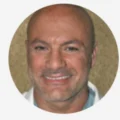
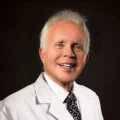
We sit down with pulmonary and critical care physicians Tonya Jagneaux and Hollis O’Neal to explore the complex challenges emergency departments face when diagnosing and treating sepsis. With overcrowded EDs, rising patient volumes, and strained resources, they discuss how new host response technologies are transforming early detection and treatment of sepsis, offering hope for better patient outcomes and more efficient care delivery.
Tonya Jagneaux and Hollis O’Neal are pulmonary and critical care physicians.
They discuss the KevinMD article, “The deadliest condition in emergency departments deserves a new diagnostic approach.”

Our presenting sponsor is DAX Copilot by Microsoft.
DAX Copilot, by Microsoft, is your AI assistant for automated clinical documentation and workflows. DAX Copilot allows physicians to do more with less and turn their words into a powerful productivity tool. DAX Copilot automates clinical documentation—making it available in the EHR within minutes—and clinical workflows, including referral letters, after-visit summaries, style and formatting customizations, and more.
70 percent of physicians who use DAX Copilot say it improves their work-life balance while reducing feelings of burnout and fatigue. Patients love it too! 93 percent of patients say their physician is more personable and conversational, and 75 percent of physicians say it improves patient experiences.
Discover AI-powered solutions for clinical documentation and workflows. Click here to see a 12-minute DAX Copilot demo.
VISIT SPONSOR → https://aka.ms/kevinmd
SUBSCRIBE TO THE PODCAST → https://www.kevinmd.com/podcast
RECOMMENDED BY KEVINMD → https://www.kevinmd.com/recommended
GET CME FOR THIS EPISODE → https://www.kevinmd.com/cme
I’m partnering with Learner+ to offer clinicians access to an AI-powered reflective portfolio that rewards CME/CE credits from meaningful reflections. Find out more: https://www.kevinmd.com/learnerplus
Transcript
Kevin Pho: Hi, and welcome to the show. Subscribe at KevinMD.com/podcast. Today we welcome Tonya Jagneaux and Hollis O’Neal. Both are pulmonary and critical care physicians. The KevinMD article is “The deadliest condition in emergency departments deserves a new diagnostic approach.” Hollis, welcome to the show.
Hollis O’Neal: Thank you, Kevin.
Tonya Jagneaux: Kevin, great to be here. Thanks for having us.
Kevin Pho: So, Hollis, I’m going to start with you. Can you tell us the events that led you to write this collaborative article, and then tell us what this article is about for those of you who get a chance to read it?
Real physician voices, twice a week
Free, and one click to unsubscribe.
Hollis O’Neal: Sure. For years, for about the last ten years, our hospital system and a group of physicians from LSU have been working in conjunction with a biotech called Cytovale in developing a novel sepsis diagnostic. We’ve been working with our ED providers, critical care providers, and ID providers, and doing some of the preliminary work. Then in 2021, I did a multicentered study looking at this as a diagnostic test for sepsis, and ultimately, in late 2022, had it FDA-cleared. Then in August of 2023, we implemented the test for use in our emergency department.
The way we did that was really a big combined effort between IT. Dr. Jagneaux is our chief medical informatics officer, so it’s a heavily IT-based screening process for patients who walk in the door, looking for signs or symptoms of infection. It’s a sepsis diagnostic, and so we want to be very clear in whom we actually applied the test. Dr. Jagneaux was instrumental in developing that process and integrating this into the electronic health record. It was also led by our quality department. Dr. Chris Thomas is one of our partners, and he’s also the chief quality officer of our health system. Then, in conjunction with our ED providers, we put this sepsis diagnostic into clinical use and started in August 2023.
The test reports back a probability of sepsis in basically a low, intermediate, and high probability. We developed treatment pathways for that. One of the things that happens is that for the high-risk population, what we call an interpretation band 3 result, that is a critical value that’s called back from the lab to the ED, and we go find those patients and begin sepsis care right away. Some of those patients, our ED is big and busy. We see 75,000, 80,000 visits a year, an 800-bed hospital, so big and busy, lots of turnover of patients. Some of those patients are in the waiting room when the test comes back. Because Dr. Jagneaux had developed a process to order this at triage, often that result comes back before the doctor’s even seen the patient, with the patient sitting in the waiting room. Well, we go get those patients out of the waiting room and bring them.
Now, that obviously creates a resource drain on the ED, because the reason they’re in the waiting room is because there are no beds. So now we’re moving patients to the hall. We’re delivering care in nontraditional areas in the ED. So the question was: Are we doing the right thing when we go identify these patients and we pull them back? Number one, are we actually getting them back faster? Number two, are they the right patients? Are these patients with sepsis? Are we delivering sepsis care to these patients faster?
The crux of this article was looking at that population of patients, those patients who were in the emergency department in the waiting room when the test came back, and we go physically retrieve them from the waiting room because they have a high-probability result. We found that the answer is yes to all of that. Number one, we are getting them back faster. Those patients with that band 3, that high-probability result, get back into the ED an hour faster than their counterparts. Number two, are they sick? The answer is yes; 90-plus percent of those patients are admitted to the hospital. The next question is: Well, do they have infections? You can’t have sepsis without an infection. The answer is yes; 90-plus percent of those patients have infections. Then the next question is: Well, do they go on to develop sepsis? The answer is yes. Over 50 percent of those patients that we go physically pull back from the emergency department will be discharged with a diagnosis of sepsis.
Ultimately, what this told us is that we are able to identify patients with occult sepsis using this rapid diagnostic for sepsis. It’s a host response tool, but we can find them when they don’t look that sick. What does that mean? Well, that means that a seasoned triage nurse sent that patient to the waiting room, waiting for results of laboratory. Nobody, I think, would willingly send a patient with sepsis to the waiting room to wait for a test result, but the reason they go out there is because they just don’t look that sick. Their underlying biology says they are, but their overall clinical presentation says they’re not. We’re able to identify those patients, get them back, and deliver care more quickly.
Kevin Pho: Sure. So before talking about this technology itself, Tonya, let me ask you, what are the traditional diagnostic approaches to sepsis, and talk about some of the clinical limitations they have and the repercussions that we currently have with traditional methods of diagnosing sepsis?
Tonya Jagneaux: Yes. I mean, pivotal to how the change management occurred with this test, prior to that, as many physicians know, sepsis presents in varied ways. It’s complicated because of different patient presentations. As Bud just described, they can look fine and be critically ill, or they can look critically ill and not have severe sepsis. And we also, because of electronic health records, had this barrage of predictive tools, and maybe sprinkled in there a few biologic tests that would offer some sense of maybe high risk. But I think the greatest challenge was the pre-existing sepsis alerts that many hospitals deployed; we had them as well. What they do is they will tell a story of maybe sepsis and generate actions that often result in alert fatigue or overutilization of resources. We were in that mindset with both physicians and nurses, and it was really a negative tone to a sepsis alert if you mentioned that. Most of the time, because they had experienced the low positive predictive value of those tests, it was almost as if there was no capacity to alert, because they had been so over-alerted and had so much noise. So that was a big deal.
Now we have this test that really brings promise. We need to order it. We need to be able to find out who’s the right patient, and the process to make sure you can derive what was truly a biologic function that we needed to translate over into the clinical bedside. So that was a critical piece. It’s been a journey. Medicine is always about discovery and improvement, but alert science is interesting in that people are very hesitant to turn things off, to miss things. But when you look at how they perform, they also result in the inability to see anything relevant when you are alerting all the time.
And not just sepsis; the electronic health record offers a lot of alerting to the folks who were at the bedside delivering care. We really had to try to figure out how to highlight the needle in the haystack for those folks who truly needed attention, who needed to be pulled out of the waiting room, or even just in the front of a presentation looking critically ill, and it’s not sepsis, and you’re not going down a completely wrong pathway because the patient looks so sick. Sometimes the default was, “This could be severe sepsis. Let’s do the whole package: fluids, antibiotics, etc.” So that was the starting point, and it required a dedicated approach. Thankfully, working with a great team, we were able to do that. But this is not just simply deploy a test, put in the ability to order, and just, “Let’s see what happens.” Much more to it than that.
Kevin Pho: So, Tonya, just to follow up on that, just to clarify, the current biomarkers that we traditionally use for sepsis, like the procalcitonin levels, you’re saying they don’t have the predictive accuracy that you need to make sure that patient’s on the right diagnostic path. Is that fair to say?
Tonya Jagneaux: Correct, yes. The ability to decipher with this test, IntelliSep, is much better. In addition, the negative predictive value, and so being able to say, “No, this is not sepsis,” is just as important as being able to say, “This is very likely to be severe sepsis,” regardless of the clinical presentation. I think that’s, again, the challenge of sepsis: how varied it presents, with the variation in severity across that presentation spectrum.
So IntelliSep has been demonstrated to parse that out. There is a middle zone; there’s a yellow component. But there’s still a heightened sense of awareness, in that you’re going to work up the patient, but still having the background that the risk of sepsis is still higher than in what we call the green category, which, if you’re green, we can put the brakes on overutilization of antibiotics and fluids and give a sense of what we think is comfort and confidence in the providers to not proceed and be able to pull back, thus allowing those who are sitting in the waiting room to have a bed and come back. So it is interrelated, the ability not only to drive the right decision-making, identification for sepsis, but also correct diagnostics when it’s not. And there’s a true value in being able to decipher one way versus the other: critical or not, sepsis or not, going forward.
Kevin Pho: And Tonya, just to clarify, if there is a delay in diagnosis of sepsis, just give us an idea of the clinical impact on that patient if there’s a delay in diagnosis.
Tonya Jagneaux: Yeah, there are a lot of numbers out there, but, and Bud, certainly correct me if I’m wrong, every hour your mortality can increase about 8 to 10 percent if we’re missing it in the septic shock population. Traditionally, septic shock was a 40 to 60 percent mortality, so it is a time-sensitive disease. We often talk about sepsis in the same way we talk about a heart attack or a stroke, like time is muscle, time is brain. In this case, time is lifesaving, in the sense that if you need antibiotics and fluid resuscitation, the earlier we get that to the right patients, the more likely they are to not die, but also not suffer morbidity: a prolonged hospitalization on mechanical ventilation, deconditioning, not being able to return to function in a short period of time.
So we recognize that, and the full approach to those patients obviously can’t be done for everyone who looks septic by the traditional SIRS criteria. So it was very important to try to identify folks upon triage who needed the test and be able to have a process to highlight the result, so that if there is a red sitting in the waiting room, someone is aware and goes and gets that patient. So it required still using some traditional vital signs, questions, and triage. That’s the only thing really available in the electronic health record to start the logic. So we did borrow from SIRS, but we went a little bit more specific. Also, we don’t want to take away the value that triage nurses have in asking about mental status changes, “Do you think there’s an infection present?” and hypotension.
So in that set of criteria, vitals and those questions, if there’s a trigger, we said we’re going to order these sets of labs, and IntelliSep was part of it, in addition to chemistry, CBC, and lactic acid, and what we call initiate sepsis care trigger, which highlighted that that patient potentially has sepsis. It also gives the checklist of what’s been done so far. Within twenty minutes, whether the patient’s been brought back or is in the waiting room, we’re usually looking at the result, in critical areas.
And I think, very important, where we have time-sensitive diseases that have also declared themselves, we don’t slow them down with this process. That was very important for nurse buy-in, like, “You’re going to stop me, and I’m trying to take care of a stroke. You’re going to stop me, and I’m trying to take care of a heart attack.” So it was not only how do we handle sepsis, but how do we handle the triage process, thinking about other time-sensitive diseases that come through, and making sure we are standing in the shoes of the human being at the point of decision-making.
Kevin Pho: So, Hollis, tell us about the technology behind this new diagnostic approach. You mentioned host response technology briefly. Talk about the science behind it and why this new test works.
Hollis O’Neal: Yeah, so the science behind it is actually really interesting, and it is elegant in its simplicity. The fundamental concept that we look at is one that’s fundamental to really every piece of biology that they start teaching you about when you’re third, fourth, fifth grade, right? And that is that in biological processes, structure and function tend to be very tightly related. So it stands to reason that if the function of something changes, then its structure may also change.
So let’s bring that down to the level of the white blood cell, specifically neutrophils and monocytes, those cells of innate immunity that are involved in this very vigorous sepsis response. When those cells become activated, their function has changed from a resting, quiescent neutrophil, monocyte to an aggressive machine that is turned on to detect and kill, right? That’s what they do. Their structure changes. Their nuclear architecture changes. They unwind their chromatin. In the case of neutrophils, they can undergo a process called NETosis, where they release their chromatin into circulation. We know that these processes are beneficial, but in certain situations they can be pathologic. So in situations where you have NETosis in the general circulation, that can lead to microthrombosis, inflammation, organ dysfunction. Those cells don’t need to be activated in the general circulation. They should be activated at the site of the infection.
So what this test does is it uses peripheral blood from a purple-top tube. It uses a tenth of a cc, using microfluidics and some technology that was developed by a gentleman named Dino Di Carlo, who’s now the chair of bioengineering at UCLA. He discovered the theory behind all of this, the process, the microfluidic function of this. We can basically squeeze tens of thousands of white blood cells, watch them squeeze using microfluidics, exposing them to hydrodynamic forces. Using microfluidics, we can watch them squeeze under a high-speed camera that takes about 500,000-plus frames per second. We can analyze the video and tell you which patients have activated innate immunity based on the structural changes that we can visually see under a microscope. We look at, again, tens of thousands of cells. It takes a couple of seconds to capture the data, video data, and it takes a couple of minutes for the computer to analyze the video data. It results in a score called the IntelliSep Index, 0.1 to 10.0, for increasing probability of sepsis.
We then divide that score into three interpretation bands: low, intermediate, high probability. Technically, the way the FDA looks at it, band 1 is low probability; band 3 is high probability; band 2 is in the middle. The way we operationalize it in the hospital is low, intermediate, and high probability of sepsis. Our ED, they like to see colors, so we do green, yellow, red for low, medium, high probability, and then we tied that to action.
So the technology is simple. You look at the structure of white blood cells using fluid to squeeze them, just like if you were to pick up a baseball and a tennis ball, you could squeeze it and feel the difference, right? A baseball’s hard, rigid. A tennis ball is a little bit squishier, right? You can feel that difference. That’s what we do. And I think the important thing is it takes a tenth of a cc from a purple-top tube. There’s no incubation; there’s no real preparation. It takes about ten minutes from sample to result.
Kevin Pho: How accessible is a test like this? Is this something that your institution is trialing out? Is this accessible nationwide?
Hollis O’Neal: So it is on the market now, FDA-cleared as of December 2022. We were the first health system to use it, in our hospital, our flagship hospital. It’s now in all of the hospitals in our system, all the hospitals of any reasonable size. In our hospital, we have some critical access hospitals where I don’t know that the utility, we haven’t really sorted that out yet. But it’s in one of our smaller hospitals, about 45 beds or so, up to our biggest, that’s 850 beds. About five hospitals in our system are using it.
We’re starting to see improvements. We’ve had it for over a year at our flagship hospital, but we’re already seeing reductions in length of stay at the other hospitals that have implemented it, interestingly, especially in those band 1 and 2 patients. And as we track that more in our flagship hospital, we’ve seen reductions in length of stay, reductions in cost, reductions in mortality. So it really works.
And I think that the reason is complicated. A test never saved anybody’s life, right? It’s the action that results from that test. It’s the doctors, the nurses, the allied health professionals, the health system that really brings that impact to the patient. So it’s what we do with the result. It’s how you apply that test. And I think that that’s important, and how we look at it. Cytovale, the company that has developed the test, has really said, “We are not selling a sepsis diagnostic. We’re selling a solution that is everything from screening to testing to adoption of these principles and how you manage these patients.”
The way I describe it to ED providers: Imagine a world that we treated chest pain without the EKG. Just imagine that, right? Somebody comes in and they start complaining of chest pain, but there’s no EKG. So you have no first step, no structure around which you can build your treatment for chest pain. Then complicate that by the fact that, as we all know, a certain percentage of MIs will present without chest pain. So now you’re really looking at nonspecific things, and you have no structure around which you can build it. So this test, implemented in the right way, really brings that structure, similar to how an EKG brings structure to the diagnosis, management, treatment of patients who present to the hospital with chest pain.
Kevin Pho: And is this test covered by Medicare and private insurance?
Hollis O’Neal: Most of the patients who are tested, most of them are admitted to the hospital just by the nature of their presentation to the ED, so it generally rolls into a DRG. Cytovale does have a CPT code for the test and is currently working with certain payers to figure out how to get that reimbursed. That takes time. It takes on the order of years to get all of that worked out, so Cytovale is currently working that out. And to your question of, is it available? It is out there on the market. Looking at different health systems, the Medical College of Wisconsin in Milwaukee has implemented it in their flagship hospital, and a couple of other hospitals are going to come online early in 2025. So it’s out there, certainly out there for use.
Kevin Pho: Sure. We’re talking to Tonya Jagneaux and Hollis O’Neal. Both are pulmonary and critical care physicians. The KevinMD article is “The deadliest condition in emergency departments deserves a new diagnostic approach.” Now I’m going to ask each of you just to end with some take-home messages to the KevinMD audience. Tonya, let’s start with you.
Tonya Jagneaux: Well, it’s been a pleasure to work with Bud on this going forward. I just think that it’s a rare time where you see such a breakthrough, I think, in the biology and diagnosis of sepsis, and having experts bring that, sort of our mechanical and engineers. And then it’s paired with what I feel has been a really informative and good practice in learning and the action with implementation science. The two together were absolutely necessary to bring this as a successful test to the patient. So I think that that’s a lesson: If there’s another great widget that comes out there for medicine, it has to be considered part of a process, and implementation science is critical to understanding how to make sure that, from a cost efficiency and quality, it appears at the bedside in the right place for the right patient at the right time.
Kevin Pho: And Hollis, we’ll end with you.
Hollis O’Neal: Yeah, so I think there are a couple of things out of this. Number one, it shows just how innovative we can be, and I think it requires good partnership. If you look at what we’ve done, Dr. Jagneaux and I are faculty at LSU, so we’re academics at heart. Cytovale is industry. Our health system is a part of a, it’s a Catholic health system; we’re in the flagship hospital. So when you bring those three together in true innovation and true partnership and innovation, it really shows you what we can do. This technology was born out of the ED. Every single study we’ve ever done has been done in the ED looking at this problem. So it’s not a surprise. Dr. Jagneaux and I were not surprised by the results we saw. We did the research. We watched it come through. We watched it grow up, if you want to say it that way.
I think her point of implementation and the teamwork that it takes, this is everything from the triage nurse all the way through to the people discharging the patient. This is a huge team effort, not only in development but also in implementation. Our quality team was actually unbelievable in how they’ve done that, tracked the outcomes, because we’re all about doing what’s right for the patient. We want our patients to be better. Tracking those outcomes and seeing how we do that is important to us. It’s important to our health system. All the other things, reimbursement, all those things, our feeling is it works itself out if you just do the right thing for the patient. This technology allows us to do the right thing for the patient. So I think that those are, to me, the major take-home messages in how you can actually move these through, get things done, be innovative but responsible in how you’re being.
And the last thing I would say is that as we were doing the research, one of the things that was important to all of us is these patients who we enrolled, we consented them when they were walking through the ED with possible sepsis. None of them wanted to be there. None of them were happy to be there. But they were all willing to participate in the research. I think that that just speaks volumes of our patients, our patient population who we have here, and I think that it should encourage anybody who’s out there: If you have the opportunity to participate in research like this, you should, because the goal is to make life better for our kids, right, and those who come behind us. But I think it just speaks volumes to our patients, our patient population, that they are willing to give a little bit of themselves when they’re really in some of the worst condition that they ever imagined themselves being in, presented to the ED with possible sepsis.
Kevin Pho: Tonya, Hollis, thank you so much for sharing your perspective and insight, and thanks again for coming on the show.
Tonya Jagneaux: Thank you.
Hollis O’Neal: Thanks for having us. Really appreciate it.
Listen and followApple PodcastsSpotifyYouTubeMore apps · Browse all episodes