













Listen and followApple PodcastsSpotifyYouTubeMore apps · Browse all episodes
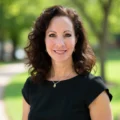
When a hospital replaces an established physician team, the beds can stay open while the care behind them quietly erodes. Shelly Haug Monti is a neonatologist, palliative care physician, and bioethicist, and a cofounder of Babies First Southern Oregon. This episode is based on her KevinMD article “Why physician outsourcing is a warning sign for hospitals.” You will hear how her entire group of neonatologists at a community NICU was terminated and replaced by locum tenens physicians and nurse practitioners, why she compares a NICU team to a philharmonic orchestra, and why she rejects the idea that financial survival and clinical excellence are competing interests. She describes how her group built an advocacy movement with families, nurses, community members, and state legislators, and why advocacy is a skill set few physicians learn. She also explains how to recognize a deteriorating health care system, from clinical infrastructure to hospital governance and staff bylaws. Press play to hear how physicians can spot the warning signs before their own team disappears.
This episode is brought to you by Froedtert & the Medical College of Wisconsin.
As a physician, you give everything to your patients. At Froedtert & the Medical College of Wisconsin health network, our focus is on giving that same care back to you. When you join, you practice at the top of your license, backed by a care team built to handle the routine so you can be fully present with your patients. Experience the best of both worlds: access to academic medicine with the Medical College of Wisconsin and a health system that empowers you to thrive: both grounded in deep community roots.
So whether you’re exploring a role in Family Medicine, Internal Medicine, or Med-Peds, you’ll have the team and the technology behind you. Reinvent health care in Wisconsin. Be here. Visit FroedtertCareers.com to learn more.

VISIT SPONSOR → https://froedtertcareers.com
EXPLORE PHYSICIAN ROLES → https://kevinmd.com/froedtert
SUBSCRIBE TO THE PODCAST → https://www.kevinmd.com/podcast
Transcript
Kevin Pho: Hi, and welcome to the show. Subscribe at KevinMD.com/podcast. Today, we welcome Shelly Haug Monti. She’s a neonatologist, and today’s KevinMD article is “Why physician outsourcing is a warning sign for hospitals.” Shelly, welcome to the show.
Shelly Haug Monti: Thanks so much for having me. I really appreciate it.
Kevin Pho: All right. So before getting to your article, let’s start by briefly sharing your story and then jumping into why you decided to share this story with KevinMD.
Shelly Haug Monti: Yeah. So I’m a neonatologist, palliative care physician, bioethicist, and now physician advocate. I’ve spent my career caring for the most vulnerable human beings imaginable: people dying, babies being born really early, barely weighing a pound, right? Patients whose very survival depends on far more than the expertise of a single physician. And it’s become abundantly clear throughout my career that exceptional medical care doesn’t happen by accident. It’s built.
And this year, our entire group of neonatologists at a community NICU in Southern Oregon was terminated and replaced by locum tenens physicians and nurse practitioners. What really concerned us wasn’t the loss of our jobs. It was the loss of years of institutional knowledge, established relationships, and the clinical infrastructure that our team had been very intentional about building, and the specific vulnerability of our patient population.
We thought about just focusing on our own issues and job losses and moving on, but we just couldn’t reconcile spending our careers advocating for our individual babies at the bedside, only to remain silent when we believed the very system caring for those babies was at risk. So we did something that none of us ever imagined doing. We became advocates on an entirely different stage and founded Babies First Southern Oregon, a physician-led advocacy group that has grown into a movement. It brings together families, nurses, physicians, community members, and state legislators, all working toward protecting exceptional medical care, demanding transparency around decisions affecting patients, and ensuring that physicians have a meaningful voice.
I used to think that my greatest responsibility as a neonatologist was to protect the fragile baby lying in front of me, and I still think that’s very much a part of it. But now I understand that sometimes, to protect that baby, you have to be willing to stand up for the entire system surrounding them. And so that’s how I unexpectedly became a physician advocate.
Real physician voices, twice a week
Free, and one click to unsubscribe.
Kevin Pho: Now, your story really resonated with me because what you’re describing is happening all across the country. In your particular case, where your group of neonatologists was replaced by locum tenens, number one, did you see it coming? And number two, what was the explanation, for people who aren’t aware of situations like these?
Shelly Haug Monti: Yeah, it is really happening all over, and I feel like our NICU is just one of the warning signs that something much larger is happening in medicine in general. We fiercely advocate for our patients and felt like it was worth any risk to continue to do so when major decisions are being made. And yet we did not see this exact outcome happening.
And to be clear, I have nothing against locum physicians and practitioners. I think they’re a very important part of medicine. At the same time, I think there might be a little bit of the Semmelweis reflex that I alluded to in the article, where we’re not listening to the warning signs because it’s uncomfortable to do so, right? We can look at a hospital, see that the beds are open and the physicians’ schedule is full, and assume that all of that clinical infrastructure remains intact. But I wrote the article to challenge physicians to look beyond that staffing spreadsheet and ask what we’re potentially losing when long-standing clinical teams everywhere are being replaced.
Because like you said, our story is definitely not isolated, but we felt it was distinct in that the patients affected are critically ill newborns who can’t advocate for themselves and whose survival depends on complex, highly coordinated care, so the stakes are extraordinarily high. What happened to our team really feels like it reflects the national problem, but the vulnerability of our patients makes our responsibility to speak up especially urgent to us.
Kevin Pho: Now, in your article, what really struck me was the relationships that you as a group formed with the health care team, and the fact that your leaving can sometimes really impact patient care. Again, the audience listening may not be aware of how a NICU works. Give us some specific examples of how your group’s leaving can potentially affect the care of your patients adversely.
Shelly Haug Monti: Yeah. So that’s a great question, and an opportunity to explain, because the NICU is its own little world. I have heard many different analogies for this, but one I really like is a philharmonic orchestra. You have these great musicians who practice for hours and hours together, have lots of expertise, and come together to make a beautiful orchestral piece of music in a concert. If you replaced them overnight with other expert virtuosos and gave them the same sheet music, the same conductor, and the same concert hall, and expected them to play that piece just as beautifully, I don’t think it would come out the same, right?
And in that setting, the stakes are just a bad performance, with maybe the rhythm being off, where it doesn’t sound the way you expected a philharmonic orchestra to sound. Whereas in the NICU, those stakes become life or death. This is our team of respiratory therapists, pharmacists, bedside nurses, charge nurses, and physicians all coming together around a patient who weighs about as much as a can of soda, and trying to intubate that baby with a 2.5 French ET tube, you know? We have to make sure that we are running things as carefully and in as much detail as possible, together as a team. I think that’s what really drives our passion here: trying to do this together for these vulnerable patients.
Kevin Pho: Now, was there ever talk of a middle ground? Right now, we’re talking about a binary choice: Your group either stays or leaves. Was there ever discussion of some type of middle ground where you could have stayed under different financial circumstances?
Shelly Haug Monti: Yes, and we tried very, very hard for multiple months, actually more than a year, to ensure that the hospital administration understood that we were speaking out as a cry for help, and that we didn’t feel like hospital financial issues were the crux of the issue. It became about patient safety. So we really did try to have a different outcome, and ultimately it came down as a very one-sided decision from the hospital, and I really can’t speak to their decision-making process.
Kevin Pho: So speaking in general, and maybe not in terms of your particular situation, whenever I talk to hospital administrators, or to proponents of private equity taking over health care, they invariably say they make these decisions for financial reasons, and that the alternative to making these decisions is simply the hospital closing, the NICU closing, something like that. Whenever you hear that, what is your response? Because they always say that if they don’t make these moves, their other choice is to simply close the hospital.
Shelly Haug Monti: That’s a great point, and I hear that often. I feel like it is the responsibility of hospital leadership to, yes, of course, look at your finances, look at your books, and make sure that the hospital stays open. But I don’t feel like financially responsible hospitals and clinical excellence are competing interests. It’s the hospital keeping the doors open, but the doors are there because you have clinical excellence in the teamwork of your medical staff.
Kevin Pho: So you told us that, as part of your journey, you’ve turned into physician advocates, partly because of the situation that you find yourselves in. So tell us, did you have to learn any new skills? Tell us some of the things that you have done to advocate on behalf of physicians, and maybe a success story about how that has made a difference.
Shelly Haug Monti: Yeah. I really wish that I had understood much earlier that advocacy is a skill set, just like medicine. We spend years learning pathophysiology, evidence-based medicine, diagnostics, and therapeutics, and recognizing all the warning signs of a patient who is clinically deteriorating. Yet very few of us, I feel like, understand who sits on our hospital board, who controls staffing decisions, and what recourse exists when we believe an administrative decision could negatively affect patient care.
So I wish I had understood that good medicine and good advocacy require different skills, but they’re skill sets all the same, and we need to develop both. Because being an excellent physician, producing good clinical outcomes, and advocating internally doesn’t necessarily guarantee that your concerns will meaningfully influence organizational decisions.
Kevin Pho: So what would be the first step for physicians who may be listening to us now, whom you’ve inspired to advocate? Tell them what their first step should be.
Shelly Haug Monti: Yeah. I think one is realizing how widespread these experiences are, right? And realizing that there is so much support that exists outside of the physician community. We’ve engaged nurses, families, community members, and, to our great surprise, multiple state legislators. So I think we as a physician group are underestimating how much the public actually cares about how health care is structured.
We don’t yet know what the ultimate outcome of our group’s advocacy efforts will be. We have lots of hope, though, that we have built such a response that we’re able to get people to understand that replacing an established team can affect the continuity, the referral relationships, and really how that clinical program functions. And it really seems like people are understanding and hearing why that matters, and are supporting and standing for change.
Kevin Pho: Now, what’s your message for other physicians who may find themselves in a situation similar to yours? And it doesn’t have to be neonatologists. This is happening, as we know, in many, many other specialties: emergency medicine, radiology, anesthesiology. Sometimes physicians can be let go just like that, without any warning. You’ve unfortunately gone through this, so can you share any wisdom with physicians who may find themselves in a similar situation?
Shelly Haug Monti: Yes. Like I alluded to earlier, we teach physicians how to recognize a deteriorating patient, and I think we need to start teaching physicians how to recognize a deteriorating health care system. Our hope is that by sharing our story, we’re able to help others see the warning signs sooner, right?
First, I want physicians to be able to understand the clinical infrastructure as it is, that it’s more than patient volume and staffing numbers. It’s the relationships with your nurses, pharmacists, respiratory therapists, and referring physicians. It’s the guidelines that your team has developed and the institutional knowledge that you’ve accumulated. And I feel like we need to learn how to describe and measure those things better, because they’re a really large part of the value that your team brings when you start seeing those warning signs.
Second, really try to understand your hospital’s governance. Who makes those major clinical decisions? Who sits on the board? Can you meaningfully communicate with them when you have concerns? And if a decision potentially compromises care tomorrow, what mechanisms exist for you to challenge it? Look at your staff bylaws and know the people around you. You want to be in a culture that really supports communication between the bedside physicians and staff and the hospital administration. This is all of us trying to work together, and like I said before, it shouldn’t be competing interests.
And third, I’d say realize that you don’t have to advocate alone. Build relationships across disciplines, with professional organizations, your community, your local medical chapters, and national organizations, and communicate concerns clearly, factually, and through the lens of patient care. We are extraordinarily good as physicians at identifying clinical problems, and we need to get better at translating these concerns into effective systems-level advocacy.
Kevin Pho: We’re talking to Shelly Haug Monti. She is a neonatologist, and today’s KevinMD article is “Why physician outsourcing is a warning sign for hospitals.” Shelly, as always, we’ll end with the take-home messages that you want to leave with the KevinMD audience.
Shelly Haug Monti: I think my biggest take-home message is that physician advocacy doesn’t end at the bedside. Protecting physician voice really means protecting the patients who depend on us. Every clinician listening knows what it feels like to recognize that something isn’t right with a patient before the monitors or the lab values fully reveal the problem. And we act on those early warning signs because experience has taught us that waiting for obvious deterioration can be catastrophic.
I think we need to apply that same vigilance to our health care systems and realize that when experienced teams are treated as interchangeable labor, clinical expertise is excluded from major decisions, and physicians no longer have meaningful avenues to raise concerns, these are all warning signs that we cannot and should not ignore any longer. Don’t wait until your own team disappears to understand how your hospital makes decisions, or to begin advocating for the systems that support exceptional medical care.
Kevin Pho: Shelly, thank you so much for sharing your story, time, and insight, and thanks again for coming on the show.
Shelly Haug Monti: Thank you for having me.
Listen and followApple PodcastsSpotifyYouTubeMore apps · Browse all episodes