Listen and followApple PodcastsSpotifyYouTubeMore apps · Browse all episodes
A patient in intensive care gets worse at 2 a.m., and the hospital has no critical care doctor in the building. Chris Gallagher, a cardiologist and founder of Access TeleCare, has spent 15 years building virtual care programs inside hospitals, and he explains why that gap is so hard to close. This episode is based on his article “Why tele-critical care deserves expansion, not retreat,” published on KevinMD. You will hear why the technology can never be allowed to fail, why training doctors to build trust through a screen is its own skill, and how a team-based approach let his group manage cardiac arrests with the doctor not in the hospital. He walks through the hybrid staffing hospitals are using now, with nurse practitioners at the bedside and physicians on video, and answers the charge that telemedicine is a cost-cutting move. He is also direct about the limits of the current evidence. Press play to hear what separates virtual critical care done right from done wrong.
Partner with me on the KevinMD platform. With over three million monthly readers and half a million social media followers, I give you direct access to the doctors and patients who matter most. Whether you need a sponsored article, email campaign, video interview, or a spot right here on the podcast, I offer the trusted space your brand deserves to be heard. Let’s work together to tell your story.
PARTNER WITH KEVINMD → https://kevinmd.com/influencer
SUBSCRIBE TO THE PODCAST → https://www.kevinmd.com/podcast
Transcript
Kevin Pho: Hi, and welcome to the show. Subscribe at KevinMD.com/podcast. Today we welcome Chris Gallagher. He’s a physician and founder of Access TeleCare. Today’s KevinMD article is “Why tele-critical care deserves expansion, not retreat.” Chris, welcome to the show.
Chris Gallagher: Thanks, Kevin.
Kevin Pho: All right, let’s start by briefly sharing your story, and then we’ll talk about why you decided to share this article on KevinMD.
Chris Gallagher: Yeah, so I’m a cardiologist by background. I’ve spent the last 15 years building telemedicine for hospitals. I built an organization, Access TeleCare, which I led for 14 of the last 15 years as CEO, and today I serve as founder and adviser for the organization. Our focus has always been on meeting the needs of underserved patients. We started out initially in rural hospitals, focused on building telemedicine, and that has expanded to urban hospitals all across the nation.
So today we operate in all 50 states, we have installed and/or implemented in 22 percent of U.S. hospitals, and this year we’ll have over 1.1 million video visits inside of hospitals. So I know the space and know the setting very well, with a wealth of experience that I think will really influence our discussion today.
Kevin Pho: All right. So tell us why you decided to share this article on KevinMD. Tell us about some of the issues, headwinds, and challenges that telehealth in the critical care setting is currently facing in general.
Chris Gallagher: Yeah. Well, I think first and foremost, change can be hard, and for many good reasons, acute care inside of hospitals is really focused on reducing variability and making sure we standardize as much as we can. One of the things that telemedicine really changes is how we care for patients. It’s a model-of-care change. Ever since we started this journey 15 years ago, when we built the first virtual ICU in Texas, there has always been resistance to change.
But as we gain more and more experience with this model of care, we see the outcomes and the publications around the outcomes. So I think it’s a really important topic that impacts patients. It keeps care local. It reduces mortality. And oftentimes, when patients are in their sickest moments, they don’t want to leave. They want to stay in their home communities and receive care where their family and their network of support is. And so we’ve been able to build that.
Kevin Pho: So for those who aren’t familiar with telehealth in the ICU setting, just paint us a picture. How exactly does it work?
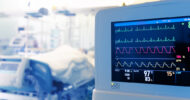
Chris Gallagher: In our models, we really believe that you use the infrastructure that’s there. If you think about what an ICU is, it’s a pod of four to 10 rooms most commonly, sometimes even more. Nurses are there in person, staffing the patients, one nurse to two patients or one nurse to one patient. Lots of monitors are connected to the patients so that we can monitor, in real time, exactly what’s going on with all of their vital signs and other issues. Patients may be on ventilators or other types of support to make sure that they’re supported through their critical moments.
And then there’s the physician piece. You have multiple types of physicians coming in and seeing the patient, and they’re typically rounding, present in person. So that’s what a typical ICU looks like. But as you can imagine, patients are really sick, and they can get sick at 2 p.m. They can also deteriorate at 2 a.m. Keeping those hospitals staffed 24/7 with in-person team members is extremely difficult, especially as you begin to get outside of the urban areas that are densely covered with physicians. So hospitals oftentimes will go without. They’ll go uncovered, or doctors will manage by telephone. That’s where we began to see an opportunity in bringing virtual care. You could see the patient, and you could interface with the patient in a much deeper way than you could by telephone.
Kevin Pho: So you mentioned that in some of your transitions, change is hard. What are some of the common points of resistance where you experience some of these obstacles? What are some common arguments?
Chris Gallagher: I think one of the most common that we’ve heard is generational. When you think about many of the patients in a hospital, or the Medicare population, they’re going to be over the age of 65. Are patients in that generation, or those generations, going to respond well to video encounters? Our experience has been overwhelmingly yes. It’s most likely, I think, because many of them are grandparents, and grandparents have learned very quickly the depth and richness of having a video encounter with your grandchild rather than just talking to them on the phone. It has become commonplace to have high-value, deep, and rich experiences over video when you can’t be there in person. So I think that’s number one.
Number two is: Is the remote physician going to be able to understand deeply what’s going on with the patient? Every hospital now has an electronic medical record with digital imaging that can be viewed remotely. We’re sitting at a computer whether we’re bedside with a patient or 500 miles away. We’re looking at a screen to get all the information, from other doctors’ notes, the medications they’re taking, and the lab results, and then actually viewing the images. So all of the data inputs that we use to make decisions are coming through the same system. They’re coming through a screen.
So I think where we sit today is a vastly different world than where we were maybe 20 or 25 years ago with virtual care and digital health models. So much of health care is digital. So much of our personal lives is now digital that I think people really understand the value that can be brought. And I think the most important thing is that it has to be done right and it has to be done well. That’s one of the things we wanted to highlight in the article: Our rebuttal was to telemedicine done wrong. There’s a clear best practice. There’s a clear right way to practice and provide high-quality care, so it’s less about the technology and really more about the process and the people behind it.
Kevin Pho: So you make that distinction between telemedicine done right versus done wrong. What are some examples that could contrast those two approaches? In the ICU setting, what are some things not to do, where telemedicine is done wrong?
Chris Gallagher: First and foremost, the technology can never fail, right? The moment you have a technology failure, the moment you can’t see a doctor on screen or the doctor can’t see the patient, you have camera issues or stethoscope issues and you do not have a backup, that’s telemedicine done wrong. We learned decades ago that you have to have redundancies built in, not only to your camera connectivity, so you can see a patient, but to your audio connectivity, so you can always talk to each other, and to your internet connectivity, because the hospital network may go out. You need to be able to connect to cell phone towers in times of natural disasters. You have to think about every point of failure and recognize that it’s technology, and it’s not an if, it’s a when. The secret is being prepared. So it has to be absolutely dependable and can never fail. I think that’s number one, and that’s the foundation that we believe is table stakes.
Number two is that the expectations of an in-person doctor need to be identical to those of a virtual care doctor. What I mean by that is responsiveness, the ability to have proper documentation, and ownership of what’s going on with the patient. You have to own your specialty, or your responsibility, just as if you were an in-person doctor.
And then number three, and I think our organization has done a great job with this, is building systems around training. Practicing virtually is different than practicing in person, and you have to really work on different skill sets than you would in person. I’ll use an example. In an ICU, you’re commonly dealing with difficult situations. You can’t lay hands. You can’t give someone a tissue in a difficult moment, or maybe put your arm around them, or even just hold their hand when you’re discussing difficult topics. So you have to work on other skills. We call this “breaking through the screen.” It’s learning how to present yourself in a very specific way that induces confidence and trust, but also giving the patient or the family time to speak, spending extra moments in discussion so that you can build the rapport and the relationship, so that you do have trust and you do have confidence. That’s very important to patients’ healing.
Kevin Pho: Now, no matter how good a physician is at proverbially breaking through the screen, isn’t there something inherently lost? Certainly in a remote encounter, if you have different remote providers, sometimes you don’t have that longitudinal care. In a critical care setting, talking to families, like you said, giving that family a tissue, you can’t do that over the screen. Isn’t there something just inherently lost by the medium itself?
Chris Gallagher: I think it’s really about building a program. The way we’ve thought about it is, when you’re an in-person doctor, you can be the Lone Ranger, right? You can walk into a patient’s room when you want to, you can see that patient when you want to see that patient, and you can coordinate with whoever you want to coordinate with. You really are operating in a solo mindset. The moment you get into a telemedicine operation, you have to begin to think team-based and programmatically. That’s another thing that we’ve learned about doing telemedicine. You’re absolutely right. It’s not about the doctor anymore. It is about the program. We’re not building a system of critical care doctors. We are building an ICU and critical care program that has team members. Just like any other team, everyone has their position and everyone has their role to ensure that we are delivering comprehensive care to a patient.
So part of our implementation is understanding what the role and the scope of a virtual critical care doctor are, and then acknowledging what we can’t do. We can’t do procedures. So who within the medical staff is going to do procedures? What’s the role of the nurse? What’s the role of the respiratory therapist in this broader program? What we have found is that when you do that, the other team members own it, and it really doesn’t matter whether it’s the critical care doctor doing all of it or it’s part of the team.
One last thing I’ll say about this is that our organization pioneered the management of cardiac arrest remotely. We launched some of the first hospitals over a decade ago. We’re managing code blues with the doctor not in the hospital: patients getting intubated, central venous access being placed by non-physicians, ACLS being administered without a physician there. Our outcomes are actually better than when our own doctors were in the hospital, and it points to a team-based approach, where the physician wasn’t trying to put in an airway and then immediately go down to the groin and put in a central line. We had assigned duties to different members of the team. Respiratory therapy managed the airway. Nursing managed central line access through an intraosseous line in the humeral bone. The physician was in the telemedicine cart, but stood at the foot of the bed managing the team, just the way the American Heart Association simulations work, with the physician not laying hands. So I think this team-based approach has really transformed how we deploy care, and it’s also a great response to the issues you raised, because they are absolutely real.
Kevin Pho: So in your solutions in general, are the bedside clinicians completely removed? Is there a place for advanced practice providers, for instance, because they are more plentiful than critical care physicians? And if so, what is the role for a nurse practitioner or a physician assistant in person in a critical care setting?
Chris Gallagher: Yeah, I think those are great questions, and again they point to building a program. Almost a third of our group is nurse practitioners, and where we have seen the role of advanced practice providers is really in augmenting what we can’t do virtually. As you pointed out, with high volume, we find that high-volume programs, where we may have 15 to 20 encounters in a single ICU or a single hospital, are really best with a hybrid approach. So part of our team is nurse practitioners on the ground, and part of our team is physicians on virtual care, so that every patient has a physician encounter, but a lot of the time spent with the patient is with the nurse practitioners, to bring efficiency to the day. We are deploying hybrid programs more and more as the ask for telemedicine continues to expand.
And then in terms of the in-person medical staff, half the programs we deploy from a critical care standpoint are in-person ICU doctors during the day, plus nocturnal and/or weekend virtual care. A lot of ICUs across America have one critical care doctor, which we all know is insufficient, or they have two critical care doctors, and that’s not sufficient to manage a 24/7 department. So we have found this hybrid model of in-person doctors with help from virtual care doctors to be a very successful model.
Kevin Pho: Now, you mentioned that tele-critical care is moving into more urban settings, where they may not be as resource-constrained. Do you ever face criticism from physicians who say that these solutions are more of a cost-cutting measure, that you’re making more of a business or economic case? And how do you respond to some of those criticisms?
Chris Gallagher: Yeah, I think it’s a great question. When our organization began to think about quality, we went to the Institute of Medicine’s domains of quality. I think it’s really interesting that the domains of quality are illustrated by STEEEP, right? Quality is defined by care that is safe, care that is timely, care that is effective, care that is efficient, equitable, and patient-centered. Care that is efficient and timely is a core component of quality, as is care that is equitable.
So when we think about telemedicine, if we can demonstrate that it is patient-centered care and that the care is safe, with the same outcomes or better outcomes, meaning it’s non-inferior, then we absolutely know, and have demonstrated, that we can provide care that is more timely. We can be there in minutes instead of hours. It’s care that is more efficient. We can cover multiple places at once. And it’s care that is equitable. Not only in the fancy demographics of America can we have a 24/7 ICU; pick a zip code anywhere, and we can provide the exact same level of care. That really makes it equitable.
So when we have any kind of pushback or resistance, typically we just present that and say, “If you don’t have us, then what’s your solution to have care that’s safe, that’s timely, that’s efficient, that’s effective, that’s equitable, and patient-centered, that you can deliver by yourself, that we can’t do as a team?” It’s something that I get really passionate about, and our group gets really passionate about, because it gets back to the change resistance that we talked about at the beginning. It’s doing models of care differently.
I sometimes like to pull out photographs from the turn of the century, the 1900s. If you go online and Google “doctor with patient in the early 1900s,” you’ll get a black-and-white photo of a doctor at a patient’s bedside with a nurse. And if you Google that same thing in 2026, you’re going to see a picture of a doctor at the bedside with a nurse and a patient, right? We have not changed our models of care. We have not changed our productivity. These are underlying reasons for some of the inflationary pressures we see. We have to find ways to do things differently while still providing excellent, safe, patient-centered care, and I think these are models that have demonstrated success over multiple decades.
Kevin Pho: So you mentioned a couple of times the data that shows that tele-critical care is non-inferior, and in some cases better than in person. Tell us a little bit about some of those data sources and studies.
Chris Gallagher: Yeah. When you review them, and I was thrilled to see you published these online, these are large observational studies that look at thousands of patient encounters and hundreds of ICUs that have deployed telemedicine, to see in a pre-post fashion what the outcomes have been. In those, what you see are not only reductions in length of stay, but mortality signals as well. That aligns well with what we have seen in our experience.
Kevin Pho: And what do you see as the future of tele-critical care? What are some of the trends going forward that we need to be looking out for?
Chris Gallagher: A lot of the discussions we’re having with systems at this point, at a strategic level, are beginning to think through a virtual-first mentality. What do I mean by virtual-first? If we think about these 24/7 services in hospitals that have to be on, we have to staff, and time matters. We have to be bedside in minutes. How can we build a layer where every patient is going to get exactly the care they need, when they need it, in an emergent nature? That can most often only be done with virtual medicine, and that is the foundation on which we build.
Then we say, let’s recognize where the ceiling is in that care. What can we not do, and what needs to be done by in-person team members? Then we layer on the in-person team members to do what we think in-person team members will be better at, or better suited to, and that’s a mix of nurse practitioners, PAs, and physicians as well. So again, it’s taking a programmatic approach: What can we do with virtual care first, and then where do we need to layer on in-person team members, nurse practitioners, and physicians? Every hospital has a different plan based on its local resources, its local capabilities, and its goals of care, but it can really be customized if you take that approach. Those have been some of the most exciting strategic discussions we’ve had over the past 12-18 months.
Kevin Pho: Now, you mentioned that a lot of the data is still observational. For those who are unconvinced by that, is there anything prospective in the pipeline? Anything randomized, double-blinded?
Chris Gallagher: We’re beginning. The organization has put a lot into our ability to manage data, building out an analytics team and the capability to house data. I think just in the last 24 months is really when our organization has woken up to the fact that we have an enormous data set. We have one of the largest data sets, and some of the largest experience in hospitalized acute care, that exists not only in the nation but in the world. That data needs to be put to work, not only to demonstrate best practices and evidence-based therapies, but also for advocacy based on the evidence we have, making sure that the government and regulators know the impacts of the care that’s being provided. So I do expect the organization will begin to be involved at that level. We’re already publishing our neurology work, and I think we’re beginning to build a body of evidence for critical care as well.
Kevin Pho: We’re talking to Chris Gallagher. He’s a physician and founder of Access TeleCare. Today’s KevinMD article is “Why tele-critical care deserves expansion, not retreat.” Chris, let’s end with your take-home messages to the KevinMD audience.
Chris Gallagher: Yeah, I think one of the things that’s really important to me is that there’s a lot of work to be done in health care, and knowing that there’s an audience of clinical team members here listening, it’s on us. It’s on you to make health care better, to really take up the leadership, and to put it to work.
Kevin Pho: Chris, thank you so much for sharing your perspective and insight, and thanks again for coming on the show.
Chris Gallagher: I appreciate it, Kevin. I enjoyed the talk.
Listen and followApple PodcastsSpotifyYouTubeMore apps · Browse all episodes