















In November 2026, headlines about Nvidia CEO Jensen Huang’s public apology for infidelity turned a private relationship into an international conversation. The separate corporate investigation has its own questions, and allegations must not be mistaken for conclusions. But I found myself thinking about something smaller and more familiar: the conversations that happen in a hospital break room when the doors are closed and a shift is finally quiet.
I can imagine someone asking, half seriously, how any clinician manages to work the same demanding job for twenty years. Is it a calling? A pension? A supportive spouse or partner? A mischievous colleague might add, “Perhaps one partner is not enough. What about two or three?” Everyone laughs. No one is offering relationship advice, and certainly no one is endorsing deception. The joke works because it points toward a truth we rarely put in a workforce report: Health professionals are sustained by people, not only by paychecks or professional ideals.
I have met dedicated professionals who seem to know every hallway and every change in a hospital’s routines. Long service is often described as individual grit. But imagine the small, repeated interactions beneath that achievement: a nurse saving a seat for a colleague at lunch; a technician remembering who takes tea instead of coffee; a senior physician checking on a new resident after a difficult case; a therapist who knows when someone needs a joke and when they need silence.
None of these gestures will appear on a staffing dashboard. Yet together they can turn an institution into a place where someone feels known. If a clinician leaves, the loss may not be limited to a role or an employee number. A familiar little community has changed.
Real physician voices, twice a week
Free, and one click to unsubscribe.
Hospitals are unusually intense social settings. People work alongside one another through the relief of a safe discharge and the grief of a death. They meet each other on holidays, overnight shifts, and ordinary Tuesdays when everyone would rather be home. Sometimes they spend more waking hours with colleagues than with family. From that proximity come friendships, arguments, inside jokes, reconciliations, and occasionally romance. Pretending otherwise will not create professionalism; it will only overlook one part of the workplace.
This is why casual conversation deserves a more thoughtful reading. A break-room exchange about who is dating whom may be gossip, but it may also be the harmless social shorthand of a close-knit team. The interesting question is not whether clinicians have personal lives. Of course they do. It is whether the atmosphere around them is one in which people can laugh, disagree, share an ordinary worry, and still respect one another when a patient needs their full attention.
There is real research behind the broader question. Reviews of nursing workforce studies have found associations between perceived social support, positive organizational climates, and intentions to stay. That does not prove that friendship causes retention, nor can results from nurses be automatically generalized to every medical profession. It does suggest that belonging deserves to be considered alongside compensation, schedules, mentorship, safety, and career development.
From my perspective in hospital operations and aging-related academic work, I would like managers to ask not only “How many people resigned?” but also “Who would notice if someone stopped coming to lunch?” “Can a newcomer find a trusted mentor?” “Can a colleague admit being exhausted without losing face?” “Does a request for help produce support or another rumor?” These questions are imperfect measurements, but they reveal things turnover statistics alone cannot.
Support also extends outside the hospital. A spouse or romantic partner may make it easier to survive long shifts and emotional fatigue. So may a close friend, a sibling, a neighbor, or a chosen family. A person may have one partner, no partner, or an unconventional relationship structure; the number is not an index of moral worth or professional endurance. The earlier joke about multiple partners should end as a joke. The serious issue is whether relationships are caring, consensual, respectful, and dependable.
The same principle informs questions our academic team and the Taiwan Society of Medical Exercise and Nutrition for Aging are interested in exploring: how marital status, living arrangements, companionship, and functional health connect in later life. A marriage certificate does not tell us whether someone has help with meals or medical appointments. Living alone does not tell us whether someone is lonely. The strength and availability of support may matter more than the label on a form. Those are research directions, not claims about unpublished findings.
A hospital workforce and an older person’s neighborhood share something important. Both depend on repeated encounters that can develop into mutual care. A colleague noticing an empty chair and a neighbor noticing an unopened door are responding to a similar human signal: Someone is part of this community, and their absence matters. Neither observation replaces staffing standards, medical assessment, or formal care. It may, however, create an opportunity to ask the right question early.
Warm relationships also have limits. The same familiarity that creates belonging can turn harmful when gossip becomes humiliation, favoritism, harassment, or pressure to join a social circle. Especially where authority is unequal, hospital leaders need clear boundaries, confidential reporting, fair scheduling, and freedom from retaliation. No clinician should have to date someone, attend an after-hours gathering, or laugh at a personal joke in order to feel accepted.
Nor should hospitals use friendship to compensate for unsafe conditions. A supportive team cannot make chronic understaffing acceptable. In fact, loyalty to colleagues can sometimes keep people in workplaces that should change. Hospital resilience therefore requires both human connection and structural fairness: adequate staffing, protected rest, psychological safety, competent leadership, and an honest way to discuss what is not working.
When a physician or nurse has stayed in the same hospital for decades, we rightly admire their commitment. I also wonder about the people behind the years: the mentor who listened, the coworker who traded shifts, the friend who brought soup, the person waiting at home, and the colleagues who made another hard morning possible. Sometimes the most important reason someone stays is neither a policy nor a heroic personality trait. It is a network of relationships that makes demanding work feel shared.
The better question is not simply, “How long have you worked here?” It is, “Who makes you want to come back tomorrow, and what is this hospital doing to make sure they can stay, too?”
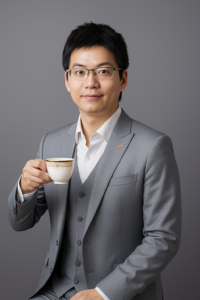
Gerald Kuo, a doctoral student in the Graduate Institute of Business Administration at Fu Jen Catholic University in Taiwan, specializes in health care management, long-term care systems, AI governance in clinical and social care settings, and elder care policy. He is affiliated with the Home Health Care Charity Association and maintains a professional presence on Facebook, where he shares updates on research and community work. Kuo helps operate a day-care center for older adults, working closely with families, nurses, and community physicians. His research and practical efforts focus on reducing administrative strain on clinicians, strengthening continuity and quality of elder care, and developing sustainable service models through data, technology, and cross-disciplinary collaboration. He is particularly interested in how emerging AI tools can support aging clinical workforces, enhance care delivery, and build greater trust between health systems and the public.