On October 15, I walked through a Taipei hospital with an international group of health professionals and an uncomfortable question I could not fit on a presentation slide: If our hospital becomes genuinely better at keeping people well, will our management system recognize that as success, or as lost business?
The visitors came from Malaysia, the Philippines, Vietnam, Mongolia, and Somaliland, representing five countries or regions with different health systems. There were eleven members in the visiting group. Their professional interests ranged from emergency care and medical training to health financing and service delivery. We could have offered a familiar tour: speeches, group photos, equipment demonstrations, and reassuring praise of innovation. Those rituals cannot answer the hardest question facing health systems.
What happens after medicine saves a life?
I work with Taipei Jen-Chi Relief Institution, a charitable health care organization with a history extending back roughly 160 years. Its story has long centered on service to people who need care. As Taiwan has become a super-aged society (meaning that at least one-fifth of its residents are 65 or older), the definition of need is changing. People still need diagnosis and emergency treatment. They also need confidence after a fall, connection while living with cognitive impairment, and safety during the weeks after discharge.
Real physician voices, twice a week
Free, and one click to unsubscribe.
At the institution’s station-area building, the thirteenth floor offered one kind of answer. There, a community program called the Memory Academy works with older adults through cognitive and social activities. Cognitive activities are structured exercises for attention, recall, and other thinking abilities; they are not a cure for dementia. The point was not guaranteed improvement on a test. It was a familiar place to practice, participate, and be recognized as more than a diagnosis.
On the seventh floor, the conversation shifted to strength, balance, and safe movement. We looked at resistance exercise, in which muscles work against a controlled load, and at ways to assess physical function. Muscle strength matters clinically, but it also matters in the most ordinary moments: rising from a chair, carrying groceries, or crossing a street before the signal changes. A person who can stand up independently may avoid an emergency call. A person who can keep attending a weekly activity may be less socially isolated. These are meaningful outcomes, even though they seldom appear on a hospital’s monthly revenue dashboard.
At one point, a familiar Taiwanese song, “Tian Mi Mi,” offered a bridge that technical vocabulary could not. Music and shared movement are not substitutes for treatment; they are reminders that care happens among people, not only inside medical records. Different languages met in a simple rhythm. I wondered what we could learn from one another beyond polite compliments.
Then came the contradiction. Hospitals routinely describe their mission as keeping communities healthy. Yet administrators often review clinic volume, procedures, bed occupancy, and income because those numbers determine whether the lights stay on. I understand why: Staff salaries, infection control, maintenance, and charity services must be funded. But an incentive problem arises when the health system celebrates a larger flow of illness-related encounters while quietly hoping that prevention will reduce the need for those encounters. If we prevent ten avoidable admissions, who receives the financial benefit? The hospital that invested in the prevention program? The insurer? The household that no longer loses wages? Often the savings and the costs land in different places.
Taiwan launched Long-Term Care 3.0 in 2026, expanding a policy framework that aims to connect medical care with support at home and in the community. Long-term care is not simply a nursing home bed. It includes assistance with everyday activities, community services, caregiver support, and coordinated help for people living with functional limitations. The policy’s language of healthy aging and aging in place is promising. But every policy faces a translation problem: How does a national ambition become a dependable service on a Tuesday afternoon, after the ribbon-cutting and the visiting delegation have gone home?
The World Health Organization defines healthy aging in terms of functional ability, the capacity to do what people value, rather than the mere absence of disease. Its integrated care for older people approach encourages teams to consider mobility, cognition, nutrition, mood, and social needs together. In management language, this means a new unit of accountability. A hospital should not ask only whether a blood pressure reading improved. It should also ask whether the person can climb the steps to their apartment, remember a medication routine, and reach help when something goes wrong.
What would this look like beyond the vocabulary of reform? Imagine a small clinical-and-community team responsible for the ninety days after a frail older adult leaves the hospital. It would agree on one practical goal with the person and family, screen for fall risk and caregiver strain, arrange rehabilitation or exercise when appropriate, check nutrition, and make a real referral to community support. Each member would know who follows up. That is care coordination: making services work as one journey instead of handing people a stack of unrelated appointments.
The manager would then need a different dashboard. We could still watch finances and safety, but add measures such as repeat falls, avoidable returns to the emergency department, mobility changes, successful referrals, caregiver burden, and whether the person resumed a meaningful activity. We would examine results by income and neighborhood: A program accessible only to those who can pay or travel easily is not a population-health success. We would also be honest about evidence: A cheerful class photo does not prove that an intervention prevented hospitalization. Outcomes need follow-up, fair comparisons, and adjustment for the fact that healthier, more motivated people may enroll first.
International exchange should make this thinking sharper, not softer. Colleagues working in emergency medicine may teach us what happens when no reliable referral destination exists. Those in health financing may ask who pays when prevention succeeds. Educators may challenge whether staff are trained to work across professional boundaries. These are questions worth bringing home from an international visit. I would rather have one uncomfortable discussion about failed handoffs than twenty photographs showing that everyone smiled.
There is a further responsibility not to confuse a building plan with a completed care system. Some medical floors at our site remain in development and subject to the relevant approvals. Technology requires maintenance, people require training, and integration requires time no architect can draw into a floor plan. If a hospital advertises a seamless care journey before patients can actually travel it, the promise itself becomes another barrier.
By 2030, the World Health Organization expects one in six people worldwide to be at least 60 years old. That is not just a demographic projection. It is a test of governance. Will hospital boards reward an additional procedure more readily than a preventable fall that never occurred? Will payers share the value of keeping people functional? Will international partnerships exchange measurable failures as readily as ceremonial gifts?
I hope the future hospital is part clinic, part recovery network, and part neighborhood gathering place. But “community living room” must be earned, not printed on a brochure. We earn it when someone returns from treatment to ordinary life without being abandoned at the hospital door, and managers can explain how that outcome is financed and measured.
Perhaps our most important patient is the person who never needs to come back. The real test is whether we are brave enough to count that person as a success.
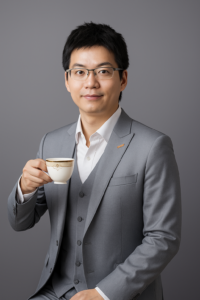
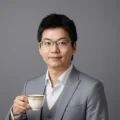
Gerald Kuo, a doctoral student in the Graduate Institute of Business Administration at Fu Jen Catholic University in Taiwan, specializes in health care management, long-term care systems, AI governance in clinical and social care settings, and elder care policy. He is affiliated with the Home Health Care Charity Association and maintains a professional presence on Facebook, where he shares updates on research and community work. Kuo helps operate a day-care center for older adults, working closely with families, nurses, and community physicians. His research and practical efforts focus on reducing administrative strain on clinicians, strengthening continuity and quality of elder care, and developing sustainable service models through data, technology, and cross-disciplinary collaboration. He is particularly interested in how emerging AI tools can support aging clinical workforces, enhance care delivery, and build greater trust between health systems and the public.