






American voters have brought health care affordability back to the center of our national conversation. Younger Americans, in particular, face a difficult question: Will the system they are helping finance be accessible, affordable, and sustainable when they need it?
As elected leaders prepare to assume their responsibilities, the medical profession has a responsibility of its own. We should bring forward practical proposals that can help turn public expectations into better care.
Coverage and financing deserve serious attention. Medicare for All is one proposal for broadening coverage and changing how care is financed. Its potential benefits, costs, and implementation challenges deserve rigorous examination.
Alongside that debate, we must ask another question: How can our health care delivery model do more to enhance health, preserve function, and reduce avoidable illness? All this can potentially reduce ER crowding, hospital bed crunch, and physician and nurse shortages. Whatever financing structure we choose, the way we deliver care will remain consequential.
Real physician voices, twice a week
Free, and one click to unsubscribe.
Strengthening the foundation
Over nearly four decades in internal medicine, I have witnessed extraordinary advances in diagnosis and treatment. I have also seen how easily the daily work of medicine becomes dominated by responding to established disease.
A patient arrives with several chronic conditions, a growing medication list, declining mobility, and limited confidence in managing daily health needs. The clinician works through urgent concerns, reviews test results, adjusts treatment, and arranges referrals. The visit ends, often before there has been enough time to explore what might help that patient function better between appointments.
This is a structural problem that individual effort alone cannot resolve.
The Health Enhancement Organization (HEO) model is my proposal for helping address it. It is an approach within scientific medicine that places greater emphasis on health enhancement through stronger primary care, preservation of function, simplified practical education, and supported patient participation. Its organizing principle is straightforward: Strengthen the base of health care, and other rewards will follow.
A strong base includes accessible primary care, continuity, adequate time for clinical inquiry, and collaboration with nurses, therapists, pharmacists, and other professionals. It also includes patients who understand their conditions and have realistic opportunities to participate in their care.
HEO does not weaken the top. It broadens and strengthens the base.
Making participation practical
Patient participation requires more than telling people to exercise, eat better, or follow instructions. Advice becomes useful when it fits a person’s abilities, resources, daily responsibilities, and living conditions. Someone working two jobs may need an approach to movement that fits into brief intervals. An older adult who fears falling may need supervised instruction and reassurance before becoming more active. A person facing food insecurity needs support that recognizes that constraint.
Participation must be supported, affordable, and accessible. It must never become a reason to blame patients for illness or restrict their care.
Within HEO, the clinical encounter would give greater attention to daily movement, joint and spine function, balance, sleep, nutrition, and the patient’s understanding of the care plan. These priorities would complement appropriate medications, diagnostic testing, specialist care, and procedures. By emphasizing the strong musculoskeletal (MSK) system and function preservation, the HEO model anticipates improved cardiovascular/pulmonary health.
Primary care teams need the time, resources, and payment structures to make this work possible. Adding expectations to an already overloaded workforce will accomplish little. In fact, this model has the potential to tame skyrocketing costs while improving affordability and accessibility.
An invitation to test the proposal
I agree that the HEO model should be examined with the same discipline we expect of any proposed improvement in health care. Evidence supporting individual components can be further evaluated and measured to demonstrate the effectiveness or financial value of the complete model. Those questions, of course, will require further validation, and the time to do so is now.
A practical starting point could be a defined pilot focused on older adults at risk of falls and functional decline. Participating teams could assess mobility and balance, provide individualized instruction, address relevant clinical risks, and follow outcomes over time.
Evaluation should include falls and injuries, function, patient experience, clinician workload, health care utilization, and total program costs. Comparisons should be designed to distinguish meaningful improvements by implementing the HEO model.
Successful elements could then be refined and expanded. Approaches that do not help should be revised or discontinued.
A responsibility shared across professions
Physicians can help identify clinical priorities. Nurses and rehabilitation professionals can help make interventions practical. Executives can create the operational conditions for implementation. Policymakers and payers can support evaluation and payment arrangements that recognize meaningful improvements in health and function. Patients and caregivers should help shape the program from the beginning.
My invitation to these groups is to review the HEO proposal critically and consider opportunities for collaborative testing.
No single model can resolve every problem in American health care. Coverage reform, workforce investment, administrative simplification, and attention to social conditions all remain necessary. The central part of the whole health care model is an effective and efficient interaction between the clinician and the patient. HEO offers a proposal for strengthening the clinical foundation on which those efforts depend.
The public is asking for affordable, accessible, sustainable health care. As a profession, we should help answer that call with ideas concrete enough to test, measures clear enough to evaluate, and the willingness to learn from the results.
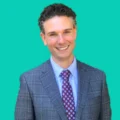
Narinder Singh Parhar is a physician with more than three decades of experience in internal medicine, hospital medicine, and intensive care medicine. Over the course of his career, he cared for a broad spectrum of medically complex and critically ill patients while developing a growing interest in health care systems improvement, prevention, biomechanics, and population health.
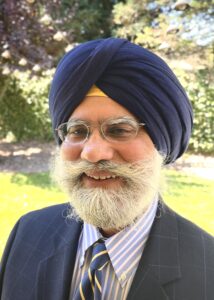
Dr. Parhar previously served as an associate clinical professor affiliated with the University of California, Davis, and on the executive board of Sutter Independent Physicians IPA in California. His professional experience spans outpatient medicine, inpatient care, intensive care medicine, and health care leadership, including past affiliations with Sutter Health and Sutter Roseville in California.
Throughout his career, he became increasingly concerned about several structural challenges within the current health care model, including affordability, accessibility, polypharmacy, health care fragmentation, microbial resistance, physician burnout, and the progressive underemphasis of prevention and functional preservation. These observations led him to develop the Health Enhancement Organization (HEO) Framework, a prevention-oriented and biomechanics-aware health care enhancement model designed to complement scientific medicine through earlier biological support, movement preservation, patient empowerment, and health care team well-being.
Dr. Parhar’s current work focuses on health care course correction, scalable prevention strategies, biomechanics education, healthier aging, and improving long-term population health resilience in practical, affordable, and biologically grounded ways. He is the founder of Jeeva Health Systems, and his research includes “Impact of a Novel Plant-Based Treatment Option in Improving Pulmonary Function Markers,” published in Alternative and Integrative Medicine.