For many people working in health care, the problems have become painfully familiar: the growing burden of chronic disease, physician and nurse burnout, shortages of adequately trained clinicians, rising costs, and dissatisfaction among patients and professionals alike. Together, these pressures can create a frustrating feeling that we have reached the end of the road. I believe we have reached a point that demands a change in direction.
We have extraordinary scientific knowledge, technological capabilities, and intellectual resources. We understand more about human biology than at any previous time. Yet translating that knowledge into affordable, accessible, and sustainable care remains an unfinished task.
Our difficulties should prompt a serious question: How can we use what we already know more effectively, while creating and testing better ways to deliver care?
Broaden our understanding of innovation
Health care innovation often brings to mind a new drug, a sophisticated device, or an advanced diagnostic platform. These developments can be lifesaving.
Real physician voices, twice a week
Free, and one click to unsubscribe.
Innovation also includes simplifying a clinical workflow, preventing an avoidable complication, improving patient understanding, or helping a clinician spend more time caring for patients. A process that safely removes unnecessary work deserves attention. So does an affordable intervention that helps people preserve function and independence, an intervention that might look too simple and inexpensive to be impressive.
I want to bring home a message: Simple is not necessarily trivial. We should judge innovation by the value it brings to patients and society: better health, safer care, improved access, meaningful professional work, and responsible use of resources.
Address the problems together
Affordability, accessibility, polypharmacy, antimicrobial resistance, and fiscal sustainability are closely connected. An inaccessible appointment may delay assessment. Fragmented care can make medication review more difficult. An exhausted clinician may have little time for thinking about prevention or patient education. An expensive intervention may offer limited practical benefit if patients cannot obtain or sustain it.
Workforce shortages add further pressure. The World Health Organization (WHO) projects a global shortfall of approximately 11 million health workers by 2030, concentrated largely in low- and lower-middle-income countries.
We must train and retain clinicians while also examining how their time is used. Requiring an already strained workforce to absorb every new initiative is an inadequate strategy. We, as clinicians, are appropriately focused on patients’ well-being and patient satisfaction as our primary goals. Here, I want to emphasize one point: We must create an environment where we also value physician well-being and clinician satisfaction.
Make health enhancement part of routine care
The Health Enhancement Organization (HEO) model I propose places greater emphasis on helping people preserve health and function within scientific medicine. Movement, nutrition, restorative sleep, patient education, and appropriate preventive care deserve a more deliberate place in everyday clinical practice.
For example, a brief observation of how a patient walks may prompt further assessment of a functional concern that would otherwise receive little attention. A structured medication review can create an opportunity to reconsider whether each prescription remains appropriate. Clear explanations can help patients participate more confidently in treatment decisions.
These approaches require thoughtful implementation. Proposed HEO workflows should be tested for feasibility, safety, clinical benefit, and cost before broad adoption.
Health enhancement also requires attention to the circumstances in which people live. Advice must be realistic for someone facing disability, limited income, caregiving responsibilities, or an unsafe neighborhood.
Treat safety as a foundation of sustainability
Medication safety deserves a central place in reform. WHO identifies polypharmacy as a priority within its Medication Without Harm initiative.
The objective is appropriate prescribing: a clear indication, a meaningful expected benefit, attention to interactions, and periodic reassessment. Clinician-supervised deprescribing belongs in that process when appropriate.
Antimicrobial resistance likewise demands coordinated action. WHO emphasizes infection prevention, vaccination, surveillance, and antimicrobial stewardship among its responses. Protecting patients from avoidable harm and preserving the effectiveness of treatment are essential responsibilities of a sustainable health care system.
Give promising ideas a fair test
We need a practical pathway from observation to innovation: identify a problem, design a feasible response, test it, measure outcomes, and improve it. Pilot programs should assess patient function, safety, clinician workload, access, and total cost. Results should guide whether an intervention is expanded, revised, or discontinued.
Payment and organizational policies must support this work. Prevention, education, coordination, and careful reassessment require time and resources.
After approximately four decades in medicine, I remain convinced that we have substantial capacity to improve health care. Our knowledge gives us reason for optimism. Our patients’ experiences give us reason for urgency. The sense of reaching the end of the road is a signal to reconsider our direction.
It is time to address these challenges head-on, with scientific discipline, practical imagination, and the courage to change how we work.
Narinder Singh Parhar is a physician with more than three decades of experience in internal medicine, hospital medicine, and intensive care medicine. Over the course of his career, he cared for a broad spectrum of medically complex and critically ill patients while developing a growing interest in health care systems improvement, prevention, biomechanics, and population health.
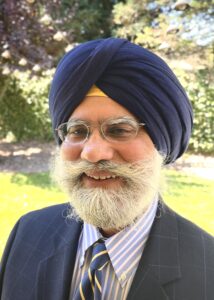
Dr. Parhar previously served as an associate clinical professor affiliated with the University of California, Davis, and on the executive board of Sutter Independent Physicians IPA in California. His professional experience spans outpatient medicine, inpatient care, intensive care medicine, and health care leadership, including past affiliations with Sutter Health and Sutter Roseville in California.
Throughout his career, he became increasingly concerned about several structural challenges within the current health care model, including affordability, accessibility, polypharmacy, health care fragmentation, microbial resistance, physician burnout, and the progressive underemphasis of prevention and functional preservation. These observations led him to develop the Health Enhancement Organization (HEO) Framework, a prevention-oriented and biomechanics-aware health care enhancement model designed to complement scientific medicine through earlier biological support, movement preservation, patient empowerment, and health care team well-being.
Dr. Parhar’s current work focuses on health care course correction, scalable prevention strategies, biomechanics education, healthier aging, and improving long-term population health resilience in practical, affordable, and biologically grounded ways. He is the founder of Jeeva Health Systems, and his research includes “Impact of a Novel Plant-Based Treatment Option in Improving Pulmonary Function Markers,” published in Alternative and Integrative Medicine.