
Money has become an increasingly dominant measure of success in modern society. Wealth, once considered a means of achieving security, independence, and a comfortable life, is too often treated as an end in itself. Nowhere is this transformation more troubling than in American health care.
Over the past two decades, health care has attracted unprecedented interest from investors, private equity firms, corporate executives, and other nonmedical stakeholders. Some have brought valuable capital, technology, and organizational expertise. But an uncomfortable question deserves our attention: Has the pursuit of financial returns begun to overshadow the fundamental purpose of health care?
Physicians, nurses, therapists, pharmacists, counselors, and other health professionals remain the human face of medicine. They devote years to acquiring the knowledge and skills necessary to relieve suffering and restore health. Yet these professionals increasingly operate within systems where revenue generation, productivity targets, and financial performance can compete with clinical judgment and patient welfare. The people entrusted with healing are at risk of becoming instruments of wealth creation for others.
The extraordinary cost of ordinary medical care
Consider the prices attached to many established medications and routine medical services. Cyclophosphamide, a medication introduced decades ago, remains essential in treating several serious diseases. Yet charges for some formulations and treatment arrangements can be surprisingly high.
Real physician voices, twice a week
Free, and one click to unsubscribe.
Branded inhaled medications for asthma and chronic obstructive pulmonary disease have historically imposed substantial financial burdens on patients. Even metformin, a long-established treatment for type 2 diabetes, illustrates how formulation and branding can produce striking differences in prices. A colonoscopy, particularly when accompanied by anesthesia, biopsy, pathology, and facility charges, can generate bills running into thousands of dollars.
Of course, prices vary considerably depending on insurance arrangements, formulations, facilities, and negotiated contracts. But this complexity itself raises questions about transparency and accountability.
According to KFF, the average annual premium for employer-sponsored family health insurance reached $26,993 in 2025. Workers contributed an average of $6,850 toward that amount. Meanwhile, national health expenditures reached approximately $5.3 trillion in 2024, representing 18 percent of the nation’s gross domestic product.
Where can this money keep coming from? Health care budgets are not bottomless pits, nor are they dollar trees with an infinite supply of money growing on their branches. Every unnecessary dollar spent represents resources unavailable for other essential human needs.
When wealth becomes disconnected from service
Executive compensation packages in corporate America can reach tens of millions of dollars annually, with exceptional awards reaching even higher levels. One may reasonably wonder how much wealth an individual or a family needs to enjoy even a luxurious lifestyle.
There is nothing inherently wrong with financial success. Responsible entrepreneurship, innovation, and investment deserve appropriate rewards.
But health care is not an ordinary marketplace. Patients do not choose to develop cancer, respiratory failure, or debilitating joint disease. Their vulnerability places a special moral obligation on those who provide, manage, and profit from their care.
A health care organization cannot be considered truly successful merely because its revenues and shareholder returns continue to rise. Its success must also be measured by the suffering it relieves, the health it preserves, and the affordability of the services it provides.
Have we begun to overvalue money itself?
Our broader cultural priorities deserve examination. Increasingly, people monitor their stock portfolios, investment returns, and financial positions almost daily. Financial security is important, but the relentless pursuit of wealth can come at the expense of meaningful relationships, community involvement, and personal fulfillment.
Throughout human history, many philosophical and spiritual traditions have valued contentment, gratitude, moderation, compassion, and service. The accumulation of wealth merely for its own sake has not universally been regarded as a virtue. Extreme economic inequality can undermine social trust and contribute to political and social instability.
Capitalism has undoubtedly generated remarkable prosperity, scientific progress, and innovation. But capitalism without ethical restraint risks reducing every human value to a dollar amount. The problem is not wealth creation. It is the elevation of wealth above human well-being.
Greed, by its very nature, recognizes few boundaries. Contentment and gratitude help establish those boundaries.
We reward the treatment of disease more readily than the preservation of health
Perhaps the greatest contradiction in our health care delivery model is that we have developed an enormous economic infrastructure around diagnosing and treating disease while comparatively underemphasizing the preservation of health. Hospitals are reimbursed for admissions and procedures. Pharmaceutical companies generate revenue from medications. Medical device manufacturers profit from interventions.
These services are often essential and lifesaving. Scientific medicine has achieved extraordinary advances, and those achievements must be protected.
But where are the comparable incentives for preventing a fall, preserving a knee joint, maintaining spinal mobility, improving sleep, or helping an older adult remain independent? Preventing illness and disability may generate enormous benefits for patients and society without producing an equally visible revenue stream for the organization delivering that benefit. This imbalance deserves serious reconsideration.
The Health Enhancement Organization (HEO) model proposes a pragmatic course correction within established scientific medicine. Its emphasis is on measurable health enhancement, functional preservation, patient education, and affordable preventive strategies.
A moral and fiscal responsibility to future generations
We need greater transparency in medical pricing, stronger accountability for patient outcomes, responsible executive compensation, and reimbursement structures that recognize the value of prevention. We must also protect the professional independence of clinicians from excessive commercial pressures.
Most importantly, we need to reconsider how we define success. A prosperous health care organization should be judged not only by its financial performance but also by its contribution to population health, affordability, accessibility, and the preservation of human dignity. Physicians and other health professionals must remain advocates for patients, not merely revenue-generating assets within increasingly complex corporate structures.
We owe this responsibility not only to today’s patients and taxpayers but also to future generations who will inherit the consequences of our decisions. Fiscal responsibility in health care is not simply an economic necessity. It is a moral obligation.
We cannot indefinitely sustain a system whose financial demands grow faster than society’s capacity to support them. The business of treating disease has become enormously sophisticated. It is time to bring the same energy, innovation, and commitment to the business of preserving health.
Narinder Singh Parhar is a physician with more than three decades of experience in internal medicine, hospital medicine, and intensive care medicine. Over the course of his career, he cared for a broad spectrum of medically complex and critically ill patients while developing a growing interest in health care systems improvement, prevention, biomechanics, and population health.
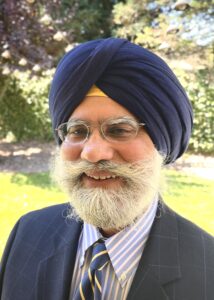
Dr. Parhar previously served as an associate clinical professor affiliated with the University of California, Davis, and on the executive board of Sutter Independent Physicians IPA in California. His professional experience spans outpatient medicine, inpatient care, intensive care medicine, and health care leadership, including past affiliations with Sutter Health and Sutter Roseville in California.
Throughout his career, he became increasingly concerned about several structural challenges within the current health care model, including affordability, accessibility, polypharmacy, health care fragmentation, microbial resistance, physician burnout, and the progressive underemphasis of prevention and functional preservation. These observations led him to develop the Health Enhancement Organization (HEO) Framework, a prevention-oriented and biomechanics-aware health care enhancement model designed to complement scientific medicine through earlier biological support, movement preservation, patient empowerment, and health care team well-being.
Dr. Parhar’s current work focuses on health care course correction, scalable prevention strategies, biomechanics education, healthier aging, and improving long-term population health resilience in practical, affordable, and biologically grounded ways. He is the founder of Jeeva Health Systems, and his research includes “Impact of a Novel Plant-Based Treatment Option in Improving Pulmonary Function Markers,” published in Alternative and Integrative Medicine.