Artificial intelligence, robotics, and other emerging technologies are transforming health care at an extraordinary pace. Their potential is enormous, and their development is both welcome and increasingly necessary.
As populations age, health care systems will face growing demands for medical care, rehabilitation, long-term support, and assistance for people with disabilities. Meanwhile, the volume of medical and pharmaceutical knowledge has expanded beyond what any individual clinician can reasonably master. AI-assisted clinical decision support, robotic assistance, intelligent monitoring, and automated documentation offer promising ways to address these challenges.
We should welcome these developments. However, enthusiasm must be accompanied by foresight, scientific scrutiny, and a commitment to human well-being.
The central question is not whether we should embrace these technologies, but how we can harness their potential without compromising the human capabilities and values they are intended to serve.
Real physician voices, twice a week
Free, and one click to unsubscribe.
Technology should strengthen the clinician-patient relationship
One of AI’s most promising applications is reducing the administrative burden on health care professionals. Physicians and nurses spend considerable time on documentation, information retrieval, and other tasks that can divert attention from patients. Thoughtfully implemented AI systems could help restore some of that time. But efficiency should not become the sole measure of success.
After four decades in clinical medicine, one of the most important lessons I have learned is that attentive listening builds trust. When patients feel heard and respected, they are often more willing to participate actively in their care. Technology should strengthen that relationship, not weaken it.
AI may help clinicians interpret information, identify patterns, and organize treatment options. It cannot assume the full responsibility of understanding a patient’s circumstances, earning trust, or exercising accountable clinical judgment. We need to strike a balance between technological efficiency and the human connection that remains central to effective health care.
The biological challenge: Use it or lose it
There is another concern that deserves greater attention. What happens to human physical and intellectual capabilities when technology increasingly performs the tasks that previously required us to exercise them?
Human physiology responds to use and disuse. Skeletal muscles lose strength when chronically underused. Physical endurance, balance, and coordination also require continued activity and practice. Modern technology has already reduced the physical demands of many occupations. Sedentary lifestyles have become common, even among highly educated professionals.
Now AI introduces another dimension: the possibility of increasingly outsourcing cognitive tasks. Clinical reasoning, problem-solving, memory retrieval, and analytical work may become progressively more dependent on intelligent systems.
This raises an important question: Could excessive reliance on AI reduce opportunities to exercise independent judgment and maintain professional skills? The answer requires careful scientific investigation. Cognitive functioning is complex, and we should not assume that technological assistance necessarily produces cognitive decline.
Nevertheless, the principle of “use it or lose it” deserves consideration as we design the next generation of health care technologies. Our goal should be to reduce unnecessary work without eliminating the meaningful physical and intellectual engagement that helps sustain human capabilities.
Medical education must evolve
The implications for medical, nursing, and pharmaceutical education are profound. Future clinicians will increasingly practice alongside sophisticated intelligent systems. Educational institutions must therefore teach students how to evaluate AI-generated recommendations, recognize errors, understand algorithmic limitations, and maintain responsibility for clinical decisions.
But technological competence alone is insufficient. Medical education must continue to emphasize attentive listening, physical examination, independent clinical reasoning, ethical judgment, and effective communication.
We should also reconsider whether existing curricula adequately prepare clinicians to address prevention, function preservation, health care costs, and the consequences of excessive medical intervention. AI may improve access to information, but access to information is not the same as clinical wisdom.
The purpose of medical education should not merely be to produce professionals who know how to use intelligent systems. It should produce professionals who remain capable of thinking independently when those systems are wrong, unavailable, or incomplete.
Preserving physical and intellectual fitness
Health care organizations and public health institutions should also consider how to counter the growing tendency toward physical inactivity. Regular movement, muscle strengthening, balance training, and functional preservation deserve greater emphasis across the lifespan. These measures need not always involve expensive equipment or elaborate programs.
Similarly, we should encourage lifelong learning, intellectually challenging activities, creative pursuits, and meaningful social engagement. One concept worth exploring is the development of community-based “brain gyms”: accessible environments designed to encourage intellectual activity, problem-solving, and continued learning.
Such programs would require careful evaluation. We should not assume that particular cognitive exercises prevent dementia or other forms of cognitive decline. Nevertheless, creating opportunities for sustained intellectual engagement is a reasonable public health objective. Technological progress should make it easier for people to remain physically and intellectually active, not encourage unnecessary dependence.
Workforce displacement and professional identity
AI and robotics may substantially alter employment across health care and other industries. Some tasks will disappear, others will change, and new occupations may emerge. Health care professionals, administrative workers, technicians, and support staff will need opportunities to develop new skills.
We should not assume that workers displaced by technological advances will automatically find equally meaningful employment. Governments, employers, professional organizations, and educational institutions must anticipate these transitions. Accessible retraining, continuing education, and practical support for affected workers should become integral parts of technological planning. A society that benefits from technological innovation has a responsibility to consider those who bear its economic costs.
Environmental sustainability and equitable progress
AI and robotics also require substantial physical infrastructure. Data centers consume electricity and water. Advanced computing systems depend on materials, manufacturing processes, and supply chains with environmental consequences. The scale and nature of these impacts vary considerably, but they cannot be ignored.
History offers useful parallels. Hydroelectric dams and nuclear power plants have provided important benefits while introducing environmental, safety, and societal trade-offs. AI and robotics deserve similarly balanced evaluation. We should assess not only their productivity and financial returns, but also their resource requirements, environmental effects, and distribution of benefits.
Another concern is the concentration of technological and economic power. When a relatively small number of organizations control essential computing infrastructure, data, and advanced technologies, questions of accountability, fair competition, and public oversight become increasingly important. National and international safeguards should protect privacy, promote transparency, establish responsibility, and help ensure that technological progress benefits society broadly.
A practical framework for responsible innovation
I believe health care leaders and policymakers should consider several priorities:
- Preserve human-centered care: Evaluate AI not only by efficiency but also by its effect on patient safety, clinician judgment, and the clinician-patient relationship.
- Protect independent clinical skills: Modernize medical education while preserving physical examination, clinical reasoning, communication, and ethical decision-making.
- Encourage physical and intellectual engagement: Use technological advances to support lifelong movement, learning, and functional independence.
- Prepare the workforce: Invest in retraining, new career opportunities, and meaningful support for workers affected by automation.
- Establish clear safeguards: Develop accountable governance for privacy, safety, fairness, environmental sustainability, and the responsible distribution of technological benefits.
These priorities are not arguments against innovation. They are essential considerations for making innovation genuinely beneficial.
The ultimate measure of progress
Humanity is entering an extraordinary technological era. AI and robotics may help address health care challenges that have persisted for generations. We have good reason to be optimistic. But technological capability alone does not guarantee human progress.
We must preserve the physical abilities, intellectual independence, interpersonal relationships, and ethical values that give human civilization its strength. We must also remember that technological development occurs within the ecological limits of our planet. Despite the excitement surrounding space exploration, humanity will remain dependent on Earth for the foreseeable future. And we share this planet with countless other forms of life.
The ultimate measure of technological progress should not be how much human effort we can replace, but how much human potential we can preserve, strengthen, and enhance. That is the balance we must strive to achieve.
Narinder Singh Parhar is a physician with more than three decades of experience in internal medicine, hospital medicine, and intensive care medicine. Over the course of his career, he cared for a broad spectrum of medically complex and critically ill patients while developing a growing interest in health care systems improvement, prevention, biomechanics, and population health.
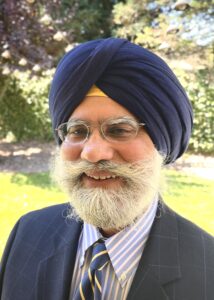
Dr. Parhar previously served as an associate clinical professor affiliated with the University of California, Davis, and on the executive board of Sutter Independent Physicians IPA in California. His professional experience spans outpatient medicine, inpatient care, intensive care medicine, and health care leadership, including past affiliations with Sutter Health and Sutter Roseville in California.
Throughout his career, he became increasingly concerned about several structural challenges within the current health care model, including affordability, accessibility, polypharmacy, health care fragmentation, microbial resistance, physician burnout, and the progressive underemphasis of prevention and functional preservation. These observations led him to develop the Health Enhancement Organization (HEO) Framework, a prevention-oriented and biomechanics-aware health care enhancement model designed to complement scientific medicine through earlier biological support, movement preservation, patient empowerment, and health care team well-being.
Dr. Parhar’s current work focuses on health care course correction, scalable prevention strategies, biomechanics education, healthier aging, and improving long-term population health resilience in practical, affordable, and biologically grounded ways. He is the founder of Jeeva Health Systems, and his research includes “Impact of a Novel Plant-Based Treatment Option in Improving Pulmonary Function Markers,” published in Alternative and Integrative Medicine.