













Listen and followApple PodcastsSpotifyYouTubeMore apps · Browse all episodes
Most people who try to quit smoking do not get proven treatment from their doctors. Edward Anselm is a board-certified internist and former Aetna medical director. This episode is based on his article “Improving tobacco treatment in clinical practice,” published on KevinMD. You will hear why asking about tobacco use routinely matters, why a conversation of more than three minutes counts as a billable visit, and why a patient who says they are not ready to quit can still try varenicline. He walks through the medication options, from varenicline and bupropion to combination nicotine therapy, and where e-cigarettes, hypnosis, and acupuncture fit. You will also hear why a follow-up call in the first week can double the effect of treatment, why smoking among patients over 60 has not dropped in 15 years, and how a new quality measure will track which doctors screen patients and advise them to quit. Press play to hear why he wants doctors to measure their own quit rates and believe they can improve them.
If this episode helped, follow The Podcast by KevinMD on Apple Podcasts or Spotify, and leave a rating.
Partner with me on the KevinMD platform. With more than 100 million impressions a year and nearly 750,000 followers, subscribers and email recipients across my channels, I give you direct access to the doctors and patients who matter most. Whether you need a sponsored article, email campaign, video interview, or a spot right here on the podcast, I offer the trusted space your brand deserves to be heard. Let’s work together to tell your story.
PARTNER WITH KEVINMD → https://kevinmd.com/influencer
SUBSCRIBE TO THE PODCAST → https://www.kevinmd.com/podcast
Transcript
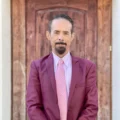
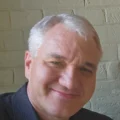
Kevin Pho: Hi, and welcome to the show. Subscribe at KevinMD.com/podcast. Today we welcome Edward Anselm. He is an internal medicine physician. Today’s KevinMD article is “Improving tobacco treatment in clinical practice.” Edward, welcome back to the show.
Edward Anselm: Great to be here.
Kevin Pho: All right. What’s your latest article about?
Edward Anselm: This time I’ve decided to help doctors improve their performance in tobacco treatment. When you look at the data from the National Health Interview Survey, it turns out the majority of people who try to quit smoking do not receive evidence-based treatment from their doctors. It’s really remarkable: We have effective treatments available for our patients, yet when they try to quit smoking, they’re not availing themselves of FDA-approved medications or counseling. So my article lays out some things that we’ve analyzed and determined are key issues in helping doctors improve their performance. It’s sort of a checklist by which doctors can get with the program.
Real physician voices, twice a week
Free, and one click to unsubscribe.
Kevin Pho: So let’s talk about the options that we have. What are some of the evidence-based treatment options for tobacco cessation that I, as a primary care physician, need to be thinking about and know about?
Edward Anselm: Many doctors use the FDA-approved medications for smoking cessation, but they may not be using them optimally. It turns out that only 25 percent of patients who use these medications avail themselves of counseling. Counseling is available for free, at no charge to the doctor or to the patient, through telephone quitlines or even health insurance case management programs. But the prescription for a patient to quit smoking should be accompanied by a strong referral to use the quitline, use counseling, or use an app to help structure their quit attempt.
We know that doctors don’t have a lot of time or a lot of expertise in counseling patients to do that, so why not talk to an expert? Literally, you could hand your patient an opportunity to have a conversation in their language about how they can quit smoking and remain smoke-free for a prolonged period of time. So we have medications and counseling, and yet when you look at the data, it shows that the majority of people who are trying to quit smoking are not using either of these treatments. So here are a few other things that we realize can be done to help people do that.
The first thing is screening. I’ve done several studies of electronic medical records, and when you measure the prevalence of smoking in the electronic medical record, we find that it’s substantially lower than the published prevalence in various epidemiological reports. That means that physicians are not capturing smoking status. So it’s really important to think about how you capture and update smoking status. One of the best practices is to have the medical assistant update the patient’s smoking status when they place the patient in the room. Obviously, if they’re a never smoker, there’s no point in asking. But if they’re a current smoker or a former smoker, it’s important to bring that information to the fore.
And there’s a double reason for doing that. When you ask a patient about their smoking, it shows that it’s something that’s important to you, the doctor, or to you, the medical practice that’s asking. But conversely, when you don’t ask about smoking status, it provides tacit acquiescence to their continued smoking. They know that smoking is not good for them, but if the doctor doesn’t ask about it, we call that enabling. So screening, and screening and updating routinely, are important interventions that you can make.
Another thing that happens frequently in practice is that we often ask a patient about their readiness to change. And if the patient says, “No, doctor, I’m not ready to change,” many doctors realize that the patient is not able to quit smoking right now and that they shouldn’t be talking about it. But the reality is that we have evidence-based conversations. The conversations are evidence-based, and they’re published in a clinical practice guideline, and they can be provided to a patient regardless of their interest in quitting, right? There are many things that you could talk about with a patient who smokes: how much they spend, whether they’re interested in lung cancer screening. There’s so much that you could talk about, and every one of those conversations is a billable visit. We made that the subject of one of our other presentations, right? Every time you talk to a patient and spend more than three minutes doing it, that’s a billable visit, and so that’s really important.
Now, beyond these very, very obvious things about repetition, and by the way, repetition is a key element of marketing any idea: The more people tell patients to quit smoking, the more they get the idea that it’s a good idea for them to do that. Empowering the patient to make a quit attempt can be further facilitated by letting them know that there are fifty-six million former smokers in the United States. I don’t know why this is a secret, all right? I mean, this is empowering news, and your patient would be empowered to try if they knew about the many millions of people just like them who tried.
If you’re already embarking on a conversation with a patient about quitting, and they talk about the difficulties of doing so and their past quit attempts, one of the things that you might do is talk about a trial of a medication, or medication sampling, right? There’s really good evidence that even among patients who specifically state, “Doctor, I’m not ready to quit smoking,” giving them varenicline, which is now available in generic form, and which, even if they can’t afford it, they can get for $20 a month, is effective in helping a substantial number of people become nonsmokers.
You may ask, why is that? If they said they’re not ready to change, why did they change? Because varenicline removes the craving that is associated with long-term cigarette use. No craving, no smoking, and suddenly the patient who had not believed that they could change their behavior now understands that maybe it’s possible to change the behavior. So you’ve reframed them with the medication sampling, all right?
Now, the best way to bring all the things that I mentioned together in a systematic approach for your practice, for your medical group, is something called systems change. We’ve recognized for decades, really, that doctors are not that good at helping people quit smoking. They don’t have enough time. The reimbursement rate, even if there is one, is kind of low. Doctors don’t feel that it makes a difference. But it does make a difference, and why not design a system whereby every patient in your practice is routinely referred to the quitline? You could set up a system in your electronic medical record that will capture that.
All these interventions become all the more important because of a new HEDIS measure that’s coming out and being validated this year. It’s about screening and treatment for tobacco. Isn’t that what we talked about? Screening and treatment. Guess what? NCQA is now going to use electronic medical record data to capture which doctors are screening patients, and which doctors are advising the patients who have been screened to quit in some manner or form.
So all of what I described is very, very timely, because we’re going to enter an environment of performance measurement for screening and tobacco treatment. You’re going to get feedback on a medical group level and on a health plan level about how well you perform. Hopefully the health plans will recognize the vast economic interest in helping people quit smoking, and the vast humanistic interest in helping people quit smoking, and they’ll put incentives behind these screening measures. But even if they don’t, individual doctors will receive feedback on how well they’re doing relative to their peers.
Kevin Pho: So you talked about some of the pharmaceutical treatments for it, like varenicline. My understanding is that not everyone can take that medication. There are some cases, like people who have a history of depression or behavioral health issues, where it may not be the right drug for them.
Edward Anselm: Of course, as with any medication, we need to carefully determine who is the right patient for the drug and understand that. But what has happened is that when varenicline first came out, there were a number of concerns around behavioral health episodes. Large-scale studies, called the EAGLES trial, pretty much demonstrated that there are no behavioral health implications for varenicline. So if you don’t meet the standard criteria, and basically a seizure threshold would be the major problem, clearly you need to tailor your medication to the patient, but there are plenty of other medications that are available.
Nicotine is very, very effective in helping people quit smoking, particularly if you provide an adequate level of nicotine that’s appropriate for that patient. Different people need different levels of nicotine, and some people benefit from having a patch, which establishes a baseline that’s then supported by a nicotine gum, all right? And that can be really, really helpful for people: a six-week course of combination nicotine therapy.
I’ve also had great results with bupropion over the years. It does the same thing that varenicline does. It eliminates the cravings, and it hasn’t gotten the popular press, maybe because it’s been generic for a long time. But the reality is that nicotine, the molecule, serves as an antidepressant for many patients. And so it’s not unreasonable that a treatment that is otherwise used for depression or pain management is actually effective in helping people quit smoking. So the continuum of pharmacotherapies that’s available for patients is now quite broad, and there are many choices to make.
A month ago, there was an article in JAMA from a working group from the Society for Research on Nicotine and Tobacco, which documented the use of electronic cigarettes in smoking cessation. This is a little bit more controversial, because most electronic cigarettes represent an element of unknown treatment. And we’ll do another podcast perhaps on electronic cigarettes, because it’s really a big subject. But nonetheless, there’s a Cochrane review that shows that electronic cigarettes are as effective as nicotine patches in helping people quit smoking. It’s a source of nicotine, and it gives people the behavior that’s familiar to them.
Interestingly, millions of people have adopted vaping. There are eleven million people in the United States who currently vape. It’s quite remarkable. And what they’ve done is they’ve chosen a harm reduction approach to getting their nicotine. They don’t want to smoke cigarettes, but they want nicotine, and so they’ve chosen a less harmful way of doing so.
So there are plenty of therapeutic options for doctors to talk about, but the challenge is to engage the patient’s interest and the patient’s sense of self-efficacy, empowering them to make another quit attempt. We know that repeated quit attempts are required over a period of several years as people unlearn their long-term habits.
This becomes especially important with older patients, right? And it’s really a sad story to tell, because older patients can quit smoking just like younger ones, but the doctors don’t tell them to quit smoking. They don’t help them quit smoking. And so what we have, epidemiologically, is that the prevalence of tobacco use has been dramatically reduced in our society, with the exception of people over the age of sixty. Over the last fifteen years, the prevalence of tobacco use among seniors has remained constant. Why is that? Part of it is that doctors and patients themselves have given up on the idea of treatment. You can think of it as a therapeutic nihilism: “Eh, the treatment doesn’t work.”
But the treatment does work if we remind them, if we give them the best practices. So there’s so much more that we could do, and so I’m an enthusiastic proponent of doing more, adopting a systematic approach, and aligning with partners to do this better. Health plans should really support doctors in a more systematic approach to tobacco treatment, but in the meantime, doctors can start on their own.
Kevin Pho: So you talked about some of the FDA-approved options. We talked about varenicline, bupropion, and nicotine replacement therapy. We talked about counseling. Of course, follow-up is tremendously important as well, so talk more about that. For me as a primary care physician, if we go one of those pharmaceutical routes, tell us about the importance of follow-up.
Edward Anselm: We found out that most people who relapse from a quit attempt relapse within the first week. Something happens to cause them a problem. They’re not taking their medication because they don’t like their medication, or they’re not using it correctly and therefore there’s no benefit from it, and they’re reluctant to engage with their doctor and tell them that they failed. Or they had a stressful life event, and that’s the main reason why people relapse: Their kid is sick, or there’s a problem at work, or some sort of stressful situation.
So the reality is, if a doctor or a counselor engages with a patient on a quit plan and starts on a strategy to quit smoking, a follow-up phone call or visit a week later is very effective. And we can do that now electronically or by telephone. The nurse could do it. And by the way, the nurse could do it as a billable visit if there are more than three minutes spent on it. The reality is that a phone call or a follow-up visit gets people back on track with the plan.
The research shows that providing a follow-up visit, and the research is based on face-to-face visits, doubles the effectiveness of the intervention, because it helps the people who relapse in the first week and are reluctant to acknowledge their failure and admit to their doctor that they failed, you know? We know that noncompliance, or nonadherence, as with alcohol, is not commonly acknowledged. So why not set up with the recognition that that happens?
Kevin Pho: Now, I have patients who don’t necessarily want to be on another pharmaceutical, and nicotine replacement may or may not be for them in terms of effectiveness. What about some of the alternative options? Hypnotherapy and acupuncture are the ones that come up most often in my clinic.
Edward Anselm: It’s very funny, because in the beginning, when I started my primary care practice, I read that hypnosis and acupuncture are no more effective than placebo. Now, placebo is actually pretty good. So a motivated person who goes to a hypnotist or goes to an acupuncturist will quit smoking because they’re motivated, and every quit attempt is a useful quit attempt. So I never discourage anyone from engaging in these therapies if they raise it, because they’re motivated. It’s their out-of-pocket cost, right? It’s not covered by insurance, all right? It’s not covered by insurance because it’s no better than placebo. The medications at least double the effectiveness of placebo. So placebo is not bad.
The ironic thing is that when I was in regular practice, I called up all the hypnotists and the acupuncturists in the Bronx to see what they were doing to help people quit smoking, and they had no idea about how or why their therapy worked. Basically, they said, “We do our thing, and the patient pays, and they don’t come back.” And so what I’m saying is that the patient was motivated, they made the quit attempt, and they were successful, all right? They had no idea about follow-up. They didn’t know anything about counseling or about how to help people prevent relapse. They didn’t even hand out the standard CDC pamphlets that are available for everyone to give away.
So if a patient says that they want to use an alternative method to quit smoking, I say, “That’s a great idea. How can I support you? When are you going? Let’s have a follow-up visit.” You see? So I no longer contradict my patients if they want to do something that’s aligned with the interest that I have, all right? So that’s my approach with that. I would never bring up acupuncture or hypnotherapy for someone, because it’s no more effective. It only works if they believe that it works. So if they have that belief, let’s work with it.
Kevin Pho: We’re talking to Edward Anselm. He’s an internal medicine physician. Today’s KevinMD article is “Improving tobacco treatment in clinical practice.” Edward, as always, we’ll end with your take-home messages to the KevinMD audience.
Edward Anselm: The take-home message is that just as we want to encourage patients to understand that they can develop their self-efficacy, including with smoking, that is, that it takes a long time to learn how to be a smoker and it takes a long time to unlearn that behavior, we can do the same thing with physician self-efficacy. I measured my own performance when I was in primary care, and my quit rate was no better than the national standard, which at that time was 5 percent.
Now, realize that’s a 5 percent success rate with your patients. You would find another line of work if you were told that your success rate was 5 percent. The national success rate now is a little bit better, now that we have better medications and so on. It’s now 8 percent, all right? Why not measure your performance? Why not develop a sense of your own self-efficacy? Why not use some social modeling and have a sign in your office that says, “Last year, fifty people quit smoking here, and they’re among the fifty-six million people who have quit smoking”? So my message to doctors is to develop their own sense of self-efficacy in doing this and doing it well.
Kevin Pho: Edward, as always, thank you so much for sharing your perspective and insight, and thanks again for coming back on the show.
Edward Anselm: Thank you. You take care now.
Listen and followApple PodcastsSpotifyYouTubeMore apps · Browse all episodes
Your KevinMD author page is one of the top results for your name. Turn it into a premium profile, publish in 1 to 3 days, and get a guaranteed podcast slot.