








Listen and followApple PodcastsSpotifyYouTubeMore apps · Browse all episodes
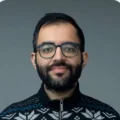
A dialysis patient raising her grandchildren lost food benefits, and her doctor could not prescribe food. Sameen Farooq is an internal medicine and palliative care physician at Montefiore Medical Center in the Bronx. This episode is based on his article “Wealth inequality is a clinical problem, not political,” published on KevinMD. You will hear how poverty shapes care for roughly a fourth of the patients on his hospital service, why city resources and community health workers can only act as Band-Aids, and how federal cuts squeeze health systems that serve poor patients. He explains why he says “poverty” and “poor” instead of “disparities,” a word his article calls a code word. He also shares practical steps, from treating every patient as a whole person to using the social need codes in the EHR, writing to your representative, and voting. Press play to hear why he believes naming the problem is where a physician’s advocacy starts.
This episode is brought to you by Froedtert & the Medical College of Wisconsin.
As a physician, you give everything to your patients. At Froedtert & the Medical College of Wisconsin health network, our focus is on giving that same care back to you. When you join, you practice at the top of your license, backed by a care team built to handle the routine so you can be fully present with your patients. Experience the best of both worlds: access to academic medicine with the Medical College of Wisconsin and a health system that empowers you to thrive: both grounded in deep community roots.
So whether you’re exploring a role in Family Medicine, Internal Medicine, or Med-Peds, you’ll have the team and the technology behind you. Reinvent health care in Wisconsin. Be here. Visit FroedtertCareers.com to learn more.

VISIT SPONSOR → https://froedtertcareers.com
EXPLORE PHYSICIAN ROLES → https://kevinmd.com/froedtert
SUBSCRIBE TO THE PODCAST → https://www.kevinmd.com/podcast
Transcript
Kevin Pho: Hi, and welcome to the show. Subscribe at KevinMD.com/podcast. Today, we welcome Sameen Farooq. He’s an internal medicine and palliative care physician. Today’s KevinMD article is “Wealth inequality is a clinical problem, not political.” Sameen, welcome to the show.
Sameen Farooq: Hi, thank you for having me. A little bit about me: I am a zero-to-first-generation American. I’m a Pakistani immigrant. I grew up in Brooklyn, lived in West Virginia for a little bit, did my undergraduate work in Brooklyn as well, at CUNY, the City University of New York, and went to medical school at Wayne State University in Michigan. So I’ve traveled around the country and lived in different places, and now I’ve been working at Montefiore Medical Center for almost a decade, between residency and being an attending.
My work is really rooted in figuring out how to help people and meet them where they’re at, and this article was born out of that. Over the last couple of years, I have noticed that we’re dealing with more and more challenges when it comes to figuring out how to give patients the best possible care while also mitigating harm and navigating a lot of the complex structures that we all have to face as clinicians. So that’s a little bit about me.
Kevin Pho: All right. In your KevinMD article, “Wealth inequality is a clinical problem, not political,” you start off with a story from your hospital shift about a grandmother on dialysis. So why don’t you start by telling my audience that story, and then talk about why it meant so much to you.
Real physician voices, twice a week
Free, and one click to unsubscribe.
Sameen Farooq: For me, when I talk to any other human being, it’s about figuring out how I, as a fellow human being in a different role, can help them, right? This patient of mine was a very sweet lady, but very overwhelmed with her chronic medical issues. She was admitted to the hospital for upper extremity pain and insomnia, difficulty sleeping, in the context of living with chronic HD and having had multiple prior cervical spine procedures. She had pretty remarkable neuropathy in the upper extremity, and there was a concern about how to better optimize her pain management and spare opioids if possible. Because she has ESRD, she’s at higher risk for complications with opioids. So we were trying to figure out what we could do for her. The pain in her body was limiting her sleep, and that was limiting her ability to be as functional as possible.
While I was talking to her about addressing these things in a rational, meaningful way, she brought up the fact that she is a caregiver. She is the guardian of her grandchildren. She is not sleeping more than three or four hours a day. She is figuring out how to put food on the table. Rent is expensive. She’s worried about the fact that her SNAP benefits got cut. That really made me very angry, because I felt helpless. I can’t prescribe food. I can’t write a prescription for three well-balanced, nutritionally appropriate meals a day that will give you your micronutrients, and I can’t tell her, “Go out and buy supplements,” because they’re very expensive. What patients have to endure to get Ensure or Boost or a variation of these protein supplements is very difficult. It’s very cumbersome.
So I had to figure out what I could do as a physician in front of her, not only to empower her to be more in control of her body and her symptoms, but also while recognizing the fact that she is poor. She’s living in poverty; her options are limited, and her access is limited.
At our hospital, we have a program where we try to connect patients with community health workers, and they help identify opportunities for support that exist at the level of the city, right? New York City is a very unique locale in the United States. We are very immigrant-friendly, very people-friendly, and even with a lot of challenges, our politics, in terms of how we approach health, focus on health as a human right, essentially, right? In that context, addressing the social determinants of health is important. So our health system is taking some steps to address that. We have a funded program for community health workers to engage with patients who are facing these challenges and identify how we can access more support if there are federal issues affecting access to food stamps and whatnot.
So as a hospitalist, I was able to have a conversation with her. We talked about the fact that being poor and living with chronic illness is a challenge in itself. For me, that was an opportunity to reflect on my role as a physician, as a person who is very privileged and very fortunate. I earn a lot more in a year than the majority of Americans, and I’m cognizant of that, right? This case particularly highlighted for me the fact that $30 may not have the same value for me, but $30 being cut out of her monthly budget had a huge impact on her. It’s just that number, right? What does $30 mean to you? We often spend $30 on the most benign things on Amazon. But for her, that was literal food.
Kevin Pho: This is such a stark example. You mentioned the term social determinants of health, and this is a clear example of how they can have clinical repercussions going forward. Now, you work at Montefiore in the Bronx. How often do you encounter this situation as a hospitalist, and how many resources are available? Because you did mention the program that connects families with community health workers. What are the resources for something like that?
Sameen Farooq: I would say that my health system, even with the challenges it faces from bureaucratic things and from federal Medicaid cuts through the “big, beautiful bill,” is always trying to figure out how we can support patients who come to our hospital with a lot of need. That does not mean that we have the fix for everything. We don’t. But we do make an attempt. There are resources open at the city level when it comes to accessing housing support, the shelter system, and food pantries, right? But again, a lot of these are Band-Aids for the problem that many of my patients face, which is that they are of lower socioeconomic status and often do not have means. Their education is sometimes limited due to their circumstances. There’s a component of health literacy, right? I’m not trying to pathologize these human beings, but that’s the milieu in which they exist.
So when we are providing medical care, not only are we combating end-stage renal disease, atrial fibrillation, congestive heart failure, poorly controlled diabetes, and chronic HIV and related complications, we are dealing with these issues in the confines of people dealing with a lack of money, a lack of advocacy for their needs, and a disconnection from what is possible for them.
I know for a fact that my fellow hospitalists and I prioritize the well-being of the patient to the best of our ability. We try to maximize the resources, however stretched they are, to improve patient access to care and to give patients opportunities to connect with services that are feasible and possible. We also acknowledge the fact that sometimes things are beyond our control, right? We cannot change federal policy on food stamps at this time. We cannot change federal policies that reduce infrastructure and target disenfranchised people for the sake of bureaucratic upgrades or efficiency, right? It’s always interesting to me that efficiency is born out of cuts that affect the most vulnerable. Efficiency is never born out of cuts to programs that don’t deal with poor Americans, right?
So for my health system, we encounter poverty and poverty-related issues on a daily basis. Out of my census of fifteen to sixteen patients, I believe roughly a fourth are living at or below the poverty line. When we do care planning for them, we can’t say, “Just go out and pay for this thing,” because paying for this thing means not paying for electricity, gas, food, or transportation. So as a health system, we try to mitigate those harms by connecting people with whatever resources we can. But again, all health systems across this country that work in underserved settings and have poor people as their patient population are being squeezed at every level, because the priorities are different federally, unfortunately.
Kevin Pho: I noticed that in our conversation, you starkly used the terms poverty and poor. In your article, you note that sometimes people just say disparities, and it’s a code word for those words. Why is that important for you? Why is it so important to call these terms what they are?
Sameen Farooq: Because I’m a child of immigrants who, for a very brief moment, relied on food stamps. Being made to feel other is something that sticks with you. For me, I think we can’t fix a problem until we name the problem, right? You can’t fix the issue until you say what the issue is. I’m really tired of academia, clinical research, and health research, where we walk around the issue without naming it.
I am not begrudging poor people. We have to be mindful of the fact that all human beings have humanity and an essence, whether or not they have the capital or the resources to live in this kind of society, right? It’s important to recognize people for who they are: people. But when we are living in systems that are designed to amplify the voices of the few and, unfortunately, commit harm on the many, intentionally or unintentionally, then we have to have the language to speak up about that. I think it’s not radical in any way to say that I get to work with really caring, kind, compassionate human beings who are my patients, who happen to be poor.
Kevin Pho: Now, let’s talk about advocacy, because individual physicians can sometimes do only so much within the confines of a hospital. What are some ways physicians can advocate?
Sameen Farooq: I think the biggest thing any physician can do is recognize humanity. Don’t reduce a person to their disease. People have full lives. They are someone’s child, brother, or sister. What I’m saying is not novel or new, but we have to remind ourselves that everybody is deserving of humanity. Everybody’s life matters, whether it’s the person who is behaving erratically on the ward in the midst of a substance use disorder-related issue, right, or somebody who is in a lot of pain and unable to express that pain. I think a lot of us encounter difficulty, and our reaction, our protection for ourselves, is, “I need to get away right now.” I am not advising that any physician or clinician of any training background or title expose themselves to harm. What I am saying is that when we encounter other human beings, we should treat them as that: human beings.
Because if you treat a person as a person, you can have a conversation. And if you can have a conversation, the very least you can do is say, “I’m not able to change a lot of things, but let’s figure out if I can give you information about this one thing,” right? And maybe that one thing leads to another conversation. Again, you are right. Physicians are limited in what we can do. We cannot prescribe a cure for the systemic ills that unfortunately affect our patients’ lived realities. But we can speak up for them.
I realized that in Epic, the EMR we use, there are codes that say unhoused, undomiciled, lack of social support, or poverty, right? There are codes, and I think we need to start coding and billing for these things. Not billing in that sense, but we need to use the metrics within the confines of the systems we work in to amplify the fact that taking care of vulnerable people, working-class people, and poor people is an immense privilege. We are the people facing the direct effects of what societal neglect and political neglect inflict on other human beings. And we as physicians are privileged in that we have the education and the background to, at the very minimum, name an issue articulately and connect people to a possible fix, if there’s a fix that can be accessed.
Kevin Pho: We’re talking to Sameen Farooq. He’s an internal medicine and palliative care physician. Today’s KevinMD article is “Wealth inequality is a clinical problem, not political.” Sameen, as always, we’ll end with your take-home messages to the KevinMD audience.
Sameen Farooq: For me, I think it’s important that we as physicians, as clinicians working in this field, always prioritize the humanity of our patients. We should leverage our ability to communicate and deal with complexity when it comes to disease, apply the same to the systemic disease of poverty that is afflicting society and the world, and use our voice as physicians, because we carry a lot of privilege, to enact what we call “good trouble,” right?
We should not shy away from saying what we see and naming the problem. I’m not advising that we all go on marches tomorrow. I’m not advising any of that. But if you have the ability to write to your congressperson, write to your congressperson, wherever you live, and just say, “I take care of vulnerable people. What are we doing about these people? Because their lives matter, their humanity matters, and as a physician living in this constituency, my voice matters, too.” We can all do one thing, which is vote. Vote for people who support our identity and politics, who amplify the needs of the working class and poor people in this country.
And when we’re at the hospital, humanize people. Name the issue. That might build a lot of bridges with patients, because you see them beyond just CHF, ESRD, diabetes, and AFib. You see them as someone’s grandmother dealing with these medical issues, living in this kind of reality, where it’s challenging to afford Eliquis and lunch.
Kevin Pho: Sameen, thank you so much for sharing your perspective and insight, and thanks again for coming on the show.
Sameen Farooq: Thank you very much. It was lovely.
Listen and followApple PodcastsSpotifyYouTubeMore apps · Browse all episodes