







Listen and followApple PodcastsSpotifyYouTubeMore apps · Browse all episodes
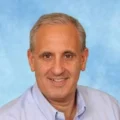
Medicine rewards pushing through, but for a doctor with an addiction, pushing through can be deadly. Anthony Grandelis is an OB/GYN hospitalist in New York City and a physician in recovery from addiction. This episode is based on his article “The danger of worshipping resilience in medicine,” published on KevinMD. You will hear how he went to treatment during residency with his family’s support, relapsed as an attending after saying yes to everything, and faced threats to his license at an institution that called his advocacy unprofessional. He explains why resilience has shifted from an internal strength to an external pressure, why asking for help early protects careers, and how a physician health program helped protect his license through a relapse. He also proposes bringing recovery principles such as honesty, surrender, and community into medicine, from peer review to support groups for the trauma clinicians see every day. Press play to hear his advice for any clinician who is still pushing through and afraid to say, “I need help.”
This episode is brought to you by Froedtert & the Medical College of Wisconsin.
As a physician, you give everything to your patients. At Froedtert & the Medical College of Wisconsin health network, our focus is on giving that same care back to you. When you join, you practice at the top of your license, backed by a care team built to handle the routine so you can be fully present with your patients. Experience the best of both worlds: access to academic medicine with the Medical College of Wisconsin and a health system that empowers you to thrive: both grounded in deep community roots.
So whether you’re exploring a role in Family Medicine, Internal Medicine, or Med-Peds, you’ll have the team and the technology behind you. Reinvent health care in Wisconsin. Be here. Visit FroedtertCareers.com to learn more.

VISIT SPONSOR → https://froedtertcareers.com
EXPLORE PHYSICIAN ROLES → https://kevinmd.com/froedtert
SUBSCRIBE TO THE PODCAST → https://www.kevinmd.com/podcast
Transcript
Kevin Pho: Hi, and welcome to the show. Subscribe at KevinMD.com/podcast. Today, we welcome Anthony Grandelis. He’s an OB/GYN hospitalist. Today’s KevinMD article is “The danger of worshipping resilience in medicine.” Anthony, welcome to the show.
Anthony Grandelis: Hi, Kevin. Thanks for having me.
Kevin Pho: All right. As always, we’ll start with you sharing your story, and then we’ll jump right into today’s KevinMD article.
Anthony Grandelis: Sure. As you mentioned, I’m an OB/GYN hospitalist. I’ve been working as an attending for about four years now in New York City, so that’s one of my big identities. The other identity that is really prominent in my life is that I’m a recovering drug addict and alcoholic. So a lot of what I’m going to be talking about today is how these two identities have played against each other in my life and how I’ve been trying to bring them together over the last few years. That’s my story in general.
To get a little more specific, when I was a resident, I was in Minnesota, where I’m from, and I was really struggling. Residency was really hard for me, and there was always an underlying substance use problem that had been brewing for most of my adult life. It really came to a head during my third year of residency. At that time, I was really scared. I didn’t know what to do. I was afraid about my license and whether I would be able to finish training. But my family was quite worried, and they were the ones who pushed me into seeking help. So I was able to take about three months off during my third year of residency, go to treatment, and then come back and finish my training.
Since that time, life has been really good. Recovery has changed my life. The problem I’ve run into over the years, though, is that recovery is a full-time job. It’s something you need to pay attention to every day of your life. When I started my attending job in New York City, a lot of the advice I got was to say yes to everything when you start as an attending, to make sure you don’t miss out on opportunities. I took that advice and unfortunately let my recovery fall to the wayside.
So over the course of a couple of years as an attending, I got sick again. This time, I knew what the solution was. I knew I needed to take some time off work and get better. But this second time, I was not met with the same compassion and, I guess, kindness that I received during my residency training. I worked at an institution that was not as supportive as I would have liked. They threatened my medical license. They told me that my advocacy for health care professionals with substance use disorders was unprofessional. So I decided to leave that institution.
That’s the first time I really started thinking, “Wow, my life in recovery is very different from my life in medicine,” and it’s very hard to lead these two different lives. That last experience is the basis for this article and a lot of the things I talk about: thinking about how I can bring the principles of recovery into medicine.
Real physician voices, twice a week
Free, and one click to unsubscribe.
Kevin Pho: So when you say that recovery is a full-time job, for those who aren’t familiar with the process, what exactly does that mean? And when you are practicing medicine, how do your two lives intersect?
Anthony Grandelis: Good question. Recovery requires daily vigilance. They say that the disease of addiction is always waiting in the corner. For me, what it looks like is going to support group meetings as much as I can, maintaining frequent contact with a sponsor, and seeing a psychiatrist and a therapist weekly. It’s something I’ve had to fit into my life as a physician, which has been hard at times. But I’ve found that, for the most part, I can make it work. It just requires a lot of, I guess, vigilance on my part to make sure that I stay healthy.
Kevin Pho: So let’s talk about that word, resilience. It’s such a loaded term, right? In medicine, physicians are trained to be resilient. But in your article, you say that in addiction, resilience can be the very thing that kills us. So talk about the tension surrounding that loaded term.
Anthony Grandelis: I work in medical education, and a lot of times when I’m reviewing applications for residency, or we’re reviewing resident performance, the word resilience comes up a lot. As I’ve worked in this field longer, the word has made me more uncomfortable, because as someone with a substance use disorder, I was resilient for a very long time. I kept pushing through. I kept going with my training. I was literally surviving fires in my personal life as I was trying to become a doctor. And eventually, at some point, you can’t push through anymore.
For drug addicts and alcoholics, that resilience becomes dangerous, because people keep pushing through until they can’t. And as we know, people overdose and they die. So resilience has just become this loaded word for me, and when I hear it used in medical education, it doesn’t sit with me as well as it used to.
Kevin Pho: So you’ve been on both sides of the fence, right? You talked about your story during residency, and now you’re a medical educator. I assume that you’re in a position of authority, reviewing residency applications. How has that word, resilience, evolved over the years for you? Like you said, it is such a loaded term, and you’ve thought a lot about it. So what does that word mean to you right now, as you watch your medical trainees go through that system?
Anthony Grandelis: For me, I don’t think resilience is necessarily a bad thing, but I think it has transformed from an internal strength into an external pressure in our medical education system, and even in health care in general. It’s essentially the response to a broken health care system. Instead of stopping and asking for help, people are expected to push through, not ask questions, and just try harder. That’s how I’ve seen resilience play out in my professional life, and it’s been hard to hear that word at times, because what I think these trainees, or even we as attendings and medical professionals, sometimes need is not to be resilient, but to actually stop and ask for help.
Kevin Pho: You described two scenarios: In residency, the program was more understanding, and you contrasted that with your previous position, where the institution wasn’t as compassionate about what you needed. What’s the situation like in general today? Are you still seeing residency programs and institutions shifting the blame and telling their residents and physicians to be more resilient, or are you seeing some improvement over the years?
Anthony Grandelis: I think there has been improvement over the years. It’s been small, but I notice the changes. There’s a lot of room to go, but people have started realizing that we can’t continue the way we have been. Burnout is at an all-time high. Providers are dying by suicide. Substance use disorders are actually quite prevalent among health care professionals. So something isn’t working. I do think there have been some steps in the right direction, but there’s still a long way to go.
With regard to my experience as someone with addiction, I think we are still very much behind where we need to be in terms of supporting health care professionals. People are still very afraid to ask for help. They don’t know what help exists. And of course, they’re quite afraid of what could happen to their professional license or their careers if they come forward and acknowledge that they have a problem.
Kevin Pho: So how do we answer those questions? Physicians and residents who are in a position similar to where you were are, I’m sure, asking those same questions. What are some of the answers? How scared should they be? What resources are available to them?
Anthony Grandelis: I think the best thing I can do is just share my story. I was very lucky the first time around to have the support of my family, who helped me seek help probably long before I would have for myself. But what I realized then is that by asking for help early, you avoid a lot of the consequences that people are afraid of. I got set up with the Health Professionals Services Program in Minnesota right off the bat, and they’re an organization that really helped make sure that I got healthy. They helped me return to work. They helped protect my training. And past that point, over the years, they’ve helped me stay healthy.
I’ve been working with them since residency, even through a relapse as an attending, and they’ve helped protect my license as long as I’m committed to the process of getting healthy. There are some requirements. I do get drug tested frequently, and I have to meet with mental health professionals and things like that. But for the most part, what I’ve learned is that asking for help early really is the best thing one can do for one’s career.
Kevin Pho: You mentioned earlier that health systems in general have a long way to go. So what would a health care system look like if it didn’t require resilience as a proverbial survival strategy? In your ideal world, what would that look like?
Anthony Grandelis: That’s where my brand, Recovering Healthcare, comes in. Well, I guess I’ll step back a little bit. After I left that institution where I didn’t feel supported, I was thinking, “Medicine seems really sick these days.” I had been thinking for a long time about what it would take to fix the broken system that I feel we work in every day. At that point, I was comparing it to my life in recovery, in which I had become a much healthier and happier person because of the principles I practiced every day in recovery.
So I was thinking, “Wow, what would it look like if we took the things that are helping millions of people around the world recover and get healthy from addiction, and applied those to medicine, to how we practice medicine, how we teach, and how we take care of patients?” So in answer to your question, my goal is to start bringing the principles that I practice every day, things like honesty, surrender, being present, humility, and integrity, into my everyday work in medicine. And I think as we start to practice some of those things, the demand for resilience will become less and less, because we will be focusing on other areas of medicine that will, in general, make us healthier as providers and help us provide better care for patients.
Kevin Pho: Is there anything specific, from a structural or policy standpoint, that health institutions can do? We do have a lot of health institution leaders listening to this podcast. If you had advice for them, something that would have made your life easier at your last position, what would you have liked to see happen?
Anthony Grandelis: Specifically for health professionals with addiction, I don’t think I’ve ever seen, in any of my training programs or the jobs I’ve applied to, what I can do if I’m struggling: real, concrete things that I can do. And we really have to protect people who come forward. We can’t be threatening their medical licenses. We cannot be making them undergo professionalism remediation. We have to really support them in coming back to work in the best way possible. So with regard to addiction, I think it’s about having more available resources, things we share with every health care professional who works at an institution.
In terms of other concrete policies, that’s hard, because these principles are a bit abstract in a way. But one thing we can start to do is look at control in medicine: the things we try to grasp at and control every single day. For me, that includes things as simple as our peer review processes. Those feel like we are trying to control and blame, and I think a restructuring of how we review cases and learn from them can really go a long way in helping people feel supported, and also in helping us realize that there are a lot of things we can’t control in medicine despite our very best efforts.
I think one of the biggest things in recovery is community support. People in recovery go to support group meetings all the time, AA meetings, NA meetings, things like that, and community is really the number one thing that helps people get better in recovery. They sometimes say that the opposite of addiction is not sobriety, but connection with other people. So I think we can embed support groups within our institutions for people to process what they go through on a daily basis. We experience trauma every single day in health care. We see people die. We see injustice and people suffering illness. We work long hours. We have these ridiculous documentation demands. We are literally experiencing trauma every single day in our hospitals. And until we learn how to treat the trauma that health care professionals go through, we won’t have a hope of providing trauma-informed care for our patients, in my opinion.
Kevin Pho: Now, what would you say to the clinician, or the medical student for that matter, who is still pushing through and afraid to say, “I need help”?
Anthony Grandelis: I would say that the first step is to be honest with yourself. If they’ve gotten to that point, then I would say talk to a trusted mentor. Sometimes it’s easier to talk to a trusted colleague. I think people will find that, for the most part, especially with a trusted mentor, these people are on your side, and they want to see you get better and ultimately will help you get better. I’ve been lucky to have some amazing mentors in my life, and they have rarely failed to show up for me in the way I’ve needed them to. So trust the people you’ve aligned on your team. The first step is really just stepping forward and saying that you need help.
For people who are afraid of doing that, you can also make anonymous calls to physician health programs and get a little more information about what the process looks like. Just getting a little information sometimes makes the process a little less scary.
Kevin Pho: We’re talking to Anthony Grandelis. He is an OB/GYN hospitalist. Today’s KevinMD article is “The danger of worshipping resilience in medicine.” Anthony, we’ll end, as always, with your take-home messages to the KevinMD audience.
Anthony Grandelis: Thanks for having me, Kevin. It was a pleasure to be on today. My take-home message, specifically for health care professionals who are struggling with their mental health or substance use disorders, is that help does exist. There’s a way through, and I’m proof of that. I live a very satisfying, happy, healthy life these days, both personally and professionally. I’ve come through some pretty dark times, and now I’m thriving, I think.
Also, I think it’s really time to take a step back and look at how you can show up each day. Think about the principles that people use in recovery. Think about being present with your patients. Think about being honest. Think about the community that you build. Think about the integrity and the values that made you enter medicine in the first place, and try to reconnect with those. I think if we can each start to change the room that we’re in, then we can help make a difference in health care.
Kevin Pho: Anthony, thank you so much for sharing your story, time, and insight, and thanks again for coming on the show.
Anthony Grandelis: Thank you.
Listen and followApple PodcastsSpotifyYouTubeMore apps · Browse all episodes