
Every nurse who has ever called you at two in the morning remembers how you answered. You remember almost none of them.
That asymmetry runs the hospital at night. The caller carries every response forward: the sigh, the pause, the question that was really a verdict. By the time the phone rings again, they have already decided how much it is going to cost them to tell you what they are seeing.
You know this because you were once the caller. You remember the attending who sighed. You can probably still hear it.
We spend a great deal of effort teaching clinicians how to make the call: situation-background-assessment-recommendation (SBAR), structured escalation, what to have in front of you before you dial. We spend almost none teaching the person who answers it. Yet the first thirty seconds of that call do more to determine whether the next one gets made than anything that happens after.
Real physician voices, twice a week
Free, and one click to unsubscribe.
Consider the same call, answered twice.
Nurse: Hi, it’s the night nurse on 4 West. I’m calling about the patient in 12. His heart rate’s been creeping up, he’s a little restless, I’m not sure what’s going on.
Physician: What are his vitals?
Nurse: Heart rate 104, pressure 118 over 70, sats are fine.
Physician: So he’s stable. Is there something specific you want me to do?
Nurse: I, no. I just wanted you to know.
Physician: OK. Call me if anything changes.
Nothing in that exchange is rude. Nothing in it is even unusual. But the nurse has just learned what a call to that physician costs, and the next time she is uneasy, she will wait longer before picking up the phone.
Nurse: Hi, it’s the night nurse on 4 West. I’m calling about the patient in 12. His heart rate’s been creeping up, he’s a little restless, I’m not sure what’s going on.
Physician: Thank you for calling. Tell me what you’re seeing.
Nurse: He keeps pulling at the sheets. He’s not in pain. He’s just not himself.
Physician: What’s different from earlier?
Nurse: He was 72 at the start of my shift and he’s 104 now. And he was sleeping. Now he won’t settle.
Physician: What are you worried about?
Nurse: Honestly, I don’t know. I just don’t like it.
Physician: That’s a good enough reason to call. What would you like me to do?
Nurse: Could you come look at him?
Physician: Ten minutes. Call me back before that if anything drops.
Same patient. Same nurse. Same information available. The second physician learned about a change from baseline, heard the nurse’s concern, and agreed to assess the patient. The first physician learned a set of numbers. The difference began in the first thirty seconds.
This is not about being nice. A sleep-deprived physician is allowed to be tired. It is about the fact that the caller is doing something difficult: converting an unease into words, for a listener who outranks them, at an hour when being wrong feels expensive. Your opening either lowers that cost or raises it.
Here is what the second physician said, and why it works.
“Thank you for calling.” Say it first, before the name, before the room number. It answers the question the caller is silently asking: Was this allowed? It also happens to be true. Someone chose to interrupt you rather than wait, and that choice is the one you want repeated.
“Tell me what you are seeing.” Not “What is the problem,” which demands a diagnosis. Not “What are the vitals,” which demands a number. Seeing. The word invites description, which a worried clinician can almost always provide even when they cannot yet say what is wrong.
“What is different from earlier?” A heart rate of 104 tells you little on its own. A heart rate of 104 in a patient who was 72 at the start of the shift tells you a great deal. This question hands the caller the frame they were struggling to find: not “Is this abnormal” but “Is this a change.”
“What are you worried about?” Ask it plainly, and then wait. The caller often has a specific fear they have not said aloud because it sounds dramatic. Sometimes the answer is “I don’t know, I just don’t like it.” That is a legitimate answer. Say so.
“What would you like me to do?” This is the one senior clinicians skip most often, because we assume the caller wants us to decide. Frequently they already have a plan and are looking for permission. Letting them propose it gets you a better plan, and it tells the caller that their judgment is part of the process.
None of these questions takes longer than the alternative. And the first one, asked in the first few seconds, decides how the rest of the call goes.
There is a shorter list of things not to say, and most of us have said all of them. “Why are you calling me about this?” is a question with a built-in verdict. “Did you look at the chart?” assumes incompetence before hearing the concern. “Just monitor them,” without a plan for what to watch for, is not an order; it is a way of ending the call. And the sigh, the pause, the audible rubbing of the eyes: None of these are words, but every caller hears them, and remembers.
The hardest case is the call that turns out to be nothing. The patient is fine. The number was a transient. This is the moment that decides the culture of a unit, because it is the moment when the senior clinician is most tempted to teach a lesson.
The lesson should be the opposite of the one we are tempted to give. A call that proves unnecessary is evidence that the system is working: Someone noticed, someone escalated, someone senior looked. The right response is not “That wasn’t worth a page.” It is “Good, I’m glad you called, and here is what would make me more worried next time.” A call answered badly costs you a minute. A call never made can cost the patient the night.
End every call by closing the loop. Say what you are going to do, say when you will reassess, and say what should prompt the next call: “Call me back if anything drops, or if you are still worried in an hour, whatever the numbers say.” The second half of that sentence matters more than the first. It tells the caller that their judgment remains a valid trigger even after yours has been applied.
Then, if you can, call back yourself. Twenty minutes later, two words: “How’s it going?” Nothing builds trust across a hierarchy faster than a senior clinician following up unprompted.
None of this requires a protocol or a committee. It requires the person with the most authority on the line to understand one thing. The call is not a distraction from the work. The call is the work.
Start with four words. Thank you for calling.
At two in the morning, you are not being interrupted. You are being trusted. Answer like it.
The exchanges above are illustrative and do not depict any actual patient or clinician. The views expressed are the author’s own.
Gurdev Singh is a physician-writer whose work centers on one idea: Most misunderstandings don’t occur because no one spoke, but because meaning did not transfer. Singh studies the gap between what is said and what is heard, especially in high-stakes settings such as illness, aging, and difficult decisions, and explores how trust is formed or lost within seconds, why reassurance sometimes increases distress, and how presence can succeed where explanation fails.
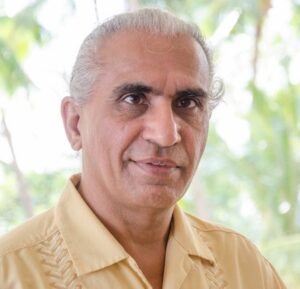
Singh writes literary nonfiction, research-informed essays, and fiction, and gives talks on empathy, communication, and human dignity. The aim is not to teach scripts, but to deepen awareness of what people carry away from an encounter, because that, more than information, shapes outcomes. In Singh’s words, “Where words end, meaning begins.” Singh’s writing appears on Substack at The Two Wells.