I have had five heart attacks. The fifth had such good manners that I missed it altogether. It arrived, did its damage, and left without a word, and I found out from a routine annual echocardiogram, the way a man learns from his bank statement that he was robbed last month.
I am a physician. I would like to report that I took the news with scientific detachment. What I actually thought was: five. At some point this stops being bad luck and becomes a hobby.
A cardiologist threaded a balloon into one of my coronary arteries and blew it up. Then he told me he could not place a stent, and that my treatment would be medical rather than interventional. I trained as a surgeon and became an internist, so I can translate. The plumbers have packed up their tools and left me in the hands of people like myself. I have met us. It was not reassuring.
So now I am in cardiac rehabilitation, pedaling a stationary bicycle with great determination toward nowhere. On the first day they assessed me, took numbers, and set goals. They meant these kindly, as a gentle destination. This was a mistake. Tell a man like me there is a goal and he hears a pass mark.
Real physician voices, twice a week
Free, and one click to unsubscribe.
Blame England. I grew up there, where the examinations that decided the rest of your life began at ten or eleven. Blame my parents too. In our house an A-plus was expected. An A was, perhaps, acceptable. Anything less meant I needed remedial training. Nobody shouted. My parents simply went silent and looked at me in “That Way,” and shortly afterwards a tutor would appear. Both of them are gone now. The look is in excellent health.
I have been sitting examinations ever since. School. Medical school entrance. Medical school exit. Board certification in surgery in England, which ought to have been enough for one lifetime. Then I crossed the Atlantic, and America, which trusts nobody’s paperwork but its own, examined me all over again. The USMLE, then boards in internal medicine. I own enough certificates to paper a small bathroom, which is, come to think of it, where a man does most of his reflecting on his achievements.
A habit like that does not know when to stop. When a treadmill stress test appeared on my calendar, I began “studying” six months ahead. Five or six days a week in the gym, pushing harder than the test ever would, so that on the day I would pass. Nobody told me to. The fitness was real enough, and no cardiologist would object to it. The folly was the motive. I did not want information about my heart. I wanted a grade. Told to fast overnight before a blood test, I fasted twelve to eighteen hours. Nobody has ever been awarded a distinction in cholesterol. I meant to be the first.
My heart was not impressed. It went ahead with attack number five and let an ultrasound deliver the result. The echocardiogram, I have discovered, is the one examination you cannot study for. It simply goes quiet and looks at you. My parents would have approved.
Naturally I have learned nothing. I passed every rehab goal before the halfway mark, and I am now trying to double them by the finish. The staff know. They encourage me and warn me, in the same breath, not to push too hard. They look pleased in the way one is pleased with a child who has eaten all his vegetables and started on the tablecloth. I do listen to the warnings. They are, after all, the examiners.
It is a collegial room. We pedal side by side, going nowhere, and nod to one another like members of a club none of us applied to join. I look down the row and suspect each of us brought someone along: a mother, a father, a schoolteacher. Nobody learns how to be a patient in a hospital. We learned it long ago, at a kitchen table, from people who loved us and had opinions.
My fellow doctors might bear that in mind. We hand a patient a number and think we have the whole story. Sometimes we have only the result of six months of studying. Mine never asked how I came by my numbers, and I never volunteered it.
I am told the purpose of rehabilitation is to learn to live with your heart, not to outscore it. I see the force of the argument, and I will give it my full attention once I have doubled my targets.
There is one examination left that nobody fails. I intend to arrive late and overprepared.
Gurdev Singh is a physician-writer whose work centers on one idea: Most misunderstandings don’t occur because no one spoke, but because meaning did not transfer. Singh studies the gap between what is said and what is heard, especially in high-stakes settings such as illness, aging, and difficult decisions, and explores how trust is formed or lost within seconds, why reassurance sometimes increases distress, and how presence can succeed where explanation fails.
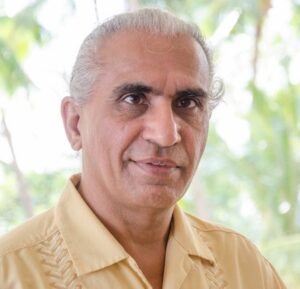
Singh writes literary nonfiction, research-informed essays, and fiction, and gives talks on empathy, communication, and human dignity. The aim is not to teach scripts, but to deepen awareness of what people carry away from an encounter, because that, more than information, shapes outcomes. In Singh’s words, “Where words end, meaning begins.” Singh’s writing appears on Substack at The Two Wells.
Your KevinMD author page is one of the top results for your name. Turn it into a premium profile, publish in 1 to 3 days, and get a guaranteed podcast slot.