Put two slides under a microscope and try to tell me which is which.
Each shows a lesion the body has been fighting for a long time. There’s chronic inflammation. There are macrophages, the immune system’s cleanup cells, so stuffed with fat they look foamy. There’s a core of dead tissue with a wall of scar tissue around it, as if the body gave up on clearing the mess and decided to fence it in.
One slide is tuberculosis. The other is a coronary artery plaque.
It’s not an easy call. In 2019, a review in Trends in Immunology ran images of the two side by side, and once you’ve seen them together, it’s hard to unsee.
Real physician voices, twice a week
Free, and one click to unsubscribe.
Here’s what bothers me. With tuberculosis, nobody looks at those fat-filled macrophages and decides the disease is a cholesterol problem. We know a bacterium started it. The fat accumulates as part of the host’s response to that infection, and may even contribute to the damage. So we treat the infection.
With atherosclerosis, cholesterol gets top billing. It’s the prime suspect and the main target of treatment. But being found at the scene of a crime isn’t the same as starting it.
The slides aren’t twins
Before anyone writes in: These lesions are not identical. Foam cells in tuberculosis are packed mostly with triglycerides. Foam cells in plaque hold mainly cholesteryl esters, the storage form of cholesterol. The tissue is organized differently, too.
Those differences are real. So is the family resemblance. In both, macrophages fill with fat, inflammation smolders, cells die, and the body walls the whole thing off with fibrous tissue.
Which leaves me with a question I can’t shake. Is some of the cholesterol in a plaque the body’s response to an injury, rather than the whole story of how the injury began?
Let me be clear about what I’m not saying. Cholesterol is not innocent. LDL and the other particles that carry a protein called apolipoprotein B (ApoB) get trapped in artery walls and cause atherosclerosis. That’s been shown about as convincingly as anything in cardiology. My worry is that we’ve taken an essential piece of the story and treated it as the whole thing.
An old suspect
In the late 1980s and 1990s, researchers got interested in a common respiratory bug called Chlamydia pneumoniae. (Not the sexually transmitted kind; different species.) Most of us catch it at some point, usually as a cold or a mild pneumonia we never think about again.
Researchers found traces of it in diseased arteries. In the lab, it could infect blood vessel cells, switch on inflammation, and change how macrophages handle fat.
One 1998 experiment has stuck with me for years. Researchers exposed human macrophages to C. pneumoniae, then added LDL. The macrophages gorged on cholesterol and turned into foam cells, the same cells that mark the earliest stage of plaque. A germ, in other words, helped build the signature cell of atherosclerosis.
And the story didn’t end in the 1990s. In 2022, Japanese researchers examined coronary plaques removed from 50 living patients undergoing a procedure called directional coronary atherectomy. Twenty-five had stable angina; 25 had an acute coronary syndrome.
They found evidence of C. pneumoniae in every single specimen. Fifty out of fifty. Both molecular testing and immunohistochemical staining were positive, with bacterial antigens found predominantly in macrophages and some vascular smooth muscle cells. That should at least raise an eyebrow.
But there was a catch. The amount of bacterial material didn’t distinguish unstable plaques from stable ones, nor did it predict subsequent restenosis. And because the investigators examined selected advanced plaques without disease-free coronary controls, they couldn’t establish whether infection caused the lesions, arrived later, or was simply along for the ride. Detecting bacterial DNA and antigens doesn’t prove that living organisms remain.
Still, 50 out of 50 is an observation worth remembering, especially for an infectious hypothesis many consider long buried. That doesn’t prove the germ causes heart disease. A dish of cells is not a coronary artery, and detecting a bacterium inside a plaque doesn’t establish causation. But these findings show why infection and cholesterol don’t have to be rival explanations. They can work together. Maybe LDL supplies the fuel and an infection, or the inflammation it triggers, supplies the spark.
Then came the antibiotic trials
This is where those of us drawn to the infection idea have to take our medicine. If a germ drives heart disease, killing it should help. So researchers ran large trials giving antibiotics to people with coronary disease.
They didn’t work.
ACES randomized 4,012 patients to azithromycin or placebo and followed them for nearly four years. Major cardiac events: 446 on the antibiotic, 449 on placebo. A dead heat. WIZARD, with 7,747 patients, was also negative. So was the antibiotic arm of PROVE-IT, which tested months of gatifloxacin. And in CLARICOR, patients given clarithromycin were more likely to die. You don’t get to wave that away because it spoils a good story.
But it’s worth being precise about what those trials showed. Giving these antibiotics to people who already have coronary disease doesn’t prevent heart attacks. That’s an important result, and it should end any notion of routine antibiotics for heart patients.
What the trials didn’t test is whether an infection years or decades earlier helped start the damage. By the time a plaque has a dead core and a scar-tissue cap, killing whatever lit the match may not put out the fire. An infection might also leave behind bacterial fragments, or a reprogrammed immune response, long after the live organisms are gone.
Those are hypotheses, not explanations for the failed trials. I wouldn’t prescribe an antibiotic for atherosclerosis based on what we know today. I just don’t think the trials closed every door.
Cholesterol matters. Is it enough?
I’ve spent most of my career as a lipidologist. Cholesterol has been very good to me. And the longer I practice, the harder it gets to believe that one theory explains everything about this disease.
Lowering LDL works. The Cholesterol Treatment Trialists’ Collaboration pooled the big statin trials and found that every 1 mmol/L drop in LDL (about 39 mg/dL) cuts major vascular events by roughly 22 percent.
In absolute terms, in the statin-versus-control trials, about 3.6 percent of patients a year had a major vascular event without a statin, compared with 2.8 percent on one. That works out to one major vascular event (including procedures to reopen narrowed arteries) prevented for roughly every 125 people treated for a year. Higher-risk patients get more benefit, lower-risk patients less.
That’s real. Nothing I’m about to say argues otherwise.
Then CANTOS added a twist. Canakinumab, a drug that blocks the inflammatory signal interleukin-1β, reduced repeat cardiovascular events without meaningfully lowering LDL. At the 150 mg dose, the event rate was 3.86 per 100 person-years versus 4.50 on placebo. A modest benefit, and it came with more fatal infections, an irony worth sitting with given the subject of this essay.
Still, CANTOS showed that inflammation isn’t a bystander. You can treat it separately from cholesterol and change outcomes.
Inflammation isn’t the same thing as infection, of course. But once you’ve shown the inflammatory machinery matters, it gets hard to stop asking what’s turning it on.
Maybe we’ve been asking the wrong question
For years, the question was: Can we find bacteria in plaque? A better one might be: Does the way your immune system responded to an old infection help decide whether your arteries go bad?
Tuberculosis researchers have started asking that kind of question. A 2026 study mapped antibody responses to thousands of TB proteins, looking for patterns that separate people with active disease from those who keep the infection in check. It’s early work. What interests me is the shift in thinking. Not “Were you exposed?” but “How did your body respond?”
The same lens could breathe new life into the infection question in heart disease. Instead of one antibody test that labels someone positive or negative for C. pneumoniae (prior exposure is common, and a simple positive antibody test tells us remarkably little), we could look at which bacterial proteins a person’s immune system targets, whether those responses cross-react with the body’s own blood vessel proteins, and whether bacterial pieces linger inside plaque.
Then ask the hard questions. Do any of these findings predict plaque growth after you account for ApoB, smoking, diabetes, blood pressure, and the rest? And if we find a real mechanism, does interrupting it change what happens to patients? That would beat yet another study showing that people with heart disease have antibodies to a common respiratory germ.
The trouble with a theory that works
Medicine has a habit. It finds one good explanation and stops looking.
For decades, ulcers were blamed on acid, stress, and lifestyle. Those things mattered. Then Barry Marshall and Robin Warren showed that a bacterium, Helicobacter pylori, was behind most of them. Marshall famously drank a culture of it to make the point. Within a few years, a disease we managed for life became one we could often cure.
I doubt atherosclerosis has its own H. pylori. Coronary disease is too complicated for one germ to explain. But infections could still be contributing factors in some people, interacting with lipoproteins, genes, and the immune system in ways we haven’t bothered to map.
The cholesterol hypothesis gave us treatments that save lives. That’s not in dispute. What’s still open is whether its success made us stop asking what else might be going on.
So go back to those two slides. In tuberculosis, the fatty, inflamed lesion points to an infection whose cause we know. In atherosclerosis, the same kind of lesion points to a disease where lipoproteins clearly matter, but where the full story may be more complicated than we’ve been willing to admit.
I’m not arguing that we should stop lowering cholesterol. I’m arguing that we shouldn’t confuse a treatment that works with a complete understanding of the cause.
Cholesterol is at the scene of the crime. No question.
But maybe it’s time we dusted for fingerprints.
Larry Kaskel is an internist and self-described “lipidologist in recovery” who has practiced medicine for more than 35 years, with an emphasis on prevention, wellness, and longevity. He runs a concierge medical practice in the Chicago area and serves on the teaching faculty at Northwestern University Feinberg School of Medicine.
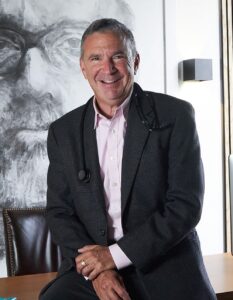
He is the former host of Lipid Luminations on ReachMD and author of Dr. Kaskel’s Living in Wellness. His writing frequently challenges conventional medical wisdom and explores new approaches to preventing chronic disease.
Dr. Kaskel is also the founder and CEO of Holy Chiat, a fiber supplement.
Your KevinMD author page is one of the top results for your name. Turn it into a premium profile, publish in 1 to 3 days, and get a guaranteed podcast slot.