














I just read a Wall Street Journal article about Larry Connor, a seventy-six-year-old billionaire who is spending a small fortune trying to slow down aging. My first reaction was to laugh. My second was to feel a little sorry for him.
Connor, a remarkably successful real estate investor, appears to have decided that aging is another problem he can solve by throwing enough resources at it. According to the Journal, he has roughly fifteen professionals helping manage his health and performance: three doctors on speed dial, personal trainers, yoga instructors, massage therapists, and a five-person department dedicated to managing aspects of his life. He’s scheduled for sixty-eight medical tests at the Mayo Clinic this year, including a full-body MRI and high-resolution brain imaging.
The number itself doesn’t worry me much. A single metabolic panel counts as more than a dozen tests, and a couple of blood draws can add up to dozens. What worries me is the imaging.
A full-body MRI in a person without symptoms has never been shown to extend life. What it reliably does is find things: harmless cysts, nodules, and shadows that lead to more scans, more procedures, and more anxiety.
Real physician voices, twice a week
Free, and one click to unsubscribe.
Sometimes the most valuable thing a physician can tell a patient is that there’s nothing else worth looking for. I wonder how often someone tells Connor that.
The Journal also reports that he stopped celebrating his birthday at age thirty, and that people around him know better than to mention it. If you don’t acknowledge your birthday, perhaps your cells won’t notice either.
His days are reportedly scheduled in increments as short as five minutes. His emails are screened and printed for him. His workouts are supervised. His cholesterol numbers are proudly displayed. And yet, despite all this extraordinary control, there remains one rather inconvenient biological reality.
He’s going to die. So am I. So are you. And that, I think, is what makes this story more sad than ridiculous.
I should be clear about where I sit. I practice concierge medicine. I work in this space, which is partly why this story bothers me. I understand the appeal of personalized attention and prevention. I encourage patients to exercise, maintain muscle, control blood pressure, and take reasonable steps to reduce their risk of disease. I do many of these things myself. But somewhere along the way, preventive medicine has become confused with the fantasy that every aspect of aging can be measured, optimized, and ultimately controlled.
To be fair, Connor is doing some genuinely admirable things. He’s physically active at an age when many people are losing their independence. He’s also donated millions to aging research at Mayo. That may do more for human longevity than all his personal testing combined. And he says his real priority is the quality of his remaining years, not simply their number. I hope that’s true.
I don’t know Connor. Perhaps he’s perfectly comfortable with his mortality and simply enjoys the challenge of staying fit. Perhaps skipping birthdays is just a quirk.
But I suspect that beneath much of the modern longevity movement (the industry I’m part of, not just one billionaire) lies something considerably less glamorous than scientific curiosity.
Fear.
Fear of dying, certainly. But perhaps something else, too. The fear of losing control. Of discovering that the rules that made you successful in life don’t necessarily apply to the business of staying alive.
A billionaire can buy a better trainer, a better doctor, a better mattress, and probably a better view from his hospital room. But he cannot buy an exemption from being human.
I am sixty-four years old. I have spent much of my professional life helping people avoid disease and premature death. I still believe deeply in prevention. But I’ve become increasingly aware of the difference between trying to live longer and being unable to accept that life ends. Those are not the same project.
The first is medicine. The second is philosophy, psychology, and perhaps a little religion. Medicine has plenty to offer the first. It has considerably less to offer the second.
I hope Connor lives to be one hundred. I hope he stays strong, travels, laughs, enjoys his family, and continues to fund worthwhile research. But I also hope that somewhere between his next blood draw and his next supervised treadmill session, he finds a few unscheduled minutes to consider the possibility that he has already won.
He is wealthy beyond imagination. He’s active. He’s alive. At some point, shouldn’t that be enough?
The great irony is that a man who has devoted so much energy to controlling time may be allowing it to control him. There is something almost touching about that.
Behind the billionaire, the entourage, the laboratory results, and the carefully managed calendar is a seventy-six-year-old man facing precisely the same uncertainty as the rest of us. No amount of money makes that easy. And no amount of testing makes it go away.
So here’s my prescription for Mr. Connor. Keep exercising. Keep funding research. Maybe cancel a scan or two.
And for God’s sake, celebrate your next birthday. You’ve earned it.
Larry Kaskel is an internist and self-described “lipidologist in recovery” who has practiced medicine for more than 35 years, with an emphasis on prevention, wellness, and longevity. He runs a concierge medical practice in the Chicago area and serves on the teaching faculty at Northwestern University Feinberg School of Medicine.
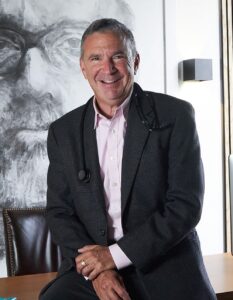
He is the former host of Lipid Luminations on ReachMD and author of Dr. Kaskel’s Living in Wellness. His writing frequently challenges conventional medical wisdom and explores new approaches to preventing chronic disease.
Dr. Kaskel is also the founder and CEO of Holy Chiat, a fiber supplement.