















I’m sick of seeing this cartoon in my Apple News feed.
You know the one. A bright red artery lined with yellow globs of cholesterol, with a few red blood cells squeezing through what’s left of the opening. It looks like someone poured bacon grease down the kitchen sink.
There it was again this week, accompanying a November 6 article about cholesterol and dementia in BBC Science Focus magazine. Really? It’s 2026. Science Focus should know better.
The odd thing is that the article itself is pretty good. It explains that the brain makes most of its own cholesterol and that cholesterol is essential for normal brain function. So why lead with a picture that gets the basic anatomy of coronary disease wrong? The opening even trots out the familiar “fatberg” analogy.
Real physician voices, twice a week
Free, and one click to unsubscribe.
Atherosclerosis isn’t cholesterol sticking to the inside of a blood vessel. It’s a disease within the arterial wall.
LDL particles can cross an intact endothelial lining. That alone isn’t atherosclerosis. The trouble begins when some of those particles become trapped in the intima, where they interact with the surrounding tissue and provoke an inflammatory response. Macrophages, foam cells, smooth muscle cells, fibrous tissue: All of that becomes part of the plaque. In its earlier stages, the artery often expands outward, so the inside channel may look reasonably normal despite a substantial amount of disease in the wall.
Yes, advanced plaques can narrow the lumen. And when a plaque ruptures or erodes, a clot can form inside the artery and cause a heart attack. But neither event resembles yellow cottage cheese slowly coating the lining.
I realize this may sound like a lipidologist quibbling over an illustration. I’m a lipidologist in recovery, so perhaps I’m entitled to one quibble. But we physicians have spent decades showing patients pictures like this. Then we wonder why they think cholesterol is a substance that needs to be scrubbed out of their arteries. It also lets us avoid a question I find much more interesting: Why does plaque form where it does?
The same LDL-containing blood flows through the entire arterial system. Yet plaque tends to develop at bends and branch points, while neighboring stretches may be relatively spared. What changes locally that causes lipoproteins to stay, inflammation to persist, and a lesion to grow?
We know quite a bit about this. Disturbed blood flow changes the behavior of vascular cells and the matrix around them. Certain arterial proteoglycans bind and retain apoB particles. In one experiment, disturbing blood flow increased the amount of LDL retained in the arterial wall without increasing the amount that entered it. And in another, mice engineered to produce LDL that couldn’t bind normally to arterial proteoglycans developed substantially less atherosclerosis.
Think about that. It isn’t simply a matter of how much LDL gets into the wall. What happens to it once it’s there matters enormously. The artery is not an innocent piece of plumbing.
I also wonder whether infection sometimes contributes to that local inflammatory environment. That’s speculation, and antibiotic trials in coronary disease have been disappointing. But it seems reasonable to keep asking what turns a particular patch of arterial wall into a place where this process takes hold.
This doesn’t let LDL off the hook. ApoB-containing particles are central to the process, and lowering LDL reduces cardiovascular events. I’ve written enough about cholesterol over the years to know that arguing over the importance of LDL can become a religious exercise. I’m not interested in another one.
What bothers me is the assumption built into the picture: too much cholesterol in the blood, so it sticks to the artery, which slowly clogs. It’s memorable. It’s also wrong, and the error matters.
I’m not asking a magazine illustrator to produce a histology textbook. Just show the plaque where it actually lives: under the endothelial lining, in the wall. Show that the wall itself changes. That might even get readers to ask a better question than “How do I clean out my arteries?”
BBC Science Focus, of all publications, could retire this cartoon.
Larry Kaskel is an internist and “lipidologist in recovery” who has been practicing medicine for more than thirty-five years. He runs a concierge practice in the Chicago area and serves on the teaching faculty at the Northwestern University Feinberg School of Medicine. He is also affiliated with Northwestern Lake Forest Hospital.
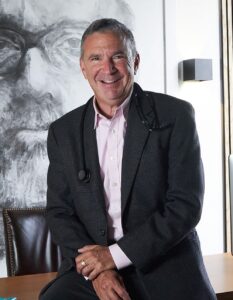
Before podcasts were even a thing, Dr. Kaskel hosted Lipid Luminations on ReachMD, building a library of more than four hundred shows featuring thought leaders in cardiology, lipidology, and preventive medicine.
He is the author of Dr. Kaskel’s Living in Wellness, Volume One: Let Food Be Thy Medicine, a book that blends evidence-based medicine with practical strategies for a longer healthspan. His current work focuses on rethinking the cholesterol hypothesis and exploring the infectious roots of atherosclerosis. More information is available at larrykaskel.com.