














I’m sixty-four years old. I’ve practiced internal medicine for more than thirty-five years, and I figure I’ve got another seven good years left. And I’m not particularly worried about artificial intelligence replacing me.
That doesn’t mean I think AI is overhyped. Quite the opposite. I suspect it’s going to transform primary care faster than most physicians appreciate. Some of what we do today will look positively antiquated by the time I retire.
Consider what’s already happening in Utah. In January 2026, the state announced a pilot program allowing artificial intelligence to handle certain prescription renewals for chronic medical conditions, under regulatory safeguards.
Think about that for a moment. Writing prescriptions has been one of the defining privileges of being a physician. Now we’re experimenting with allowing software to perform at least part of that function. And I don’t necessarily think that’s a bad thing.
Real physician voices, twice a week
Free, and one click to unsubscribe.
Does a stable patient with hypertension really need a physician to personally review every routine refill? If an AI system can review blood pressures, kidney function, potassium levels, and medication interactions, perhaps not. The technology isn’t perfect. Neither are we.
But the implications go well beyond prescription refills. For much of my career, physicians possessed an enormous information advantage. We knew things our patients didn’t. We had access to medical literature, understood physiology, and could interpret laboratory results. That advantage is disappearing.
A motivated patient can now arrive at an appointment having consulted an AI system that has reviewed more medical literature in seconds than I could reasonably read in a month. Sometimes the patient may even be right. I’ve learned not to find that threatening.
But I’ve also learned something else over the years. Knowing what to do and getting someone to do it are two entirely different things.
I practice concierge medicine now. My patients pay me directly for access, continuity, and a relationship that extends well beyond the traditional office visit. I used to think the primary attraction was convenience. Longer appointments. Direct communication. The ability to reach me when something goes wrong.
I’ve come to believe it’s something more fundamental. My patients want a physician who knows them.
I know which patient will catastrophize over a mildly abnormal laboratory result. I know who needs reassurance and who needs an uncomfortable conversation. I know who will agree enthusiastically with my recommendations and then proceed to ignore every one of them. And occasionally, I know something isn’t right before I can explain precisely why. That’s not mystical intuition. It’s what happens when you’ve known someone for fifteen years.
There’s a term for part of this relationship: the therapeutic alliance. I prefer to call it trust.
Interestingly, artificial intelligence may initially make physicians busier rather than less necessary. The Wall Street Journal recently described how divorce attorneys are dealing with clients who arrive armed with elaborate AI-generated legal arguments. Instead of simplifying the divorce process, AI sometimes creates additional work for attorneys who must untangle inaccurate assumptions and unrealistic expectations.
I can easily imagine the medical equivalent. Patients will arrive with AI-generated differential diagnoses, treatment recommendations, and interpretations of laboratory results. Some will be excellent. Others will be spectacularly wrong. And physicians will spend time sorting out which is which.
For a while, AI may create an entirely new category of medical work: explaining why the computer is wrong. Of course, that won’t last forever. AI systems will improve, and patients will become more sophisticated in using them. Eventually, much of routine primary care may be handled by AI systems with physicians supervising the exceptions. I suspect younger physicians should be thinking seriously about what that means for their careers.
But at this stage of mine, I see an opportunity. Imagine walking into an examination room where the patient’s history has already been collected, medications reconciled, relevant records reviewed, and a thoughtful clinical summary prepared. No frantic typing. No clicking through endless electronic health record screens. Just a physician and a patient having a conversation.
After decades of watching technology interfere with the practice of medicine, perhaps technology will finally give us some of our time back.
There’s another reason I think physicians will remain important. Someone has to take responsibility. When a treatment recommendation goes wrong, who answers for it? The software company? The health system? The physician who approved the recommendation? Those questions aren’t going away simply because an algorithm becomes more accurate.
And medicine is full of patients who don’t fit neatly into protocols. The patient whose symptoms don’t make sense. The person taking twelve medications, each prescribed for a perfectly reasonable indication. The patient whose laboratory results look reassuring but whose appearance tells you otherwise. These situations require judgment, and sometimes judgment means knowing when to ignore the algorithm.
I’m not suggesting physicians possess some magical quality that machines can never reproduce. That would be a dangerous assumption. AI may eventually become better than we are at many aspects of clinical reasoning.
But medicine is also a relationship between two people, one of whom has agreed to help the other navigate illness, uncertainty, and sometimes death. I don’t think that relationship is going away anytime soon.
Perhaps I belong to the last generation of physicians who will practice medicine in anything resembling its traditional form. I’m comfortable with that. I’ve had a remarkable career, and I’m genuinely curious to see what happens next.
If artificial intelligence can relieve me of the administrative nonsense that has accumulated around medical practice, I’ll welcome it. If it can help me make better decisions, even better. And if it eventually replaces much of what physicians currently do, so be it.
But for the next seven years, I suspect there will still be patients who want someone who knows them, understands their history, and is willing to take responsibility for their care. That’s the part of medicine I still enjoy.
And I don’t see much reason to retire from it just yet.
Larry Kaskel is an internist and “lipidologist in recovery” who has been practicing medicine for more than thirty-five years. He runs a concierge practice in the Chicago area and serves on the teaching faculty at the Northwestern University Feinberg School of Medicine. He is also affiliated with Northwestern Lake Forest Hospital.
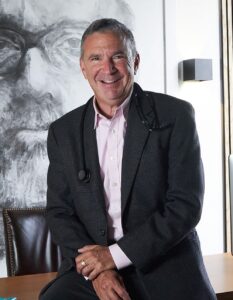
Before podcasts were even a thing, Dr. Kaskel hosted Lipid Luminations on ReachMD, building a library of more than four hundred shows featuring thought leaders in cardiology, lipidology, and preventive medicine.
He is the author of Dr. Kaskel’s Living in Wellness, Volume One: Let Food Be Thy Medicine, a book that blends evidence-based medicine with practical strategies for a longer healthspan. His current work focuses on rethinking the cholesterol hypothesis and exploring the infectious roots of atherosclerosis. More information is available at larrykaskel.com.