








I spent eight years as a urologist in rural Washington, two of them as chief of staff at our hospital. I loved my patients. I also saw, up close, what happens when a community can’t get specialty care close to home. I watched a woman die of bladder cancer after years of being treated for “recurrent UTIs.” The medicine was never the hard part. Access was.
Later, in a leadership role at a large health system, I kept pushing for changes I believed would make care better. Every push got framed as being difficult. Eventually, I was fired for speaking up. I own my part. I was loud and impatient, and I didn’t always pick my battles well. But that firing taught me something I couldn’t have learned any other way: Some systems can’t be changed from the inside.
So I tried building from the outside. I started a solo urology practice in Nashville with no business background and no golden parachute. I learned the business side the hard way, and I made more than $1 million in mistakes doing it. The practice grew anyway. Then I founded a company that partners with rural hospitals to rebuild specialty care locally, the same problem I had watched in Washington.
For years, I did all of it. I saw patients, ran a practice, and built a company. I told myself that was what commitment looked like.
Real physician voices, twice a week
Free, and one click to unsubscribe.
The slow subtraction
Nobody tells you that stepping back from clinical medicine is rarely one decision. For me, it was a slow subtraction. Over six years, I gradually stripped away what it meant to be a clinician. Each step felt small and reasonable on its own. Together, they added up to a question I had been avoiding: What was I actually trying to accomplish?
By the end of 2025, the answer had become clear. The opportunity in front of me was to focus on only one goal, and that goal was growing the company I had built to bring specialty care back to rural communities. I couldn’t see it while I was still splitting my week between the exam room and everything else. Once I saw it, I couldn’t unsee it.
Physicians can do anything. We can’t do everything.
Medicine trains us to believe we can carry it all. We get through residency on the idea that more effort fixes every problem. We take the extra call, add the extra clinic, say yes to the committee. Many of us bring that same habit into whatever we build next.
I’ve learned that although physicians can do anything, we can’t do everything. By diluting my focus, I was diluting the impact I could make. Every hour I gave to one role was an hour the other didn’t get, and neither got my best. My patients deserved a surgeon who was all in. The hospitals and communities I wanted to help deserved a leader who was all in. I couldn’t be both.
That is a hard thing for a surgeon to admit. Our identity is tied to the patient in front of us. Walking away from that felt, at first, like walking away from who I was. I worried about what I would be without the clinic schedule, the cases, and the title that comes with them.
What changed
I’m now ten months in, and I am fully confident in my decision to step away from clinical medicine. The biggest change is how I measure my work. My impact is now measured not by how many patients I can see, but by how many service lines I can help build in rural communities across the country. A clinic day helps the patients on that day’s schedule. A specialty service line that lasts helps a whole community for years: the patient who no longer drives hours for a 15-minute follow-up, the cancer caught early instead of late, the small hospital that keeps the procedure, the revenue, and the trust of its town.
My training didn’t expire when I stopped seeing patients. I use my clinical judgment every day, just differently. I use it to design care teams, to support the physicians and advanced practice providers who do the clinical work, and to explain to hospital leaders what a sustainable specialty program actually needs.
What I’d tell a colleague
If you are a physician who feels pulled in too many directions, here is what I wish someone had told me sooner:
- Name the one goal: If you can’t say in one sentence what you are trying to accomplish, you are probably doing too many things at once.
- Leaving a role is not leaving medicine: Being fired felt like the end of my career. It turned out to be the start of the work I was meant to do.
- Expect to make mistakes, and make them out loud: I’ve made more than $1 million of them. Each one taught me something an MBA wouldn’t have.
- Don’t confuse exhaustion with commitment: Medicine taught me to wear an overloaded schedule like a badge. The version of me running on empty was not serving anyone well.
Medicine taught me to measure my worth one patient at a time. I still believe every one of those patients mattered. But stepping back from the exam room let me help far more of them, in places that had been losing specialty care for years. It was the hardest professional decision I’ve made. It was also the clearest.
Joe Pazona is a urologist turned entrepreneur and the founder and CEO of VirtuCare, which partners with rural hospitals to build sustainable outpatient specialty service lines like urology.
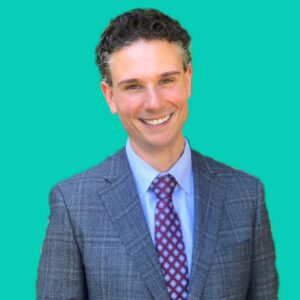
Trained at Northwestern, he spent eight years as a rural urologist in Washington state, where he saw how delayed diagnoses and long drives cost patients their health. After being fired from a hospital leadership role, he started and scaled his own solo practice in Nashville with no business background and no golden parachute.
Today he leads VirtuCare full time and writes openly about his mistakes, life after leaving traditional employment, and what burned-out physicians should weigh before their next career step. His belief: If we take better care of physicians, we can truly heal communities.