Harsha Moole, MD
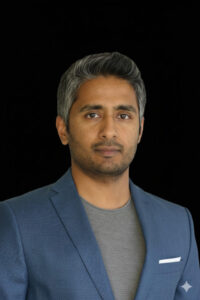
Harsha Moole is an internal medicine-trained physician-scientist with more than 100 peer-reviewed publications, including work featured in the New England Journal of Medicine. After years of clinical practice and gastroenterology outcomes research, he made an unconventional transition from the bedside to the boardroom by founding PhysicianEstate, a health care-focused venture capital firm.
Over the past seven years, Dr. Moole has made 22 early-stage health care investments across digital health, medical devices, biotech, and therapeutics. He has also built a network of more than 200 physicians from institutions such as Johns Hopkins and Stanford who help source opportunities and provide clinical diligence before capital is deployed. His core thesis is that physician-scientists with firsthand clinical experience are uniquely positioned to identify health care investments that generalist investors often miss.
His research background is reflected in his publication record on Google Scholar, and he shares professional updates on LinkedIn.
Physician Finance
I have been pitched investments in a doctors' lounge, at a conference dinner, and twice in a specialty group chat. Every one of them came from another physician. That is not bad luck. That is the design. This piece is…
I have been pitched investments in a doctors’ lounge, at a conference dinner, and twice in a specialty group chat. Every one of them came from another physician. That is not bad luck. That is the design.
This piece is about the specific ways physician money gets lost, and what actually works against each one. Not general advice about saving more. Named failure modes, with the fix for each. I have …
Read more…
How doctors lose money investing: 6 failure modes
Physician Finance
A friend told me he had counted it out. Eleven more years and he could stop. He said it the way you would read a lab value, flat, no feeling in it. He is a good doctor. He was not…
A friend told me he had counted it out. Eleven more years and he could stop. He said it the way you would read a lab value, flat, no feeling in it. He is a good doctor. He was not describing a job. He was describing a sentence he had to serve.
That word, trapped, comes up more than exhaustion does.
This piece is about that feeling and what the evidence actually …
Read more…
Physician autonomy predicts who leaves, not exhaustion
Physician Finance

I have reviewed manuscripts for more than thirty journals. The habit is always the same. Skip the abstract. Go straight to the methods, because that is where the paper either holds up or falls apart. Then a fund pitch lands…
I have reviewed manuscripts for more than thirty journals. The habit is always the same. Skip the abstract. Go straight to the methods, because that is where the paper either holds up or falls apart.
Then a fund pitch lands in your inbox and the habit disappears. The deck opens with a big number, and most of us read that number the way we would never read an abstract.
First, the words, …
Read more…
How to run private fund due diligence like a reviewer
Physician Finance
Your hospital recently adopted a new piece of technology. Maybe it was an EHR module. A patient monitoring upgrade. A documentation tool. A new device in the OR. Think about what happened next. Some of your colleagues embraced it. Others…
Your hospital recently adopted a new piece of technology. Maybe it was an EHR module. A patient monitoring upgrade. A documentation tool. A new device in the OR.
Think about what happened next. Some of your colleagues embraced it. Others resisted. The nurses figured out workarounds within a week. The IT department sent three emails about training sessions that nobody attended. Six months later, half the staff is using the new …
Read more…
You already run clinical diligence on every rollout
Health Technology
One morning, a new alert showed up in our charts. Just a colored banner. Nobody told us what data it learned from, who it had been tested on, or what we were supposed to do when it went off at…
One morning, a new alert showed up in our charts. Just a colored banner. Nobody told us what data it learned from, who it had been tested on, or what we were supposed to do when it went off at 3 a.m. on a patient who looked fine. We were expected to act on it anyway.
We were trained to pick apart a study and question a drug rep. Then software …
Read more…
AI tools in health care are cleared, not proven to work
Physician Finance
A cardiologist I have known for years called me with a fund document open on his screen and one question: Is this a good one? He had read all of it. He still could not tell me what he would…
A cardiologist I have known for years called me with a fund document open on his screen and one question: Is this a good one? He had read all of it. He still could not tell me what he would owe, when he would owe it, or when any of it might come back. He is superb at what he does. Nobody had taught him this, because nobody teaches us …
Read more…
Venture capital for physicians: what you actually signed
Physician Finance
It was two in the morning and I was starting a heparin drip on a patient whose clot was not going to wait for daylight. I typed the order, the electronic health record (EHR) flagged the weight-based dose, and minutes…
It was two in the morning and I was starting a heparin drip on a patient whose clot was not going to wait for daylight. I typed the order, the electronic health record (EHR) flagged the weight-based dose, and minutes later a nurse hung the bag and programmed the smart infusion pump at the bedside. The pump beeped, the number climbed, and I moved on to the next patient without …
Read more…
The business of medicine was never on my syllabus
Physician Finance
The best investment I ever made didn't start with a pitch deck. It started with a nurse spending two hours on a task that should have taken ten minutes. I was rounding as a hospitalist, and I noticed, again, the…
The best investment I ever made didn’t start with a pitch deck. It started with a nurse spending two hours on a task that should have taken ten minutes.
I was rounding as a hospitalist, and I noticed, again, the amount of time clinical staff spent on manual equipment checks, compliance logs, and inventory reconciliation. It was the kind of operational friction that becomes invisible when you see it every day. …
Read more…
Why health care investing should start at the bedside
Physician Finance
I arrived in the United States from India with one goal: become an excellent physician. That was the entire plan. Get through residency. Pass your boards. Build a clinical reputation. Publish research. Maybe land a faculty position at an academic…
I arrived in the United States from India with one goal: become an excellent physician. That was the entire plan. Get through residency. Pass your boards. Build a clinical reputation. Publish research. Maybe land a faculty position at an academic medical center. Stay on the path.
For immigrant physicians, the path is narrower than most people realize. You don’t have a family network in American medicine. You don’t have alumni connections …
Read more…
Immigrant physicians can do more than practice medicine
Physician Finance
René Laennec invented the stethoscope in 1816 because he was uncomfortable placing his ear directly on a young woman's chest. Werner Forssmann performed the first cardiac catheterization, on himself, in 1929, threading a catheter through his own arm into his…
René Laennec invented the stethoscope in 1816 because he was uncomfortable placing his ear directly on a young woman’s chest. Werner Forssmann performed the first cardiac catheterization, on himself, in 1929, threading a catheter through his own arm into his heart because no ethics board would have approved it on a patient. Graeme Clark developed the cochlear implant after watching his deaf father struggle to communicate. Charles Kelman revolutionized cataract …
Read more…
Why physician-led innovation in health care stalled
Physician Finance
Whenever I speak to physician groups about health care investing, I get the same reaction. Interest first, then a pause. Then someone says, "That sounds great, but I'm not about to quit my practice and become a venture capitalist." They…
Whenever I speak to physician groups about health care investing, I get the same reaction. Interest first, then a pause. Then someone says, “That sounds great, but I’m not about to quit my practice and become a venture capitalist.”
They don’t have to.
The biggest misconception about physician involvement in health care investing is that it requires a career change. It doesn’t. Over the past seven years, I’ve built a network …
Read more…
5 ways physicians can shape health care investing
Physician Finance
A conference table. Six to ten people around it. A health care startup is being evaluated for a multimillion-dollar investment. The people in the room are smart, with MBAs from top programs, former management consultants, ex-bankers who pivoted into health…
A conference table. Six to ten people around it. A health care startup is being evaluated for a multimillion-dollar investment. The people in the room are smart, with MBAs from top programs, former management consultants, ex-bankers who pivoted into health care venture capital. They have built financial models, analyzed market sizing data, and stress-tested the company’s revenue projections.
They are about to commit capital to a product designed for use inside …
Read more…
Health care investing needs a doctor in the room
Physician Finance
A physician in our network was having dinner with a group of entrepreneurs. None of them worked in health care. But one mentioned a former health IT executive who had built a technology platform for hospital operations. The physician, who…
A physician in our network was having dinner with a group of entrepreneurs. None of them worked in health care. But one mentioned a former health IT executive who had built a technology platform for hospital operations. The physician, who spent his days inside hospitals and immediately recognized the problem the product was solving, picked up his phone, called me, and said, “You need to look at this.”
That call led …
Read more…
Why physician-led deal sourcing beats traditional VC
Physician Finance
She was 42, uninsured, and had been avoiding the doctor for three years. By the time she showed up in my hospital, her diabetes was uncontrolled, her blood pressure was dangerously elevated, and she had early signs of kidney disease.…
She was 42, uninsured, and had been avoiding the doctor for three years. By the time she showed up in my hospital, her diabetes was uncontrolled, her blood pressure was dangerously elevated, and she had early signs of kidney disease. Everything about her case was preventable. She knew it. I knew it. And neither of us could do much about the system that made it happen.
I was an inpatient hospitalist …
Read more…
Why physicians make the best health care investors
Physician Finance
I graduated residency with over 100 peer-reviewed publications, an EB-1A visa for extraordinary ability in medicine, and zero understanding of how health care capital works. Nobody taught me what a term sheet was. Nobody explained how venture capital flowed into…
I graduated residency with over 100 peer-reviewed publications, an EB-1A visa for extraordinary ability in medicine, and zero understanding of how health care capital works.
Nobody taught me what a term sheet was. Nobody explained how venture capital flowed into the companies building the devices, drugs, and software I used on patients every day. Nobody mentioned that the same analytical rigor I applied to systematic reviews, defining a question, evaluating evidence, …
Read more…
Physicians belong in health care venture capital
Physician Finance
Nobody in my residency program would have predicted I'd end up in venture capital. Certainly not me. I immigrated to the United States from India with a straightforward plan: become the best physician-scientist I could and build a career in…
Nobody in my residency program would have predicted I’d end up in venture capital. Certainly not me.
I immigrated to the United States from India with a straightforward plan: become the best physician-scientist I could and build a career in academic medicine. For the first chapter of my professional life, that’s exactly what I did. I trained in internal medicine, published over 100 peer-reviewed papers including in the New England Journal …
Read more…
Physicians in venture capital see what others miss
Health Technology

I built an AI-powered system that sources and scouts healthcare startup companies and generates structured investment memos on them in under ten minutes. It pulls data from public filings, clinical trial registries, patent databases, and competitive landscapes. It scores companies…
I built an AI-powered system that sources and scouts healthcare startup companies and generates structured investment memos on them in under ten minutes. It pulls data from public filings, clinical trial registries, patent databases, and competitive landscapes. It scores companies across multiple risk dimensions. It produces fifteen-section analyses that would take a human analyst days to assemble.
I use it constantly. And I would never let it make an investment decision.
I …
Read more…
3 things AI in health care investing cannot evaluate
Physician Finance
Every physician remembers the first time they ran a code. The adrenaline. The organized chaos. The moment you reach for the crash cart and trust, without thinking, that everything inside it is where it should be, that the medications aren't…
Every physician remembers the first time they ran a code. The adrenaline. The organized chaos. The moment you reach for the crash cart and trust, without thinking, that everything inside it is where it should be, that the medications aren’t expired, and that the equipment has been checked.
But here’s what most physicians don’t think about: Who’s making sure that crash cart is actually compliant? Who’s tracking whether every piece of …
Read more…
The crash cart that taught me physician-led investing
Physician Finance
Most health care startups don't fail because the technology is bad. They fail because of mistakes that happen long before the product ever reaches a clinical setting. After seven years of evaluating health care companies as a physician-scientist turned venture…
Most health care startups don’t fail because the technology is bad. They fail because of mistakes that happen long before the product ever reaches a clinical setting. After seven years of evaluating health care companies as a physician-scientist turned venture investor (and making over 20 investments across digital health, biotech, medical devices, and therapeutics), I’ve started to see the same patterns repeat.
These aren’t obscure business school failures. They’re patterns that …
Read more…
5 patterns behind health care startups that fail
Physician Finance
A few months ago, a well-connected investor sent me a deal for a surgical device with a proprietary safety feature. U.S. Food and Drug Administration (FDA)-cleared. Strong intellectual property. Thousands of units sold. Multiple institutional backers across several rounds. The…
A few months ago, a well-connected investor sent me a deal for a surgical device with a proprietary safety feature. U.S. Food and Drug Administration (FDA)-cleared. Strong intellectual property. Thousands of units sold. Multiple institutional backers across several rounds. The investor who referred it had taken a company to a NASDAQ initial public offering and was putting in his own money.
On paper, this was exactly the kind of deal most …
Read more…
Health care investing insights from a venture capital pro
Real physician voices, twice a week
Free, and one click to unsubscribe.