



Every November I end up thinking about the same three patients. None of them would remember me. I remember all of them, usually right around the moment someone at the table asks what I am thankful for and I give a safer answer out loud.
They are composites now, details changed the way privacy requires. Between them, they taught me most of what I know about risk, meaning how to make a decision when you cannot know how it will turn out. I learned that at the bedside, and it is the skill I lean on most in the work I do now outside the hospital.
The first was a woman in her late seventies with atrial fibrillation, an irregular heartbeat that can throw clots to the brain. I sat on the edge of her bed and walked her through it. Without a blood thinner, her risk of a stroke was several times her risk of a serious bleed on one. By every guideline I knew, the choice was obvious.
She listened to all of it, thanked me, and said no.
Years earlier her sister had bled into her brain while on a blood thinner. She had spent nine days in that ICU waiting room. She understood my numbers fine. She just weighed them differently, because one of those risks had a face, and she had already watched it.
Real physician voices, twice a week
Free, and one click to unsubscribe.
I pushed a little. Then I stopped, because she was right about something nobody had taught me. Risk is not only a probability. It is a probability that lands on one particular life, and the person living that life gets to decide which loss they can carry. We documented her choice, set up close follow-up, and I went home a better doctor than I had come in.
The second patient I barely spoke to before things went wrong. A man in his fifties, admitted with pneumonia, stable on afternoon rounds. Around two in the morning his nurse called a rapid response, the hospital’s emergency team for patients who are getting worse. His numbers were not alarming yet. She said he just did not look right, and she had been doing this long enough that I had learned to run when she said it.
By the time I got there, he was crashing. What I remember most is how calm the room was. The nurses already had him on the monitor and the pads on his chest. Someone was drawing blood to check his oxygen. Someone else had the ICU on the phone. Everyone knew their job before anyone knew the diagnosis, because we had rehearsed that exact chaos so many times that the rehearsal simply took over.
Nobody in that room had predicted he would go downhill that night, and it turned out nobody needed to. What carried him was a team that had practiced, not anyone’s forecast. He made it to the ICU, and a week later he went home.
The third was a contractor in his fifties with no insurance. Work had been slow, so he had been splitting his blood pressure pills in half to make the bottle last until things picked up. He told me this almost apologetically, as if he had done something wrong. He came in with a bleed in his brain.
There was nothing exotic about his case. The disease was ordinary. The treatment had existed for decades. What failed him was everything around the medicine: the price of a refill, the gap between a slow month and a pharmacy counter, the lack of anyone he could see for a few dollars of care before it turned into an ICU stay.
He taught me that systems usually fail people before diseases do. That is a big part of why I co-founded a directory to help uninsured patients find affordable primary care, and why I now spend so much of my time on the other side of health care, looking for people trying to fix the parts of the system that failed him.
None of the three thought they were teaching anything. They were sick and scared and trying to get home.
If I had to boil it down, the right answer on paper is not always the right answer for the person in the bed, and respecting how someone weighs a risk is part of the care. Nobody predicts the crash, so you build habits that make the prediction matter less. And the risks that hurt people most often sit outside the chart entirely, in costs and access that nobody rounds on.
I lean on those lessons every week now, in rooms that look nothing like a hospital. When someone wants me to stake everything on one outcome, I think about that 2 a.m. rapid response. When the spreadsheet says yes and an experienced clinician’s gut says no, I take the gut seriously, because I once met a woman who understood her own risk better than my numbers did. And when a product looks brilliant, I still ask what happens to the patient who cannot pay for it.
Medicine trains this kind of judgment better than any business school, because the stakes are real and they are lying in the bed in front of you. Most of us absorbed it without noticing. Our patients paid for that education with some of their worst days.
So this Thanksgiving my gratitude goes to them, and it feels less like a warm sentiment than a debt I am still paying down. Every good decision I have made since, in medicine or outside it, carries some of their fingerprints. The least I can do is use well what they paid to teach me.
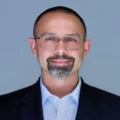
Harsha Moole is an internal medicine-trained physician-scientist with more than 100 peer-reviewed publications, including work featured in the New England Journal of Medicine. After years of clinical practice and gastroenterology outcomes research, he made an unconventional transition from the bedside to the boardroom by founding PhysicianEstate, a health care-focused venture capital firm. He is also the co-founder of FindMyDirectDoctor, a national directory of direct primary care, concierge, and cash-pay doctors.
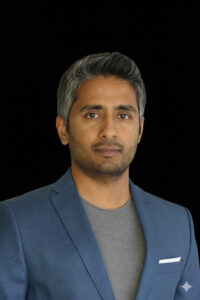
Over the past seven years, Dr. Moole has made 22 early-stage health care investments across digital health, medical devices, biotech, and therapeutics. He has also built a network of more than 200 physicians from institutions such as Johns Hopkins and Stanford who help source opportunities and provide clinical diligence before capital is deployed. His core thesis is that physician-scientists with firsthand clinical experience are uniquely positioned to identify health care investments that generalist investors often miss.
His research background is reflected in his publication record on Google Scholar, and he shares professional updates on LinkedIn.
Your KevinMD author page is one of the top results for your name. Turn it into a premium profile, publish in 1 to 3 days, and get a guaranteed podcast slot.