On March 19, 2020, I was called to a meeting by Dr. Bijoy Sahoo, who was serving as provost of our university at the time. I was serving as vice president of the Faculty Senate, and because the Senate president was unavailable, I attended the meeting on behalf of the faculty. The university faced an urgent challenge: how to protect students, faculty, and staff from a rapidly spreading pandemic while ensuring that classes could continue for the remaining two months of the spring semester.
Like many others at the time, I initially thought that the shift to remote instruction would last only a couple of weeks. I had no idea that what seemed like a temporary disruption would last for more than a year and change how we taught, worked, and interacted with one another.
Looking back, that meeting reminds me how little we knew about the virus and how quickly institutions had to make important decisions. We were still learning about the virus, but decisions affecting thousands of lives could not wait until all the evidence became available.
The COVID-19 pandemic showed us both what modern science could accomplish and where its limitations lay. Within a remarkably short time, scientists identified a previously unknown virus, sequenced its genome, and developed diagnostic methods. Through a federal initiative known as Operation Warp Speed, vaccine development and manufacturing were greatly accelerated, bringing effective vaccines into use before the end of 2020. These accomplishments demonstrated what modern science, government, and industry could achieve when working toward a common goal.
Real physician voices, twice a week
Free, and one click to unsubscribe.
Yet the pandemic also left us with a troubling question, one that continues to be discussed in the scientific community, including in a recent Science editorial by H. Holden Thorp. Why did confidence in scientific institutions become increasingly divided along political lines at a time when scientific expertise was needed most? Part of the answer may lie not in the quality of science itself, but in how scientific findings were communicated and translated into public policy.
When scientific advice becomes public policy
During the pandemic, scientists and public-health officials became unusually prominent in public life. Their recommendations influenced decisions involving schools, workplaces, businesses, travel, social gatherings, and many aspects of everyday life. Measures intended to control viral transmission became closely connected with questions of education, economic security, individual freedom, and acceptable risk. These were not purely scientific questions.
Scientists could estimate the risks of infection, evaluate the effectiveness of preventive measures, and assess the consequences of uncontrolled transmission. But scientific evidence alone could not determine how society should balance these risks against the economic, educational, psychological, and social consequences of restrictions.
These decisions involved competing priorities, public expectations, and political responsibility. Governmental and public-health authorities ultimately had to weigh the available scientific evidence alongside these broader considerations.
Unfortunately, the distinction between scientific advice and governmental decision-making was not always clear to the public. When policies became controversial, scientists and scientific institutions sometimes became associated with decisions that went beyond their scientific expertise.
Scientific expertise should inform public policy, but it should not be confused with the authority to determine every aspect of that policy.
The challenge of communicating uncertainty
Scientific understanding advances through observation, experimentation, critical examination, and revision. Conclusions that appear reasonable today may need to be reconsidered when new evidence becomes available. This is not a weakness of science. It is one of its greatest strengths.
During the pandemic, however, scientists were often expected to provide immediate answers when reliable evidence was still incomplete. Public-health officials also faced pressure to communicate clearly and encourage protective behavior. Acknowledging uncertainty was not always easy when the public expected clear answers.
Questions about the origins of SARS-CoV-2
The debate surrounding the origins of SARS-CoV-2 illustrates this difficulty. Early in the pandemic, some prominent scientific statements strongly challenged the possibility of a laboratory-associated origin. Early genomic analyses argued against deliberate laboratory manipulation of SARS-CoV-2, while broader questions about its possible origins, including natural spillover and accidental laboratory-associated release, remained unresolved. By 2021, other scientists were calling for serious investigation of both natural spillover and accidental laboratory release.
In its June 2025 assessment, the World Health Organization acknowledged that important information remained unavailable and that all hypotheses should remain under consideration. The weight of available evidence favored zoonotic emergence, but the organization did not consider the origin question conclusively resolved.
I had some firsthand experience with these scientific uncertainties. In May 2020, my colleague Dr. Babu Bassa and I submitted two responses to articles in Science, drawing attention to differences in the spike glycoprotein sequences of SARS-CoV and SARS-CoV-2. Using comparative sequence analysis, we identified differences in a 15-amino-acid region associated with viral membrane fusion and questioned their evolutionary significance.
In another response posted in July 2021, we questioned whether the widely discussed D614G substitution was unique to SARS-CoV-2. Drawing on GenBank sequence records, we identified an 11-amino-acid motif containing glycine at the corresponding position in an earlier SARS-CoV sequence annotation. We also drew attention to the remarkable conservation of this region among related coronaviruses and the change in local physicochemical properties associated with replacing aspartic acid with glycine. These observations raised questions about the evolutionary history and functional significance of the substitution, although they did not establish how SARS-CoV-2 originated.
We believed that these observations deserved further examination. That experience reminded me that scientific observations must be judged on their evidence, even when they challenge established interpretations. Science advances not by protecting established explanations from scrutiny, but by testing them against new observations.
This does not mean that every hypothesis deserves equal scientific weight. Conclusions should not go beyond what the evidence supports, and legitimate questions should remain open when the evidence is incomplete.
Scientists must distinguish between what is known, what is strongly supported, what is plausible, and what remains uncertain. The public deserves these distinctions, particularly when scientific findings influence decisions affecting millions of people.
When science becomes entangled with politics
The pandemic also demonstrated how easily scientific disagreements can become political. As early as June 2020, surveys by the Pew Research Center documented growing partisan differences in perceptions of the pandemic, preventive measures, and confidence in medical scientists. Views about vaccination, masking, restrictions, and institutional credibility increasingly became associated with broader political positions. Once this happens, people may judge scientific information according to who communicates it rather than the strength of the evidence itself. The problem extends beyond political parties and affects how society understands and responds to scientific evidence.
It would also be unfair to attribute the erosion of confidence entirely to scientists or public-health institutions. Political leaders, social media, misinformation, rapidly changing circumstances, and the unprecedented demands of the emergency all played important roles. Many scientists and clinicians worked under extraordinary pressures, often with incomplete information and limited time.
Nevertheless, scientific institutions have a responsibility to examine their own communication and decision-making practices. We can recognize the achievements of science while also acknowledging its shortcomings.
How can science regain public trust?
Restoring public confidence cannot be accomplished simply by reminding people of scientific credentials, institutional reputations, or past achievements. Nor can confidence be demanded through appeals to authority. Scientists and their institutions must be willing to acknowledge uncertainty, correct mistakes, and apply the same scientific standards regardless of where the evidence leads.
Public-health communication should also make clear where scientific evidence ends and policy judgment begins. A recommendation based on scientific findings is not necessarily the only reasonable policy choice when other social consequences must be considered.
At the same time, disagreement over a particular policy should not be mistaken for rejection of the underlying science. People may accept scientific evidence yet differ over how its benefits, risks, and burdens should be distributed.
The experience of COVID-19 should encourage us to strengthen the relationship between science and society without making science dependent on political approval. Scientific knowledge will continue to evolve. Governments will change. Public priorities will shift. But the principles of scientific inquiry (evidence, transparency, critical examination, and willingness to revise conclusions) must remain independent of these changes.
Perhaps the most important lesson of the pandemic is that scientists and public officials have different responsibilities, but both are essential. Science helps us understand what is happening and what consequences may follow. Public policy determines what society should do with that knowledge. Our responsibility as scientists is to pursue the best evidence available, acknowledge its limitations, correct errors when they occur, and communicate findings in ways that allow the public to make informed judgments.
Trust in science cannot be demanded or legislated. It has to be earned and sustained through the integrity, reliability, and usefulness of the science we do.
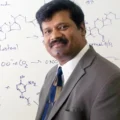
Rao M. Uppu is professor of environmental toxicology and chemistry at Southern University and A&M College in Baton Rouge, Louisiana, where he has served since 2002. He is also an adjunct professor of chemistry and pathobiological sciences at Louisiana State University.

Trained in biochemistry, physical organic chemistry, and free radical chemistry, his research spans bioanalytical methods, biomarker discovery and validation, chemical toxicology, environmental chemistry, computational genomics, reactive intermediates, and the molecular mechanisms of disease. His scholarship is indexed on ORCID, ResearchGate, and Google Scholar.
Dr. Uppu is a Fellow of the American Association for the Advancement of Science (AAAS), the Royal Society of Chemistry (RSC), the Royal Society of Biology (RSB), the Royal Society of Medicine (RSM), the Royal Society for Public Health (RSPH), and the Academy of Toxicological Sciences (ATS).
In addition to his scientific research, he writes reflective essays on scientific culture, mentorship, peer review, ethics, and the human dimensions of academic life. He shares updates on LinkedIn.