Most scientists I know have several unfinished manuscripts at any given time. I am no exception. Some of mine concern recent work; others are based on research completed years ago, and, in a few cases, decades ago.
I vividly remember a senior colleague at the National Institute of Nutrition who served as my supervisor for a couple of years. He would often show me, with great enthusiasm, a stack of over twenty unfinished manuscripts. He retired and passed away years ago. I still wonder how many of those manuscripts he was able to complete and publish.
Writer’s block could be one reason, but it was not the whole explanation for me, for my supervisor, or for many other scientists in similar situations. We may have the data without yet knowing what the paper is really saying or which aspect of the work is most important to convey.
I, for one, was never fully satisfied with the familiar saying: If it walks like a duck, looks like a duck, and quacks like a duck, it is probably a duck. I usually wanted something more, some additional evidence or unique observation that would establish what the work contributed. Often, one more experiment, followed by yet another, seemed necessary.
Real physician voices, twice a week
Free, and one click to unsubscribe.
But funding ends. A graduate student or postdoctoral fellow leaves, and no one is available to continue the work. A rejected paper loses momentum as other responsibilities take over. In time, a nearly completed study becomes another folder on a computer.
This is where I find large language models (LLMs) useful. I can return to an old draft, bring the scattered ideas together, try several ways of explaining a finding, or prepare an abstract. This can help me move the manuscript forward. However, the model cannot tell me whether the study is complete, whether another experiment is necessary, or whether my interpretation is correct. I know the work and have to make those decisions myself.
Sometimes I conclude that another experiment would be useful but not essential to the principal finding. I then make that limitation clear, usually in the Discussion, and do not claim more than the evidence allows. By doing so, I may also answer the likely criticism before a reviewer raises it. An LLM may help me find the right words, but the scientific judgment must be mine.
The distance between knowing and writing
Even with AI assistance, a manuscript may still go through ten or fifteen drafts before the writing adequately conveys what the author has in mind. AI may produce sentences quickly, but it does not eliminate the need for careful revision.
Here I think of the neti, neti (“not this, not this”) approach in Indian philosophy. Suppose I have only one mango and have already started eating it. A friend beside me wants to know how it tastes.
“Is it sweet?” Yes, but that is not all. “Is it sour?” Perhaps slightly, but that is not all either. More questions may bring my friend closer to the taste I am experiencing, yet the answers together may still leave something out.
Scientific writing presents a similar difficulty. The investigator knows the experiments, observations, surprises, uncertainties, and limitations. Putting all that knowledge into a paper, within a journal’s space limits and without needless repetition, is not easy. An LLM can be like the questioning friend. It may suggest different ways of saying something, and I can accept, reject, or correct those suggestions. But I must know when the words finally convey what I intended to say. The model cannot make that judgment for me.
Assistance is not authorship
There is a difference between using AI to assist with a manuscript and asking it to produce the manuscript and the scientific argument. If I performed the study, I know what was done, what the results showed, and where the uncertainties remain. I should also be the one to decide when the wording goes beyond the evidence or when a statistically significant finding may not have much biological or clinical importance.
The LLM did not observe how the study was carried out. It was not in the laboratory when an experiment failed or when a result did not make sense. It did not take part in the discussions that followed. Still, it can write as though everything is certain. I therefore have to examine every statement and decide whether it represents the work correctly.
The sequence also matters. We first conduct the research, interpret the results, and then write the manuscript. AI should not be used to create a convincing story and then search for material to support it. The resulting manuscript may read as complete even when the science is not.
A neglected archive of biomedical research
After more than forty years of research in diverse educational and research settings, I believe there may be a substantial archive of completed but unpublished science. It includes experiments left in laboratory notebooks, findings confined to dissertations, conference abstracts never developed into papers, and manuscripts rejected but never submitted elsewhere.
I once submitted a manuscript that was rejected partly because my findings agreed with those of another study. The difficulty was that the other study had not been published and was apparently known to the reviewer but unavailable to me. I searched for it without success. Six months to a year later, the paper finally appeared, and I was able to read it.
By then, I faced a chicken-and-egg problem. My study, which was eventually published, and the other study, against which it had been judged, reported similar findings regarding inhibition by superoxide dismutase and by transition-metal ions such as Cu(II) and Mn(II), but their mechanistic interpretations were entirely different.
I was then a young and perhaps somewhat naive scientist working in a developing country. I did not have the resources to answer the reviewer’s questions quickly. Designing new experiments and repeating parts of the work described in the article cited by the reviewer took another three or four years. Everything eventually fell into place, but my article was published in a different journal approximately five years after the original submission.
The significance of my work later became clearer when researchers at NitroMed cited it as the basis for the nonenzymatic superoxide-generating system used in their microplate assay for superoxide dismutase. That delay was not caused by writer’s block. It arose from inaccessible information, scientific questions requiring new experiments, and limited resources. Similar circumstances can leave worthwhile work unpublished for years.
There is another problem with older work: time. Years later, the principal investigator may remember why an experiment was done, but a student’s shorthand in a laboratory notebook may no longer be clear. Files may have been moved from one computer to another, and the software used for the analysis may have changed. More often than not, reconstructing the study requires more than reopening an old draft. Returning to the raw data, correspondence, instrument records, and the literature available when the work was performed may present additional difficulties.
Even when an older study can be reconstructed, not all such work should be revived. The methods may now be outdated, the controls inadequate, or the ethical requirements different. Later discoveries may also have overtaken the original observation. Yet some older studies remain useful. Negative results may prevent unnecessary duplication, and an observation that once seemed isolated may acquire new meaning when viewed alongside later research.
AI, with careful oversight, may help investigators organize surviving material, locate newer literature, and compare an old draft with the available results. Investigators must decide what can still be verified and whether the work remains suitable for publication. AI cannot restore an undocumented experiment or supply a missing control. It can only help present evidence that already exists.
The medical evidence still needs protection
In biomedical research, a published article seldom remains isolated. It may be included in a systematic review, cited in a clinical guideline, used to justify another experiment, or repeated in public discussion. Any weakness in the article may therefore enter the larger evidence base.
In an earlier KevinMD article, “Scientific writing and AI: Balancing authorship and assistance,” I wrote, “The essential question is not speed, it is engagement.” That remains true. But the large backlog of unfinished research raises another concern. AI may help bring neglected findings into the scientific record, but it may also make it easier to submit work before the science is ready.
This also creates a practical problem for journals. AI can accelerate drafting, but the capacity for careful review cannot increase as easily. Editors and reviewers must still examine the design, statistics, references, interpretation, and relevance of each study. If submission volume rises while the pool of qualified reviewers does not, superficial but polished manuscripts may consume attention that could have gone to more substantial work.
There is also a question about training. Young scientists learn by working through their data and trying to explain what the results mean. If AI does that work for them, part of their education may be lost. But if a student questions the output, corrects it, and understands why one formulation is better than another, the exercise may help the student learn scientific writing. What matters is not simply whether students have access to AI, but how they use it.
The question, therefore, is not simply whether AI was used. I want to know whether the authors performed the work or genuinely understand it, verified every reference and factual statement, represented the evidence fairly, and are prepared to defend every conclusion published under their names.
In the end, I see no contradiction between AI assistance and responsible authorship. The investigator must remain in command, and verification must not be hurried simply because drafting is faster. AI can help us describe the mango. It cannot taste it for us.
Rao M. Uppu is professor of environmental toxicology and chemistry at Southern University and A&M College in Baton Rouge, Louisiana, where he has served since 2002. He is also an adjunct professor of chemistry and pathobiological sciences at Louisiana State University.
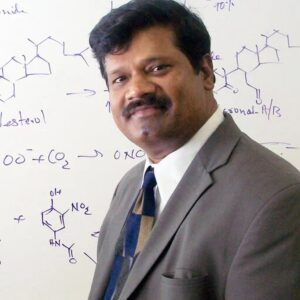
Trained in biochemistry, physical organic chemistry, and free radical chemistry, his research spans bioanalytical methods, biomarker discovery and validation, chemical toxicology, environmental chemistry, computational genomics, reactive intermediates, and the molecular mechanisms of disease. His scholarship is indexed on ORCID, ResearchGate, and Google Scholar.
Dr. Uppu is a Fellow of the American Association for the Advancement of Science (AAAS), the Royal Society of Chemistry (RSC), the Royal Society of Biology (RSB), the Royal Society of Medicine (RSM), the Royal Society for Public Health (RSPH), and the Academy of Toxicological Sciences (ATS).
In addition to his scientific research, he writes reflective essays on scientific culture, mentorship, peer review, ethics, and the human dimensions of academic life. He shares updates on LinkedIn.