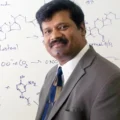
William A. Pryor, whose intellectual rigor and scientific voice shaped generations of researchers and the broader world of free radical biology and medicine, often told me something I have never forgotten. Only later did I understand that it was really about cognition.
But what stayed with me most was his insistence on a simpler discipline: Keep your hand on the keyboard and start writing. “The ideas,” he said, “will crystallize as you write.”
The crystallization of thought
The same truth lies beneath what we call writer’s block. Writers can spend hours trying to produce the first sentence, starting and restarting, typing and deleting, circling the idea without quite entering it. Only after prolonged resistance does one enter that fluid state of mind, when the world recedes: children running by, a spouse calling out, the ordinary noise of life. Then, suddenly, there is only the idea. What appears outwardly as delay is often the mind quietly assembling coherence.
An old anecdote is told about Bammera Pothana, the poet who translated the Sanskrit Bhagavata Purana into Telugu in the late 15th century. A devotional legend holds that when he faltered, the Lord himself came and wrote a portion of the poem. Whether one takes that literally or not, the story captures a familiar experience of writing: In the deepest moments, it can feel as though the words arrive from beyond us, when they often emerge simply because we stayed with the work long enough.
Real physician voices, twice a week
Free, and one click to unsubscribe.
The myth of the solitary writer
I have noticed something else over the years. When I write entirely on my own, it often takes time to enter that mode, the slow settling into thought, the long silence before the words begin to flow. But when I sit with a student and try to show them how to write, the sentences come more clearly than I expect. There is, suddenly, someone present, not as a critic, but as a witness.
The inadvertent presence of a student creates a kind of attention, a quiet desire to be understood, perhaps even to be worthy of imitation. That presence subtly reorganizes one’s thinking. And in that moment, I find that I become a better thinker, and often a more polished writer, than I am in solitude.
Something similar happens when I teach. I feel, in some quiet way, that I must become an older brother in the room, someone who can take what is complex and make it intelligible to a novice student. The responsibility is not only to know, but to make things understandable. And in that effort, the ideas themselves become simpler, cleaner, more honest. Teaching, like writing, is a discipline of restraint: It forces one to remove ornament, to find the essential thread, and to speak in a way that another mind can grasp readily.
The lost draft and the persistence of memory
I remember an experience from early in my career, when I was preparing my first grant application within an already funded program project. The money was available, but the mandate was clear: The proposal had to be written at a level that could serve as a precursor to an R01. Whether I would receive further support would be decided by a small circle, senior investigators within the program, faculty from a research-intensive university, and an external advisory committee of internationally recognized scientists.
One faculty member from the research-intensive university, perhaps sensing some potential in me, took an unusual interest. He would call often, at hours that seemed not to matter, listening patiently as I offered only fragments of developing thought. He asked questions, drew out what I could not yet clearly articulate, and helped the proposal find its shape. In conversation, ideas that resisted solitary writing often settled more easily. By then, the draft was nearly complete.
And then, for reasons I still cannot fully explain, I lost it, accidentally erased, simply gone. I was not especially computer-literate then, and even now, 24 years later, I remain only modestly so.
An interim meeting was approaching, one that would determine not only whether my application would move forward, but also the direction of the broader program project. Its evaluation depended, in part, on demonstrating the development of an independent research trajectory.
When I started again, something unexpected happened. I found that I could bring back nearly everything in a fraction of the time, perhaps one-half to one-third, and what emerged was better than what I had first written. The euphoria and struggle of the original effort had not vanished with the lost document. They had already done their work. It was still there, preserved in thought and memory, waiting to be shaped again.
It reminded me of something my professor had said years earlier: Keep your hand on the keyboard. Writing is not merely the recording of finished ideas. It is the place where thought forms, where understanding clarifies, and where, at times, what seems lost returns with greater coherence than before.
Artificial intelligence and the future of authorship
Moments like these remind me that scientific writing has never been purely solitary. Editors reshape manuscripts, journals recommend professional language services, and clarity frequently emerges through collaboration. In biomedical science and medicine, clarity is not merely style, it is part of responsibility.
It is striking, then, that artificial intelligence now provokes such deep unease. Perhaps the difference lies in accountability: A human editor is visible and accountable, while an algorithm is not. Yet the deeper concern is that AI blurs the boundary between polishing and composing, between assistance and authorship. When language becomes effortless, the visible traces of intellectual struggle can disappear, and in science, where rigor is inseparable from restraint, this matters. The essential discipline remains unchanged: evidence over belief, judgment over fluency, responsibility over ease.
AI can be remarkably productive. What might take a week of struggle can at times be accomplished in a few hours with careful assistance. But the essential question is not speed, it is engagement. What matters is who remains in command: you or the tool. As long as the writer remains the one directing the thought, shaping the argument, and taking responsibility for the final words, AI can remain what it should be, an instrument, not an author. Used that way, it can help us write more clearly, more efficiently, and perhaps even more widely, without surrendering the discipline that makes writing an act of thinking.
Rao M. Uppu is professor of environmental toxicology and chemistry at Southern University and A&M College in Baton Rouge, Louisiana, where he has served since 2002. He is also an adjunct professor of chemistry and pathobiological sciences at Louisiana State University.

Trained in biochemistry, physical organic chemistry, and free radical chemistry, his research spans bioanalytical methods, biomarker discovery and validation, chemical toxicology, environmental chemistry, computational genomics, reactive intermediates, and the molecular mechanisms of disease. His scholarship is indexed on ORCID, ResearchGate, and Google Scholar.
Dr. Uppu is a Fellow of the American Association for the Advancement of Science (AAAS), the Royal Society of Chemistry (RSC), the Royal Society of Biology (RSB), the Royal Society of Medicine (RSM), the Royal Society for Public Health (RSPH), and the Academy of Toxicological Sciences (ATS).
In addition to his scientific research, he writes reflective essays on scientific culture, mentorship, peer review, ethics, and the human dimensions of academic life. He shares updates on LinkedIn.