Skip to content
  • About
  • Contact
  • Contribute
  • Book
  • Careers
  • Podcast
  • Recommended
  • Speaking
KevinMD
  • All
  • Physician
  • Practice
  • Policy
  • Finance
  • Conditions
  • .edu
  • Patient
  • Meds
  • Tech
  • Social
  • Video
  • All
  • Physician
  • Practice
  • Policy
  • Finance
  • Conditions
  • .edu
  • Patient
  • Meds
  • Tech
  • Social
  • Video
    • All
    • Physician
    • Practice
    • Policy
    • Finance
    • Conditions
    • .edu
    • Patient
    • Meds
    • Tech
    • Social
    • Video
    • About
    • Contact
    • Contribute
    • Book
    • Careers
    • Podcast
    • Recommended
    • Speaking
KevinMD
  • All
  • Physician
  • Practice
  • Policy
  • Finance
  • Conditions
  • .edu
  • Patient
  • Meds
  • Tech
  • Social
  • Video
    • All
    • Physician
    • Practice
    • Policy
    • Finance
    • Conditions
    • .edu
    • Patient
    • Meds
    • Tech
    • Social
    • Video
    • About
    • Contact
    • Contribute
    • Book
    • Careers
    • Podcast
    • Recommended
    • Speaking
  • About KevinMD | Kevin Pho, MD
  • Be heard on social media’s leading physician voice
  • Contact Kevin
  • Discounted enhanced author page
  • DMCA Policy
  • Establishing, Managing, and Protecting Your Online Reputation: A Social Media Guide for Physicians and Medical Practices
  • Group vs. individual disability insurance for doctors: pros and cons
  • KevinMD influencer opportunities
  • Opinion and commentary by KevinMD
  • Physician burnout speakers to keynote your conference
  • Physician Coaching by KevinMD
  • Physician keynote speaker: Kevin Pho, MD
  • Physician Speaking by KevinMD: a boutique speakers bureau
  • Primary care physician in Nashua, NH | Kevin Pho, MD
  • Privacy Policy
  • Recommended services by KevinMD
  • Terms of Use Agreement
  • Thank you for subscribing to KevinMD
  • Thank you for upgrading to the KevinMD enhanced author page
  • The biggest mistake doctors make when purchasing disability insurance
  • The doctor’s guide to disability insurance: short-term vs. long-term
  • The KevinMD ToolKit
  • Upgrade to the KevinMD enhanced author page
  • Why own-occupation disability insurance is a must for doctors

International medical graduates need real protections

Vasilii Khammad, MD, PhD
Physician
May 13, 2026
Share
Tweet
Share

In 2019, I completed my medical training in Russia and arrived in the United States as a Fulbright Scholar. My award carried the U.S. president’s personal signature, a powerful welcome to a country I saw as a place of opportunity, freedom, and cultural exchange. It felt like a once-in-a-lifetime honor that most foreign physicians can only dream of. Then came the COVID-19 pandemic. In early 2020, while still in the U.S., I watched hospitals plead for help. People were dying, doctors were in short supply, and I was trained to help. As a physician, I felt I had no choice but to step forward. Yet I was turned away, because I had not completed the U.S. licensing exams required of all international medical graduates.

I had spent years preparing for the exams, and Match Day felt like the final reward for all that sacrifice. When I learned I had matched into a pediatrics residency program at a large academic medical center in the United States, I was overwhelmed with relief and joy. The warmth of my interview experience had already made me think of the program as a second home, and that day felt like the beginning of the bright future I had worked so hard for. Like thousands of other international medical graduates, I believed in America’s promise: that if you worked hard and followed the rules, you would be treated fairly. Little did I know that instead of building a future, I would come to a system where unchecked power could end a career overnight.

The program director of pediatrics was celebrated as a champion of racial justice for Black physicians. At first, I truly admired this and believed it was one of the program’s greatest strengths. But as time went on, I began to feel that when residents from other backgrounds tried to share ideas or concerns, their perspectives were often brushed aside: at best dismissed, and at worst treated as outright defiance.

For many of my colleagues, speaking up about concerns did not feel easy. Over time, a culture developed in which residents became increasingly hesitant to voice disagreement or raise problems openly out of fear of professional consequences: Those individuals could find themselves subjected to focused reviews, disciplinary pressure, and the constant threat of dismissal from the program. In some cases, their professional judgment and psychological stability were also called into question.

Despite this environment, residents rotating from smaller outside institutions, along with my fellow pediatrics residents, continued to raise concerns about serious problems within the program, including inefficient scheduling, uneven workloads, staffing shortages, a toxic hierarchical culture, and instances of age discrimination. There was also a perception among residents that interpersonal relationships with the program’s leadership, including helping care for the program director’s child, could influence how individuals were viewed or evaluated. These concerns were ultimately raised with the Accreditation Council for Graduate Medical Education (ACGME), which conducted an on-site review of the program in hopes of improving oversight and support for residents.

For me, these experiences cut even deeper. Despite successfully meeting the academic expectations of the program, I remained actively involved in scholarly work, participating in conferences and preparing four research abstracts and two articles during my first year of training. Yet I found myself under increasing scrutiny. My speech was criticized because I was a non-native English speaker and my behavior was dehumanized through anonymous comparisons to artificial intelligence. My achievements, far from protecting me, only fueled further hostility. The message was unmistakable: Survival depended not on excellence but on the favor of the program director.

By the end of my first year of residency, as I began reaching out to other programs in search of a healthier training environment, my attempts turned into a personal tragedy. Without any warning, the program director accused me of dishonesty and unprofessionalism, cut off all my access to institutional systems, had me publicly escorted out of the workplace, and stopped paying my salary. During this period, I found myself without institutional, legal, or immigration support for the following two months. Although I attempted to raise concerns through institutional channels, my perspective was not meaningfully addressed. Ultimately, my journey within U.S. medical training ended abruptly, despite how deeply I had hoped to continue serving within the system I had worked so hard to join.

The same institution’s financial practices further shaped my understanding of how power could operate within it. During the COVID-19 pandemic, CNN reported that this academic medical center aggressively pursued medical debt claims against thousands of low-income patients, including members of its own workforce. Experiencing the sudden loss of salary, institutional support, and professional stability as a medical resident made those stories feel far more personal to me.

Despite the personal tragedy, I ultimately chose not to remain silent. I reached out for help to the president of the United States, who had once personally signed my invitation to come to the country through the Fulbright Program. His words about resilience, freedom, and the importance of continuing to fight for American values gave me the strength not to give up and to continue defending myself through formal channels. Encouraged by the president’s words, I pursued legal action through the Equal Employment Opportunity Commission, the Arkansas State Claims Commission, and raised concerns with the ACGME, continuing to believe in the fairness and strength of the American legal and medical systems.

I chose to speak openly about what happened not only for myself. I hope that international physicians who come to the United States to study and work will have clear, step-by-step systems of protection and support. No physician should find themselves in a legal and professional vacuum, losing their livelihood, professional standing, and stability overnight without meaningful accountability.

Vasilii Khammad is a physician and researcher originally trained in Russia who later pursued postgraduate medical training in the United States as a Fulbright Scholar. He is affiliated with Peoples’ Friendship University of Russia and The Loginov Moscow Clinical Scientific Center.
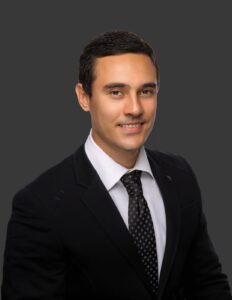
His academic and clinical interests include oncology, pediatric medicine, artificial intelligence in health care, medical education, and the experiences of international medical graduates navigating the U.S. training system. Dr. Khammad has participated in clinical research, scientific presentations, and scholarly writing in hematology, oncology, neuro-oncology, and pediatric medicine. His publications address pediatric follicular lymphoma, machine learning workflows for pediatric and adult central nervous system malignancies, AI-assisted diagnosis of primary brain tumors, and education for medical professionals on generative AI.

His current work explores the intersection of medicine, institutional power, accountability, and the human impact of professional systems, with a focus on transparency, fairness, and support for physicians in training. Additional publications are available on ResearchGate, and he shares updates on Facebook and Instagram.


Prev

Why psychiatric medications often fail autistic patients

May 13, 2026 Kevin 0
…

Kevin

Tagged as: Residency

< Previous Post
Why psychiatric medications often fail autistic patients

ADVERTISEMENT

Related Posts

  • International medical graduates ease the U.S. doctor shortage

    G. Richard Olds, MD
  • 9 ways international medical graduates can boost their residency match outcomes

    Heli Patel, Monica van de Ridder, PhD, Vijay Rajput, MD
  • From medical humanities student to physician

    Nicholas Bellacicco, DO
  • Fill mid-level positions with unmatched medical graduates

    Alice Nguy, MD
  • How language shapes physician migration and medical training

    Omer Ahmed
  • A retired physician’s medical school memories

    Ronald Halweil, MD

More in Physician

  • Point-of-care ultrasound transforms emergency medicine

    Joshua Guttman, MD
  • Health outcomes rely on more than just health care

    Jalene Jacob, MD, MBA
  • Doctors with mental illness need our care, not silence

    Michael F. Myers, MD
  • Primary care access is the real problem, not the system

    Payam Zamani, MD
  • Physician vs. provider is an ethics issue, not just style

    American College of Physicians
  • Expanding the SOAP framework boosts health outcomes

    Deepak Gupta, MD and Sarwan Kumar, MD
  • Most Popular

  • Past Week

    • Expanding the SOAP framework boosts health outcomes

      Deepak Gupta, MD and Sarwan Kumar, MD | Physician
    • The handwashing standard nobody finished. Until now.

      Bernadette Burroughs, RN | Conditions
    • Your doctor saved your life but won’t return your call [PODCAST]

      The Podcast by KevinMD | Podcast
    • Primary care access is the real problem, not the system

      Payam Zamani, MD | Physician
    • How corporate medicine is eroding truth and patient dignity

      Ronald L. Lindsay, MD | Physician
    • Why bipolar II is not just a milder version of bipolar I

      Ethan Evans, MD | Conditions
  • Past 6 Months

    • I Googled my own name and a corporate clinic I’ve never worked at appeared [PODCAST]

      The Podcast by KevinMD | Podcast
    • Rethinking the role of family physicians vs. specialists

      Ronald L. Lindsay, MD | Physician
    • How corporate health care ruined the medical profession

      Edmond Cabbabe, MD | Physician
    • Clinicians are failing at value-based care because no one taught them the system [PODCAST]

      The Podcast by KevinMD | Podcast
    • When shared decision making gives way to medical paternalism

      DeAnna Pollock, MD | Physician
    • How xenotransplantation could finally solve organ shortages

      Rafael S. Garcia-Cortes, MD | Conditions
  • Recent Posts

    • International medical graduates need real protections

      Vasilii Khammad, MD, PhD | Physician
    • Why psychiatric medications often fail autistic patients

      Carrie Friedman, NP | Conditions
    • Missed claims filing deadlines threaten patient care

      Assinatha Mukantaganzwa | Finance
    • Point-of-care ultrasound transforms emergency medicine

      Joshua Guttman, MD | Physician
    • Health outcomes rely on more than just health care

      Jalene Jacob, MD, MBA | Physician
    • Medical malpractice risks persist even after saving a life

      Chinmeri Nwuba | Policy

Subscribe to KevinMD and never miss a story!

Get free updates delivered free to your inbox.


Find jobs at
Careers by KevinMD.com

Search thousands of physician, PA, NP, and CRNA jobs now.

Learn more

Leave a Comment

Founded in 2004 by Kevin Pho, MD, KevinMD.com is the web’s leading platform where physicians, advanced practitioners, nurses, medical students, and patients share their insight and tell their stories.

Social

  • Like on Facebook
  • Follow on Twitter
  • Connect on Linkedin
  • Subscribe on Youtube
  • Instagram

ADVERTISEMENT

  • Most Popular

  • Past Week

    • Expanding the SOAP framework boosts health outcomes

      Deepak Gupta, MD and Sarwan Kumar, MD | Physician
    • The handwashing standard nobody finished. Until now.

      Bernadette Burroughs, RN | Conditions
    • Your doctor saved your life but won’t return your call [PODCAST]

      The Podcast by KevinMD | Podcast
    • Primary care access is the real problem, not the system

      Payam Zamani, MD | Physician
    • How corporate medicine is eroding truth and patient dignity

      Ronald L. Lindsay, MD | Physician
    • Why bipolar II is not just a milder version of bipolar I

      Ethan Evans, MD | Conditions
  • Past 6 Months

    • I Googled my own name and a corporate clinic I’ve never worked at appeared [PODCAST]

      The Podcast by KevinMD | Podcast
    • Rethinking the role of family physicians vs. specialists

      Ronald L. Lindsay, MD | Physician
    • How corporate health care ruined the medical profession

      Edmond Cabbabe, MD | Physician
    • Clinicians are failing at value-based care because no one taught them the system [PODCAST]

      The Podcast by KevinMD | Podcast
    • When shared decision making gives way to medical paternalism

      DeAnna Pollock, MD | Physician
    • How xenotransplantation could finally solve organ shortages

      Rafael S. Garcia-Cortes, MD | Conditions
  • Recent Posts

    • International medical graduates need real protections

      Vasilii Khammad, MD, PhD | Physician
    • Why psychiatric medications often fail autistic patients

      Carrie Friedman, NP | Conditions
    • Missed claims filing deadlines threaten patient care

      Assinatha Mukantaganzwa | Finance
    • Point-of-care ultrasound transforms emergency medicine

      Joshua Guttman, MD | Physician
    • Health outcomes rely on more than just health care

      Jalene Jacob, MD, MBA | Physician
    • Medical malpractice risks persist even after saving a life

      Chinmeri Nwuba | Policy

MedPage Today Professional

An Everyday Health Property Medpage Today

Copyright © 2026 KevinMD.com | Powered by Astra WordPress Theme

  • Terms of Use | Disclaimer
  • Privacy Policy
  • DMCA Policy
All Content © KevinMD, LLC
Site by Outthink Group

Leave a Comment

Comments are moderated before they are published. Please read the comment policy.

Loading Comments...