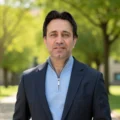
Arshya Vahabzadeh, MD
Arshya Vahabzadeh is a physician.
Is this your author page?
Make it work for you. Your KevinMD author page is one of the highest-ranking results for your name. An enhanced author page turns this page into a premium profile with your photo, biography, affiliations, publications, and links, publishes your accepted articles in 1 to 3 days, includes a listing in Experts by KevinMD, and comes with a guaranteed interview on The Podcast by KevinMD. See an example · See the enhanced author page → Cancel anytime.
Latest articles
Health technology
The growing wearable sensor market is yielding ever-increasing amounts of consumer-derived digital data. These data can consistent of many different physiologic measures such as heart rate and rhythm, sleep quality, brain activity, and physical activity levels. As many consumers and…
The growing wearable sensor market is yielding ever-increasing amounts of consumer-derived digital data. These data can consistent of many different physiologic measures such as heart rate and rhythm, sleep quality, brain activity, and physical activity levels. As many consumers and commercial organizations look toward using wearables to monitor medical conditions, clinicians may begin to find themselves in the role of a digital data decoder.
This will be no easy task, as …
Read more…
Is it time we teach medical students about wearables?
Physician voices
Recently the Mayo Clinic named a patient as a visiting professor for 2015. The patient, Dave deBronkart (otherwise known as “e-Patient Dave”) was chosen by the internal medicine chief residents to fulfill this unique role, where he would have the…
Recently the Mayo Clinic named a patient as a visiting professor for 2015. The patient, Dave deBronkart (otherwise known as “e-Patient Dave”) was chosen by the internal medicine chief residents to fulfill this unique role, where he would have the opportunity to lead grand rounds, give educational talks to medical students, residents and faculty, and truly emphasize the message of patient engagement and empowerment.
So what is an …
Read more…
How patients can be medical educators
Medical education

Why are we shortening medical degrees? The four-year medical degree has been the mainstay of U.S. medical schools for more than a century, following the publication of the Flexner report in 1910. Prior to this, there was little standardization about…
Why are we shortening medical degrees?
The four-year medical degree has been the mainstay of U.S. medical schools for more than a century, following the publication of the Flexner report in 1910. Prior to this, there was little standardization about what a medical degree could or should look like. Medical school education was subsequently standardized to two years of academic study, followed …
Read more…
Shortening medical school: Is that a good idea?
Physician voices
Pretty much on a weekly basis I come across an article about how awful life is as a practicing physician. Articles focus on how unhappy physicians are with their jobs, with their hours, with their pay or with health care…
Pretty much on a weekly basis I come across an article about how awful life is as a practicing physician. Articles focus on how unhappy physicians are with their jobs, with their hours, with their pay or with health care reform.
After almost a decade of practice, the fact is that I like my job.
Is it perfect? Absolutely not: quite far from it, in fact. There are certainly many times when …
Read more…
There is something very special about being a physician
Health policy
I have made several observations as to why developmentally challenged people are losing out in our health care systems. Given that there are 11 million children in the United States with an emotional, developmental or behavioral condition, we really can’t…
I have made several observations as to why developmentally challenged people are losing out in our health care systems. Given that there are 11 million children in the United States with an emotional, developmental or behavioral condition, we really can’t afford to neglect this important issue.
My first observation is that primary care remains a chronically undervalued component of health care delivery in the U.S. Despite the 60 million Americans …
Read more…
Our health system doesn’t serve the developmentally challenged
Physician voices
Hospitals are environments where emotions can run high. These emotions cross all boundaries and can affect physicians, hospital staff, patients and their families. Dealing with an “angry” patient is a common challenge that physicians face. The first step for a…
Hospitals are environments where emotions can run high. These emotions cross all boundaries and can affect physicians, hospital staff, patients and their families. Dealing with an “angry” patient is a common challenge that physicians face.
The first step for a physician encountering an angry patient is to remain calm and allow the patient to express his or her concerns. In my experience, “angry” patients can be viewed as falling into several …
Read more…
4 reasons why patients may become angry
Drugs and prescribing
As physicians, we often write prescriptions for our patients. Where, when, and how patients fill their prescriptions are usually outside of our realm of expertise. But should we be more involved? On occasion, the cost of a medication and possible…
As physicians, we often write prescriptions for our patients. Where, when, and how patients fill their prescriptions are usually outside of our realm of expertise. But should we be more involved?
On occasion, the cost of a medication and possible alternatives will be the subject of my conversation with a patient. I was surprised, however, when one of my patients complained about the price of an antidepressant that I had prescribed. …
Read more…
Be more involved in how patients fill their prescriptions
Real physician voices, twice a week
Free, and one click to unsubscribe.