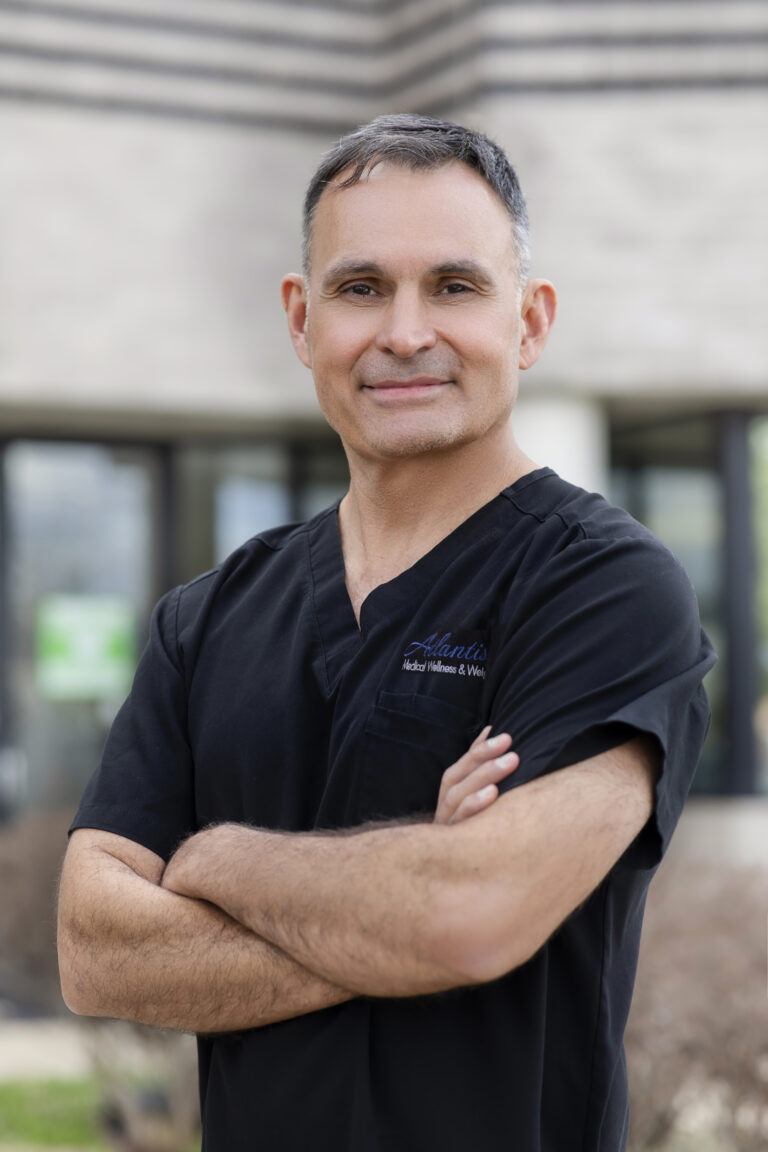
Benjamin González is an integrative and functional medicine physician, a leading expert in metabolic and obesity medicine, and an outspoken advocate for women's health. A self-described medical feminist, he pushes for improved care within a gender-biased health care system, drawing on a background in genetics, obesity medicine, and metabolic medicine to bring a distinctive perspective to wellness care.
He develops and designs health coach and physician weight loss certification programs, and he teaches medical professionals on hormones, metabolic function and repair, and peptide management. He is the author of The Athena Factor: Science-Based Strategies for Safer, Smarter Women's Health Care in a Sex-Biased System.
González is a frequent speaker on the national medical education circuit. He has lectured on peptides and the aesthetic effects of glucagon-like peptide-1 (GLP-1) agonists at The Aesthetic Show in Las Vegas, and serves as primary faculty for the Weight Management Certification Course with the American Academy of Anti-Aging Medicine (A4M), where he has delivered main stage talks on metaflammation and GLP-1 receptor agonists and adjuncts at the annual Longevity Fest. He spoke on insulin resistance at the Biohacking and Longevity Symposium in New York in October 2025, and on gender bias in medicine, medical nutrition, and metabolic repair at the Age Management Medicine Group (AMMG) annual conference in Salt Lake City in November 2025.
He shares updates on Instagram and LinkedIn.
If you work in medicine long enough, you learn that science moves slowly. Regulation moves slower. And social media moves at the speed of caffeine and bad decisions. That collision is exactly what is happening right now in the peptide world.
One week the FDA tightens restrictions. The next week state medical boards issue warnings. Then telehealth companies pivot. Then compounding pharmacies change formulations. Then another peptide disappears from the market. …
Read more…
Peptide regulation: 4 lanes every physician must know
The single scariest moment in my medical career was not as a student, or a resident with the first dying trauma patient in front of me. Nor was it in Iraq on November 2, 2003, when two Chinooks were shot down and my ER was overwhelmed with trauma after trauma. It was the very first day as an attending in the ER. Up until then, in every single case in …
Read more…
Evaluating the U.S. Surgeon General nominee: Why clinical experience matters