Richard A. Lawhern, PhD
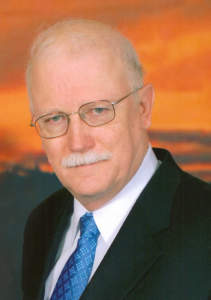
Richard A. Lawhern is a nationally recognized health care educator and patient advocate who has spent nearly three decades researching pain management and addiction policy. His extensive body of work, including over 300 published papers and interviews, reflects a deep critique of U.S. health care agencies and their approaches to chronic pain treatment. Now retired from formal academic and hospital affiliations, Richard continues to engage with professional and public audiences through platforms such as LinkedIn, Facebook, and his contributions to KevinMD. His advocacy extends to online communities like Protect People in Pain, where he works to elevate the voices of patients navigating restrictive opioid policies. Among his many publications is a guideline on opioid use for chronic non-cancer pain, reflecting his commitment to evidence-based reform in pain medicine.
Conditions

Dedicated to my friend and colleague Pat Irving to whom I first told the story. I'm 80 years old and I've been writing for over 60 years—first in systems engineering, later in advanced technology, and more recently in public health…
Dedicated to my friend and colleague Pat Irving to whom I first told the story.
I’m 80 years old and I’ve been writing for over 60 years—first in systems engineering, later in advanced technology, and more recently in public health policy for the regulation of pain medicine. At this stage of my life, some of my writing is introspective, in an attempt to extract and share “lessons learned” with others. Thus, …
Read more…
5 questions in mental health counseling – and life
Conditions

As a U.S. health care writer and patient advocate for almost 30 years, I read a lot. Recently, some of that reading is in court transcripts of doctors being persecuted out of medicine or into jail by various prosecutors and…
As a U.S. health care writer and patient advocate for almost 30 years, I read a lot. Recently, some of that reading is in court transcripts of doctors being persecuted out of medicine or into jail by various prosecutors and their hired “experts.” I use the term “persecuted” intentionally. I believe that “medical experts” in many court or Medical Board proceedings are simply “hired guns” – clinical predators hired for …
Read more…
How biased medical experts are destroying doctors’ lives and careers in the opioid crisis
Tech

As a health care writer and patient advocate for people in pain, I spend a lot of time online on venues like Facebook, Quora, LinkedIn, and X (formerly Twitter). I am visible. And because I am visible, many people reach…
As a health care writer and patient advocate for people in pain, I spend a lot of time online on venues like Facebook, Quora, LinkedIn, and X (formerly Twitter). I am visible. And because I am visible, many people reach out to me seeking help or doctor referrals to the few clinicians who are still prescribing safe and effective opioid pain relievers. In recent years, I have also been contacted …
Read more…
Unmasking online scams: How to stay safe as a visible patient advocate
Meds

Anyone reading health care news today must be aware that American medicine – particularly pain medicine – is in crisis. Doctors are experiencing high levels of burnout due to administrative burdens, prior authorization demands, and a health care system that…
Anyone reading health care news today must be aware that American medicine – particularly pain medicine – is in crisis. Doctors are experiencing high levels of burnout due to administrative burdens, prior authorization demands, and a health care system that often prioritizes efficiency over patient care. This burnout is leading to mental health issues and, in some cases, physician suicides.
Medicare payments to physicians have decreased by 26 …
Read more…
The truth behind opioid use disorder
Conditions

As a health care writer and subject matter expert in public health policy for the treatment of chronic pain and opioid addiction, I spend a lot of time online reading or writing. Nearing the age of 80, I have time…
As a health care writer and subject matter expert in public health policy for the treatment of chronic pain and opioid addiction, I spend a lot of time online reading or writing. Nearing the age of 80, I have time for such occupations. In that context, I recently ran into a quite profound quotation on Facebook:
I lived when simply waiting was a large part of ordinary life: when we waited,
…
Read more…
Transform relationships: Embrace real interactions over digital distractions
Conditions
As a non-clinician patient advocate and health care writer, I am frequently reminded of a quotation attributed to Samuel Clemens (Mark Twain): "Figures don't lie. But liars figure." I am also aware of a second quotation from economist Ronald H…
As a non-clinician patient advocate and health care writer, I am frequently reminded of a quotation attributed to Samuel Clemens (Mark Twain): “Figures don’t lie. But liars figure.” I am also aware of a second quotation from economist Ronald H Coase: “If you torture the data for long enough, it will confess to anything.”
I find that both quotations apply directly to the U.S. Centers for …
Read more…
Uncovering the real story behind opioid prescriptions and deaths
Conditions
I write widely as a patient advocate and subject matter expert on public policy for the regulation of prescription opioid analgesics in pain medicine. Like many people younger than myself, I also visit many social media platforms almost daily. I…
I write widely as a patient advocate and subject matter expert on public policy for the regulation of prescription opioid analgesics in pain medicine.
Like many people younger than myself, I also visit many social media platforms almost daily. I am active on these platforms to share recent health care news and to support hope among people who increasingly struggle to find clinicians and pharmacists who will treat their pain by …
Read more…
From advocacy to early cancer detection
Conditions
In 1990, Ronald Melzack published a paper in Scientific American titled "The Tragedy of Needless Pain." Many would regard Melzack as the "father" of pain science and the treatment of pain. In that paper, he described the science behind several…
In 1990, Ronald Melzack published a paper in Scientific American titled “The Tragedy of Needless Pain.” Many would regard Melzack as the “father” of pain science and the treatment of pain. In that paper, he described the science behind several observations that many clinicians and public health policy decision-makers would find startling in today’s hostile and fraught regulatory environment surrounding the U.S. opioid crisis.
… the fact is
…
Read more…
Pain medicine realities: beyond the opioid crisis
Conditions
I write widely as a subject matter expert on U.S. policy for the regulation of prescription opioid pain relievers and of clinicians who employ them in managing their patients' chronic pain. Because I am a patient advocate and the spouse…
I write widely as a subject matter expert on U.S. policy for the regulation of prescription opioid pain relievers and of clinicians who employ them in managing their patients’ chronic pain. Because I am a patient advocate and the spouse of a chronic pain patient, I hear from a lot of suffering people. In one form or another, many of their pleas amount to, “My doctor has deserted me, …
Read more…
Rethinking U.S. opioid policy
Conditions
"In July 2015, journalist Johann Hari gave a TED Talk that over 20 million people have since viewed. Hari offered convincing evidence that vulnerability to opioid addiction is a consequence of the conditions under which people live — the social…
“In July 2015, journalist Johann Hari gave a TED Talk that over 20 million people have since viewed. Hari offered convincing evidence that vulnerability to opioid addiction is a consequence of the conditions under which people live — the social determinants of health — rather than simple exposure to opioid pain relievers. This theme is brilliantly elaborated by economist Anne Case and Nobel Prize winner Angus Deaton …
Read more…
Everything the government thinks it knows about the opioid crisis is wrong
Conditions

As a health care writer and policy analyst, I frequently encounter the term "risk" in discussions of medical issues. I also frequently see the term grossly misused in both the popular press and medical literature. Nowhere is this more evident…
As a health care writer and policy analyst, I frequently encounter the term “risk” in discussions of medical issues. I also frequently see the term grossly misused in both the popular press and medical literature. Nowhere is this more evident than in the 2016 and 2022 CDC Guidelines for the prescription of opioids in the treatment of pain.
In science, the term “incidence” is a measure of the likelihood …
Read more…
How misused terminology and biased studies may be misguiding our understanding of opioid addiction and mortality
Meds
We've all heard about America's so-called "opioid epidemic." Nearly 100,000 people died in 2021 of causes that included overdose by one or more narcotic drugs and often alcohol. We also hear assertions from anti-opioid advocates that this epidemic was caused…
We’ve all heard about America’s so-called “opioid epidemic.” Nearly 100,000 people died in 2021 of causes that included overdose by one or more narcotic drugs and often alcohol. We also hear assertions from anti-opioid advocates that this epidemic was caused by doctors “over-prescribing” opioid pain relievers to their patients. These assertions are fundamentally wrong on fact. U.S. national health care policy and law redirections are needed to correct such distortions.
Doctors …
Read more…
The real cause of America’s opioid crisis: Doctors are not to blame
Real physician voices, twice a week
Free, and one click to unsubscribe.