Rita Agarwal, MD
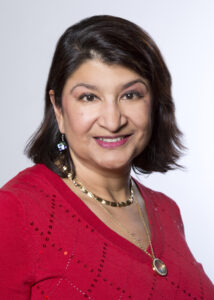
Rita Agarwal is a double board-certified pediatric anesthesiologist at Stanford University and Lucile Packard Children's Hospital. Her work focuses on pediatric pain management, neuroanesthesia, medical education, advocacy, mentorship, and sponsorship. She serves as chair of the California Society of Anesthesiologists' Women in Anesthesiology Committee, is active with the ASA and CSA communications committees, and is one of two hosts of the CSA podcast Vital Times.
Dr. Agarwal is an active member of the Society for Pediatric Anesthesia and the Society for Pediatric Pain Medicine, where she contributes to educational and editorial initiatives. A representative sample of her publications includes work on pediatric sedation safety in Pediatrics, anesthesia for pediatric chest trauma in Seminars in Cardiothoracic and Vascular Anesthesia, airway management in laryngotracheal injuries in children in Paediatric Anaesthesia, opioid use in children during the perioperative period, perioperative management of pediatric patients using medicinal marijuana, dental anesthesia safety, outpatient opioid prescribing guidelines for children and adolescents, and safe and effective pain management in children in American Family Physician. She has also written on workforce trends in pediatric anesthesiology, adverse event disclosure, and perioperative considerations for adolescents and young adults with substance use disorders.
She has completed training in evidence-based coaching and is passionate about advocacy for safer care for children undergoing dental anesthesia and appropriate pain management for pediatric patients, while also supporting physicians through mentorship and coaching. She shares updates through her Stanford profile, on X as @ritaagarwal6, on Instagram as @ragarwal62, and on Bluesky as @momdoc3.bsky.social.
Physician
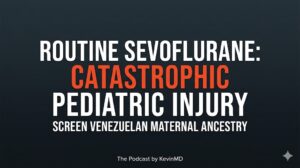
Imagine a healthy eight-year-old boy going under general anesthesia for a routine procedure. His preanesthetic workup is unremarkable. His family history raises no flags. He receives sevoflurane, the most commonly used inhaled anesthetic in pediatric practice worldwide, and he does…
Imagine a healthy eight-year-old boy going under general anesthesia for a routine procedure. His preanesthetic workup is unremarkable. His family history raises no flags. He receives sevoflurane, the most commonly used inhaled anesthetic in pediatric practice worldwide, and he does not wake up the same.
This is not a theoretical scenario. It has happened to families of Venezuelan ancestry on multiple continents, across multiple decades, and no one connected the dots. …
Read more…
How a hidden genetic mutation creates a severe pediatric anesthesia risk
Conditions and Diseases

Anesthesia and sedation in dental patients has come under scrutiny in recent years, fueled in part by high-profile tragedies, such as the deaths of six-year-old Caleb in 2015, cardiologist Dr. Henry Patel in 2020, and the five media-reported deaths in…
Anesthesia and sedation in dental patients has come under scrutiny in recent years, fueled in part by high-profile tragedies, such as the deaths of six-year-old Caleb in 2015, cardiologist Dr. Henry Patel in 2020, and the five media-reported deaths in 2025. These incidents serve as a stark reminder that the current landscape of dental sedation practices is fraught with inconsistencies and a lack of oversight, which can have devastating consequences …
Read more…
The risks of the single-provider dental sedation model
Physician

"We need an urgent pain consult for patient Lucy Bee in room 5621. She's a 17-year-old drug addict and is screaming and wanting morphine," I was told. Lucy Bee is not a real patient, but a composite of patients I…

“We need an urgent pain consult for patient Lucy Bee in room 5621. She’s a 17-year-old drug addict and is screaming and wanting morphine,” I was told. Lucy Bee is not a real patient, but a composite of patients I have cared for either when providing pain management services on our inpatient floors, or in the operating …
Read more…
Words matter: Caring for pain patients with suspected opioid use disorder
Medications
“6 in 10 Kids Got Opioids After Tonsil Surgery, Study Says.” So screams the headline from The Daily Beast. "In the midst of the opioid crisis, doctors sent many kids home with oxycodone and hydrocodone," it goes on to say.…
“6 in 10 Kids Got Opioids After Tonsil Surgery, Study Says.”
So screams the headline from The Daily Beast.
“In the midst of the opioid crisis, doctors sent many kids home with oxycodone and hydrocodone,” it goes on to say. Another example of scaremongering and sensational headlines, or is this something we should still be concerned about?
Well, according to the actual article, there was no greater risks of complications …
Read more…
How do we manage pain in the era of the opioid crisis?
Physician
Almost every day there is a new revelation about men committing horrible, criminal, bizarre, or nauseating acts of sexual misconduct. Harassment and assault seem to be rampant. The #MeToo and #TimesUp movements have illuminated the vast scope of the problem.…
Almost every day there is a new revelation about men committing horrible, criminal, bizarre, or nauseating acts of sexual misconduct. Harassment and assault seem to be rampant. The #MeToo and #TimesUp movements have illuminated the vast scope of the problem. Most stories have focused on famous men in politics, business, sports, and entertainment, but this type of behavior is pervasive. Lately, the lay press, medical blogs, and social media have …
Read more…
Harassment of women in medicine: We are all in this together
Physician

Las Vegas: 59 dead, 500+ injured. I worry about our medical colleagues who will suffer tremendously while treating the injured; they will be wracked with guilt for the patients they could not help and false back to the horror of…
Las Vegas: 59 dead, 500+ injured. I worry about our medical colleagues who will suffer tremendously while treating the injured; they will be wracked with guilt for the patients they could not help and false back to the horror of that night and the ensuing days and weeks caring for the living. We must find ways to support each other help them cope as well as looking for sensible solutions.
My …
Read more…
After Las Vegas: What is the change that needs to occur?
Physician
After surgery for my broken tibia, I realized that there were only four points on the pain scale that really mattered to me: I’m OK. This acetaminophen/ibuprofen/whatever is enough. I wouldn’t mind a little something more, preferably something that binds…
After surgery for my broken tibia, I realized that there were only four points on the pain scale that really mattered to me:
- I’m OK. This acetaminophen/ibuprofen/whatever is enough.
- I wouldn’t mind a little something more, preferably something that binds mu
- Um, could you please hurry that up?
- NOW! NOW! I need it NOW!
On the 0 to 10 pain scale, who really cares if you are at a 2 or …
Read more…
Finding the right balance in pain relief: A physician’s story
Real physician voices, twice a week
Free, and one click to unsubscribe.